
Archaeologists Identify First Physical Evidence of Punitive Nose Amputation in 14th-Century China
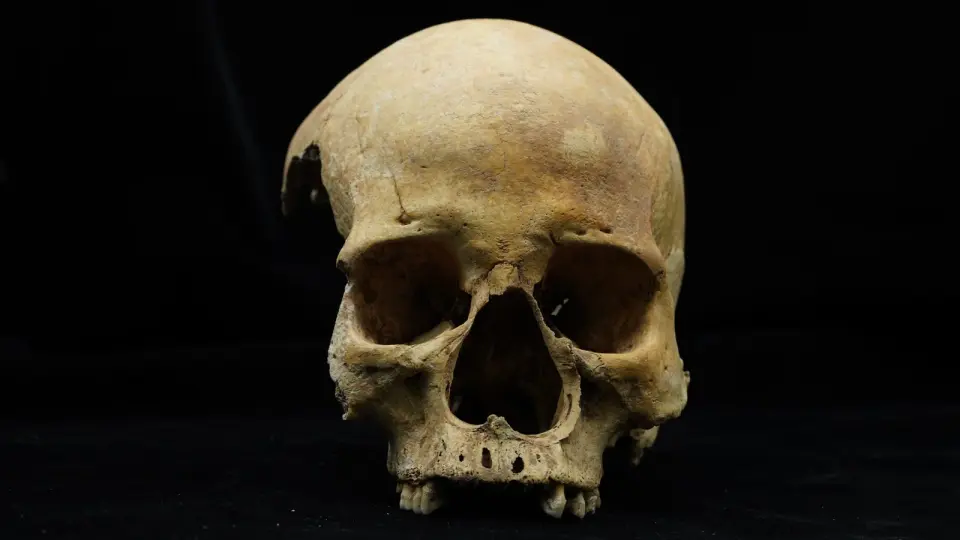
A 14th-century female skeleton from Henan, China, provides the first archaeological evidence of punitive nasal amputation. The woman, who lived between 1298 and 1404, survived the procedure for several years, as indicated by healed bone fractures. Her face-down burial suggests social ostracism, likely resulting from crimes such as theft or adultery under the historical 'Five Punishments' system.
Key points
- The skeleton was discovered in 2019 at the Sanzhiyuan cemetery in Henan province but was not identified as a case of nasal amputation until 2024.
- Radiocarbon dating places the woman’s life between 1298 and 1404, corresponding to the late Yuan or early Ming dynasties.
- CT scans revealed partial removal of nasal bones and internal structures, with signs of healing indicating she survived the injury for years.
- The woman was buried face-down in an isolated location with only a copper hairpin, suggesting she was socially cast out after death.
- The study confirms that nasal amputation, part of the ancient 'Five Punishments,' was physically enacted, though the specific crime remains uncertain.
Background
This discovery follows earlier reports in September 2026 regarding the first archaeological proof of nose-cutting punishment in ancient China. While previous coverage noted the limited contextual evidence of this single case, the new study provides detailed forensic analysis confirming the procedure's survivability and the social stigma associated with it. This finding bridges the gap between historical textual records of the 'Five Punishments' and physical archaeological evidence.
How outlets are covering it
Live Science and UA.News emphasize the forensic details, noting that the woman’s nasal bones were partially removed with signs of healing, suggesting she survived for years. They highlight the face-down burial as evidence of social discrimination. Gizmodo focuses on the historical context of the 'Five Punishments,' noting that while nasal amputation was recorded in texts as early as 2070 BCE, this is the first physical proof. Beef Central highlights the economic aspect, linking the punishment to livestock theft, and notes that chemical analysis suggests the woman was a commoner who ate a millet-based diet. All sources agree that while disease or accident cannot be entirely ruled out, punitive amputation is the most likely explanation.
Why it matters
This discovery validates historical records of corporal punishment in ancient China, providing the first physical evidence that nasal amputation was actually performed. It offers insights into the social consequences of such punishments, as the woman’s isolated burial suggests she was ostracized by her community. The finding also highlights the survivability of such procedures, indicating that post-operative care was provided to prevent infection and manage pain.
What to watch
Researchers plan to screen more skeletons from the Sanzhiyuan site for similar cases of trauma or disease. They hope to find additional examples of nasal amputation in clearer archaeological contexts to better understand the prevalence and specific causes of this punishment. Further analysis of the woman’s remains may also reveal more about the medical procedures used to treat her after the amputation.
- 700-year-old skull from China is first ever skeletal evidence of nose amputation Live Science
- This Skeleton May Prove That Imperial China Really Did Cut Off Noses as Punishment Gizmodo
- Ancient skeleton reveals brutal punishment for cattle thieves Beef Central
- Medieval Chinese skeleton may reveal first evidence of a brutal punishment Phys.org
- China finds likely world's first example of nose amputation as punishment — Live Science UA.NEWS
Want the full story? Read the original reporting
Read on Live Science