
Westminster Abbey Archaeologist Identifies 1,000-Year-Old Misidentified Coffin Occupant as Medieval Abbot
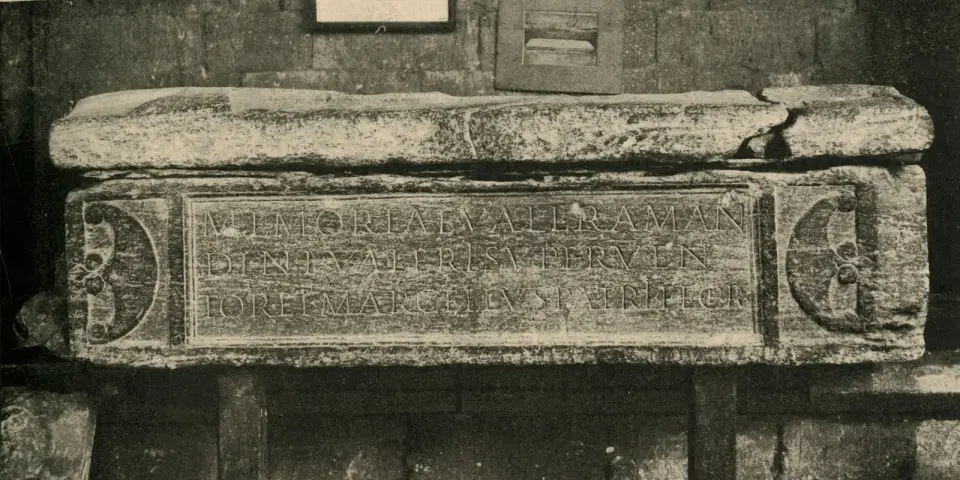
A limestone sarcophagus excavated at Westminster Abbey in 1869 was long misidentified as the tomb of a Roman-era Briton due to an original inscription. Recent analysis by consultant archaeologist Warwick Rodwell reveals the coffin was reused in the 10th or 11th century for a high-ranking Benedictine abbot. Radiocarbon dating places the occupant's death between 987 and 1052 C.E., narrowing the identity to either Aelfwig or his successor Wulfnoth. The discovery resolves a 150-year mystery after the skeleton was rediscovered inside the coffin in 2016.
Key points
- The sarcophagus, found on the North Green of Westminster Abbey in 1869, bore an inscription for Valerius Amandinus, a Roman-era Briton, but also featured a later Anglo-Saxon cross.
- The skeleton was declared lost in 1873 but was rediscovered inside the coffin by conservators in 2016.
- Warwick Rodwell, the Abbey’s consultant archaeologist, published a study in the Journal of the British Archaeological Association identifying the occupant as a medieval abbot.
- Radiocarbon dating from the Scottish Universities Environmental Research Centre placed the bones between 987 and 1052 C.E., confirming the coffin was reused.
- Physical analysis by bone specialist James Young Langhorne determined the man was between 35 and 49 years old, 5 feet 9 inches tall, and suffered from osteoarthritis and healed rib fractures.
- Rodwell narrowed the identity to two candidates: Aelfwig, who died around 1020, or his successor Wulfnoth, who died 29 years later, with Aelfwig considered slightly more likely due to his prior status as a Westminster monk.
Background
This discovery adds to recent archaeological findings regarding ancient burial practices, such as the 2026 unearthing of a Roman child’s coffin in Romania. It also follows broader historical research into medieval institutions, providing new insights into the physical lives and burial customs of high-ranking religious figures in England.
Why it matters
The resolution of this 150-year-old mystery corrects a significant historical error regarding a prominent figure in English monastic history. It demonstrates how modern forensic and radiocarbon techniques can resolve long-standing archaeological ambiguities, particularly when artifacts have been repurposed across centuries. The findings also highlight the importance of re-examining historical records and physical evidence, as previous 19th-century assessments of the skeleton’s age and stature were proven inaccurate by contemporary analysis.
What to watch
The sarcophagus remains on permanent display in the Queen’s Diamond Jubilee Galleries at Westminster Abbey. While Rodwell favors Aelfwig as the occupant, the possibility of Wulfnoth remains open. Further research may be required to definitively distinguish between the two abbots, though current evidence suggests the identity is likely one of these two medieval figures.
Want the full story? Read the original reporting
Read on AOL.com