
Amsterdam Herons Turn Market Cleanup into Daily Buffet
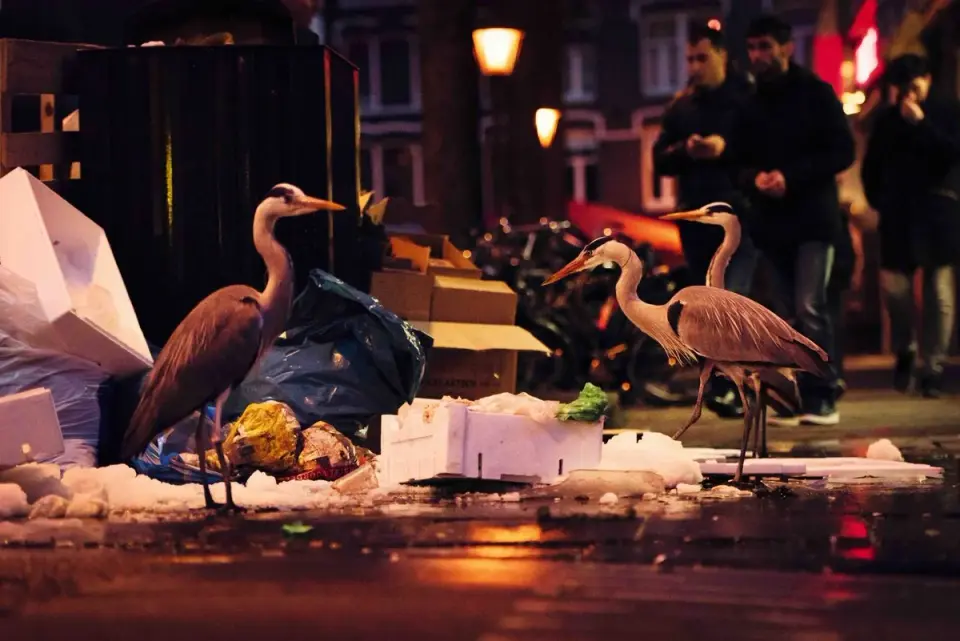
Grey herons have adapted to Amsterdam’s urban landscape by scavenging fish scraps at the Albert Cuyp Market, turning the daily cleanup into a communal feeding event that locals and vendors have accepted as part of the city's charm.
Key points
- Grey herons now regularly visit the Albert Cuyp Market in Amsterdam, a site famous for its vibrant atmosphere and local culture.
- Approximately 20 herons gather by 4 PM as stallholders pack up, waiting for leftovers and scraps from fish stalls.
- While most birds wait patiently, some boldly snatch food from stalls, including one that was observed carrying a squid with tentacles dangling from its beak.
- Fishmongers have adapted to the birds' presence by removing lids from discarded coolboxes, facilitating easier access to food for the herons.
- The integration of these birds into the market scene is viewed positively, contributing to the local concept of 'gezelligheid' or conviviality.
Background
This development highlights the ongoing adaptation of urban wildlife in Amsterdam, a city characterized by its extensive canal system and historical integration of nature into daily life. Previous coverage in our archive has not addressed urban wildlife behavior, focusing instead on financial, political, and technological developments, making this a distinct topic within our recent reporting. The herons' presence at the market underscores how urban environments can support wildlife populations through incidental food sources, a trend observed in other cities but specifically detailed here for Amsterdam's iconic market.
Why it matters
The behavior of grey herons at the Albert Cuyp Market illustrates the successful coexistence of urban wildlife and human activity, challenging the notion that cities are hostile to nature. It demonstrates how local communities and businesses can adapt to wildlife presence, fostering a sense of shared space and environmental harmony. This case study provides insights into urban conservation strategies and the potential for integrating wildlife into public spaces without conflict, offering a model for other cities seeking to balance development with ecological needs.
What to watch
The continued presence of grey herons at the Albert Cuyp Market is likely to persist as long as fish stalls generate scraps and vendors maintain their accommodating practices. Conservationists may monitor the herons' health and population stability to ensure that scavenging does not lead to nutritional deficiencies or health issues. Additionally, urban planners might consider this dynamic when designing future public spaces, potentially incorporating features that support wildlife while maintaining human usability. There is no indication of regulatory changes or conflicts, suggesting a stable, ongoing relationship between the birds and the market community.
Want the full story? Read the original reporting
Read on BBC Wildlife Magazine