
SpaceX adopts catch-tower design for Starship to enable rapid reuse and Mars logistics
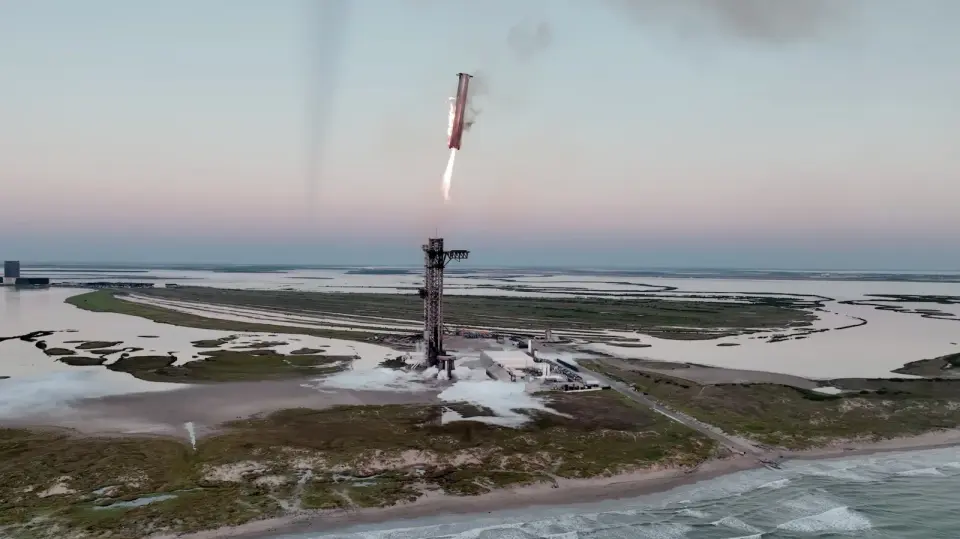
SpaceX is using mechanical arms on its launch tower to catch the Super Heavy booster instead of landing it on legs. This design choice reduces vehicle weight, allows for greater payload capacity, and enables rapid turnaround times at the launch site. The strategy supports ambitious goals for frequent Mars cargo launches and potential suborbital passenger flights, though significant technical and safety hurdles remain before operational deployment.
Key points
- SpaceX replaced traditional landing legs on the Starship with a catch system using giant mechanical arms on the launch tower.
- Removing landing legs reduces the rocket's overall mass, allowing for heavier cargo, larger crews, or increased fuel capacity for the 100-ton lift vehicle.
- The catch method allows the booster to be inspected and refueled immediately at the launch tower, eliminating the need to transport it to a separate facility.
- This rapid turnaround aims to enable airline-like operations with multiple launches per day using the same booster.
- The design supports Musk's vision for frequent Mars cargo launches during 26-month windows and potential suborbital passenger flights between major cities.
- Challenges remain, including the need for reliable long-duration life support, safety assurances for flights over populated areas, and economic viability of infrastructure.
Background
SpaceX has successfully landed Falcon 9 boosters over 600 times since 2015 using landing legs. Recent archive data shows SpaceX expanding operations, including preparing Pad 39A at Kennedy Space Center for Starship launches to increase frequency and supporting Moon and Mars missions. The company also recently achieved a record day with four booster landings and saw stock rally following reports of undervaluation and upcoming Starship tests.
Why it matters
The shift to a catch-tower design is critical for achieving the high launch cadence required for Musk's Mars colonization plans and potential global suborbital transport. It represents a fundamental change in rocket reusability strategy, moving from ground-based landing to tower-based capture to maximize efficiency and payload capacity.
What to watch
SpaceX must complete testing of the Starship, including orbital landings and lunar missions, before operationalizing the catch system. They also need to address safety concerns regarding sonic booms and flights over populated areas, as well as develop certified life support systems for long-duration space travel.
Want the full story? Read the original reporting
Read on BGR