
Fossil Tooth in Ichthyosaur Vertebra Confirms Pliosaurid Predation
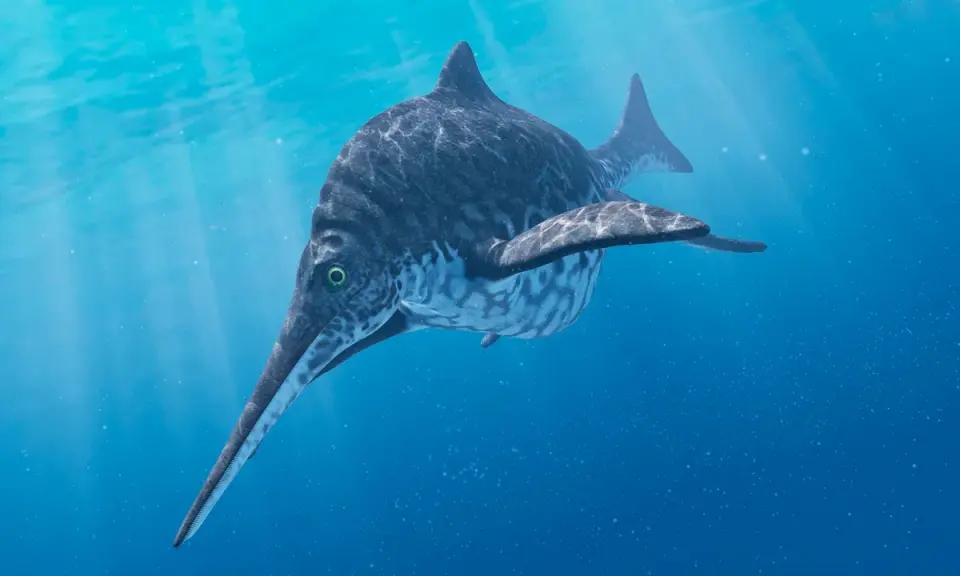
A rare fossil discovery provides direct physical evidence of predation between two ancient marine reptiles. Researchers identified a broken pliosaurid tooth embedded in the vertebra of an ichthyosaur, dating back 160 million years. The specimen, originally found in a museum drawer, was analyzed using CT scans and high-magnification imaging to confirm the tooth’s serrated structure and origin. The lack of acidification on the bone suggests the tooth was ripped off during a live attack rather than scavenged from a stomach. This finding validates long-standing theories that pliosaurids were apex predators capable of killing large prey like ichthyosaurs.
Key points
- A pliosaurid tooth was found embedded in the vertebra of an ichthyosaur fossil, providing rare physical proof of predation between these two species.
- The specimen dates to the Upper Jurassic epoch, approximately 160 million years ago, and was recovered from an abandoned museum drawer in England.
- CT scans and stacked high-magnification images confirmed the tooth’s serrated edges and identified it as belonging to a pliosaurid, a reptile three times the size of the ichthyosaur.
- The absence of acidification on the vertebra indicates the tooth was likely ripped off during a live attack, rather than being scavenged after passing through a predator’s stomach.
- The fossil’s provenance was traced through Victorian-era correspondence between collectors Nicholson Leeds and Othniel Charles Marsh, as well as a Yale Peabody Museum ledger.
Background
Previous research, such as the 2026 study on shark evolution, highlighted the deep history of marine life, but direct evidence of predation between specific large marine reptiles remained scarce. This discovery fills a gap in understanding the ecological dynamics of the Jurassic period, confirming that pliosaurids were indeed apex predators that hunted large prey like ichthyosaurs, rather than merely scavengers or opportunistic feeders.
Why it matters
This fossil offers concrete evidence of predator-prey interactions in the prehistoric marine ecosystem, moving beyond theoretical models to document a specific violent event. It demonstrates the value of re-examining old museum collections, where overlooked specimens can yield significant scientific insights. The finding helps refine our understanding of the behavior and hunting strategies of giant marine reptiles, such as pliosaurids, which had heads as large as an adult human body and teeth comparable in size to those of Tyrannosaurus rex.
What to watch
Researchers may continue to analyze other overlooked specimens in museum collections to uncover more evidence of prehistoric predation. Further studies could explore the biomechanics of the bite, using the embedded tooth to model the force and angle of the pliosaurid’s attack. Additionally, the provenance research may lead to the identification of other related fossils from the same Victorian-era collections, potentially revealing more about the ecosystem of the Upper Jurassic period.
Want the full story? Read the original reporting
Read on Scientific American