
Rare Nanotyrannus Skeleton 'Jodi' Heads to Sotheby's Auction for $6M-$9M
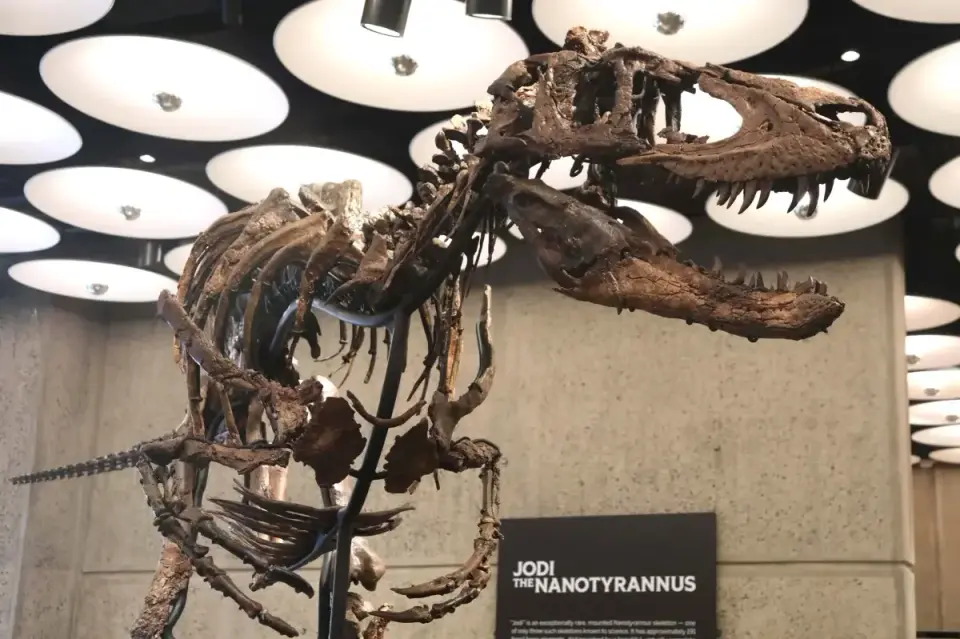
A rare, nearly complete Nanotyrannus skeleton nicknamed 'Jodi' is on public display at Sotheby's in New York ahead of an October 27 auction. Estimated to sell for $6 million to $9 million, the fossil is one of only three known specimens of this distinct Cretaceous predator, which coexisted with T. rex. The sale highlights ongoing debates between private collectors and scientists over the preservation and accessibility of significant paleontological finds.
Key points
- The Nanotyrannus skeleton, nicknamed 'Jodi,' is 6.5 feet tall and nearly 20 feet long, standing as one of only three known specimens of the genus.
- The fossil is estimated to fetch between $6 million and $9 million at a Sotheby's auction scheduled for October 27, 2026.
- Recent 2025 research confirmed Nanotyrannus as a distinct genus that coexisted with T. rex, overturning decades of debate that it was merely a juvenile T. rex.
- The specimen is approximately 70% complete, featuring a nearly intact skull and jaw with roughly 35 teeth, and was discovered in 2019 on a Montana ranch.
- The Society of Vertebrate Paleontology opposes the private sale, arguing such fossils should remain in public institutions for research, while Sotheby's defends the role of private hunters in discovery.
Background
This auction follows a trend of high-profile cultural and scientific items entering the private market, including recent Sotheby's sales of a T. rex fossil for $50.1 million and Princess Diana's 'revenge dress.' The Nanotyrannus debate has persisted since the 1942 discovery of the 'Cleveland Skull,' with scientists long questioning whether the smaller predator was a juvenile T. rex. The 2025 confirmation of its distinct status, based on growth ring analysis, solidified its place as a separate apex predator of the Late Cretaceous period, approximately 67 million years ago.
Why it matters
The sale of 'Jodi' underscores the tension between the commercial value of rare scientific specimens and the public interest in preserving them for research and education. As one of only three known Nanotyrannus skeletons, its removal from potential public display could limit future scientific study and public access to a key piece of Cretaceous history. The auction also highlights the growing role of private paleontological hunters in discovering significant fossils, a practice that remains controversial among academic institutions.
What to watch
The public display at Sotheby's will continue until the October 27 auction. The final sale price will be determined by bidding, with the estimated range set between $6 million and $9 million. The outcome will likely spark further debate among paleontologists and collectors regarding the ethics of privatizing significant scientific specimens.
Want the full story? Read the original reporting
Read on New York Post