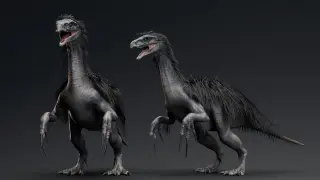
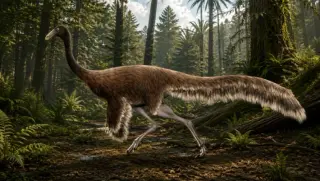
A new study reveals Kayrasaurus changliensis, the largest known therizinosaurus, found in China. It features massive claws, a unique tooth arrangement, and a heavy build, but was likely a plant-eater.
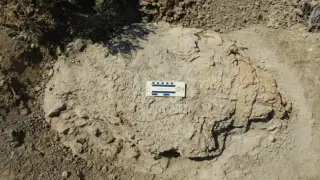
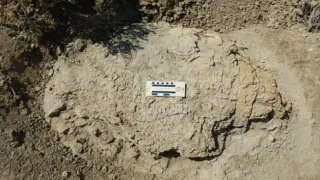
Paleontologists in southwestern North Dakota have identified the first trackway of a full-grown Tyrannosaurus rex: four three-toed footprints spanning about 23 feet, indicating the animal walked at roughly 3.5–4.5 mph and dated to around 66.5 million years ago. The site was found in 2025 near Marmarth, with 3D scans confirming the tracks; three footprints will be airlifted to the Denver Museum of Nature & Science for analysis, providing rare behavioral insight into T. rex movement before the mass extinction.
Paleontologists report the first trackway of a full-grown Tyrannosaurus rex—a 23-foot sequence formed by four three-toed footprints dating to about 66.5 million years ago in the North Dakota badlands—showing the predator walked at about 3.5 to 4.5 mph. Found in 2025 near Marmarth on U.S. Forest Service land, the prints were 3D-scanned and analyzed by Peter Falkingham; three footprints will be airlifted to the Denver Museum of Nature & Science. This discovery provides movement insights that were previously unavailable from isolated T. rex footprints.
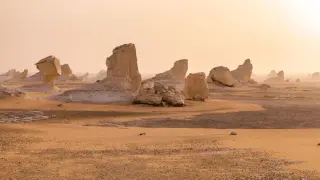
Paleontologists analyzing phosphatic beds at Abu-Tartur, Egypt, uncovered 28 shark teeth belonging to five extinct species—including two new records for Egypt—revealing a nutrient-rich, open-shelf Cretaceous sea that once lapped northern Africa; the assemblage suggests distinct ecological niches and a productive marine ecosystem driven by upwelling, though the teeth represent a time-averaged snapshot rather than a single moment.
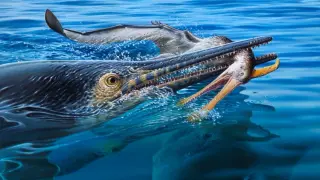
Australian paleontologists report that a 6–7 m ichthyosaur, Platypterygius australis, had two pterosaur jaw fragments preserved in its stomach, the first direct evidence of an ichthyosaur preying on a pterosaur, with Kronosaurus queenslandicus likely delivering a lethal bite to the carcass, capturing a rare three-tier predator sequence in the Cretaceous Eromanga Sea.
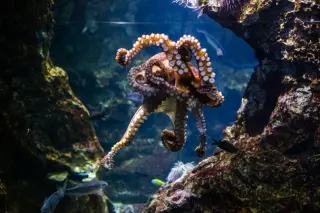
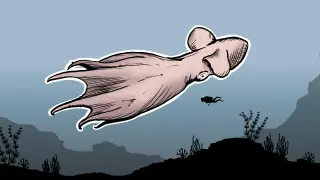
A 2026 Science study analyzed 27 Late Cretaceous fossil jaws from Japan and Vancouver Island, estimating Nanaimoteuthis haggarti could reach about 7–19 meters (roughly 100–72 million years ago). The findings suggest giant, active, finned octopuses that could hunt hard prey and occupy a top predatory tier in ancient oceans, challenging the view that vertebrates dominated ancient marine ecosystems. Exact full-body size remains uncertain since conclusions are based on jaws rather than complete skeletons.
Researchers analyzing oversized fossil jaws from Japan and Canada describe two giant, kraken-like octopuses—Nanaimoteuthis jeletzkyi and N. haggarti—from about 72 million years ago; based on jaw size, N. haggarti may have reached 23–62 feet, potentially the largest known invertebrate, suggesting Cretaceous oceans hosted top predators among invertebrates alongside vertebrates and pointing to a more complex ancient marine ecosystem.
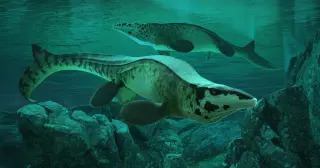
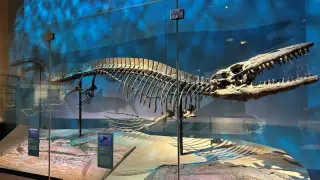
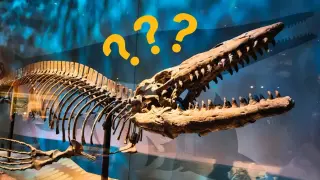
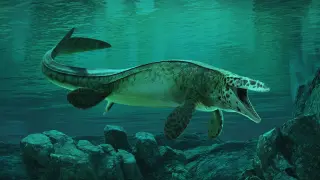
Paleontologists have identified Tylosaurus rex as a distinct, giant mosasaur—about 13 meters long with serrated teeth and powerful jaws—living roughly 80 million years ago in the Western Interior Seaway; it was the sea’s equivalent of Tyrannosaurus rex in size and ferocity.
Scientists have described Tylosaurus rex, a new mosasaur species that inhabited North America’s inland seas about 80 million years ago. Reaching up to 43 feet in length, it was larger than its close relative Tylosaurus proriger and likely the ocean’s apex predator, with a robust jaw and a scimitar-shaped skull. The species was identified after reclassifying fossils held in more than a dozen museums, including a nearly complete holotype at the Perot Museum in Dallas. The discovery reveals greater mosasaur diversity and shows that sea predators crowned the Cretaceous seas as fearsome as the land-dwelling T. rex was on land.
Scientists have identified a massive 80-million-year-old dinosaur fossil found in Texas as a previously unknown species, expanding our understanding of dinosaur diversity and evolution.
Paleontologists on Denman Island, off British Columbia, recovered a tail vertebra from an 80–75 million-year-old ornithomimosaur, the second dinosaur skeletal material found in the Nanaimo Group and the first from Canadian outcrops. The fossil suggests bird-like, ostrich‑like dinosaurs inhabited the ancient Pacific coastline and may have reached Denman Island via coastal currents, shoreline transport, or drifting carcasses. Dating to the Campanian, the find informs on the latitudinal distribution of Late Cretaceous dinosaurs along western North America and raises questions about coastal biogeography; the study was published in FACETS by Evans and colleagues.
A Perot Museum mosasaur specimen, previously identified as Tylosaurus proriger, has been reclassified as a new species, Tylosaurus rex, making it a 13.2-meter-long apex predator with a powerful jaw and serrated teeth; researchers also reassigned 12 other large mosasaurs to T. rex, prompting a rethink of mosasaur evolution and the diversity of Late Cretaceous oceans.
Scientists describe a new mosasaur species, Tylosaurus rex, from 80-million-year-old Texas fossils that could reach about 43 feet in length, possessed finely serrated teeth and powerful jaws, and likely dominated ancient seas; several specimens previously labeled as Tylosaurus proriger have been reclassified as this new species, highlighting ongoing revisions in mosasaur evolution and the Western Interior Seaway ecosystem.
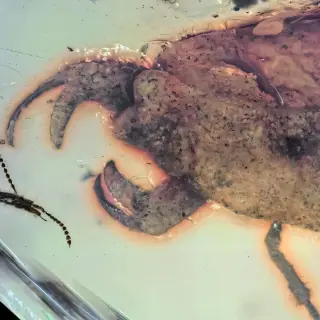
A 100‑million‑year‑old insect preserved in Myanmar amber has been named Carcinonepa libererrantes in homage to the K-pop group Stray Kids, notable for its rare crablike front claws likely used for grasping prey; CT scans helped place it among true bugs, highlighting convergent evolution with crustaceans.
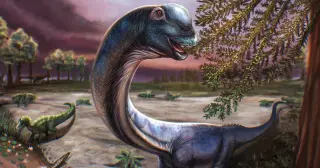
In northeastern Thailand, researchers uncovered skeletal remains of Nagatitan chaiyaphumensis, a massive sauropod about 90 feet long and weighing roughly 25–28 tons, dating to ~113 million years ago. The find highlights Southeast Asia’s sauropod diversity and paints a picture of a subtropical, riverine ecosystem with predators and other dinosaurs, expanding understanding of how these giant herbivores lived and why they grew so large.