
"1.75-Billion-Year-Old Fossils Shed Light on the Ancient Origins of Photosynthesis"
TL;DR Summary
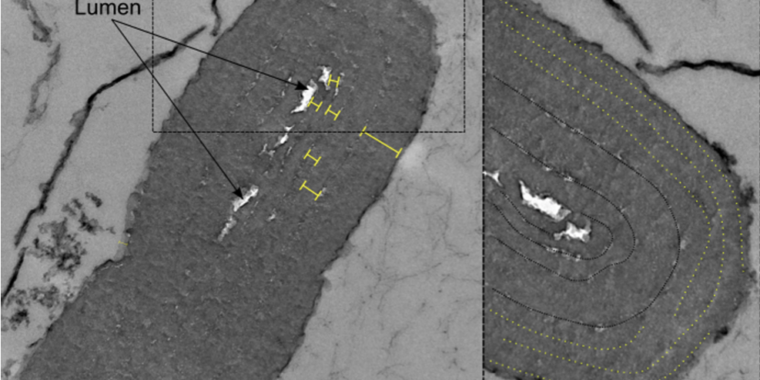
Scientists have discovered fossil evidence of photosynthetic cells that pushes the origin of photosynthesis back by over a billion years, to 1.7 billion years ago. The evidence is based on the identification of thylakoid membranes, which are crucial for photosynthesis, in cell-like bodies from ancient sedimentary rocks. This finding, which comes from the McDermott Formation in Australia and the Grassy Bay Formation in Arctic Canada, provides new insights into the evolution of photosynthesis and suggests that the genetic and chemical evidence for the development of this process may be complemented by fossil records.
Topics:science##cyanobacteria#evolution#fossils#photosynthesis#science-and-environment#thylakoidmembranes
- Fossil evidence of photosynthesis gets a billion years older Ars Technica
- Oldest thylakoids in fossil cells directly evidence oxygenic photosynthesis Nature.com
- Bacteria fossils hold the oldest evidence of photosynthesis machinery Science News Magazine
- Earliest Evidence Yet Reveals Photosynthesis Evolved at Least 1.75 Billion Years Ago ScienceAlert
- 1.75-billion-year-old fossils help explain how photosynthesis evolved New Scientist
Reading Insights
Total Reads
0
Unique Readers
10
Time Saved
3 min
vs 4 min read
Condensed
85%
613 → 93 words
Want the full story? Read the original article
Read on Ars Technica