
Fossil data reveals 56-million-year-old forest collapse as warning for modern climate
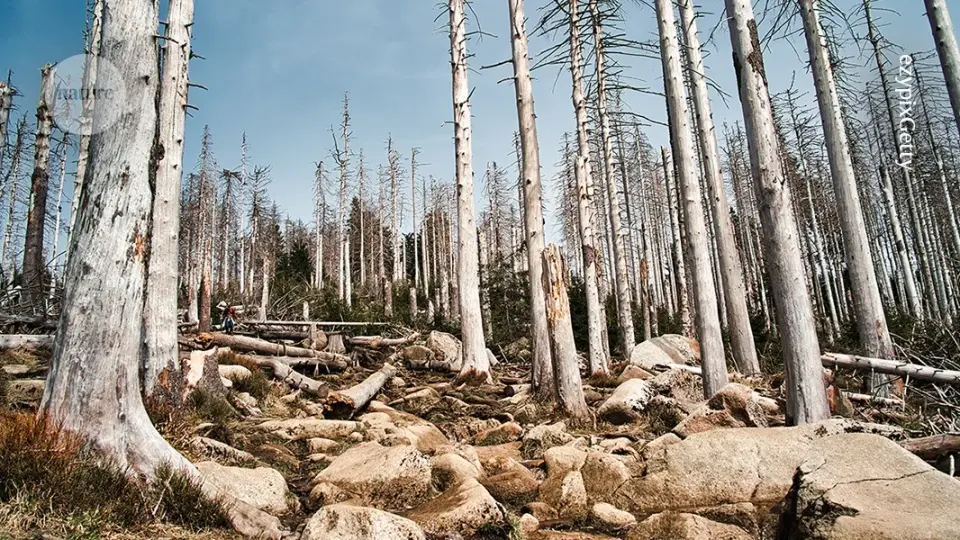
A new study published in Science analyzes fossilized leaf cells from the Hanna Basin in Wyoming to reconstruct forest conditions during the Paleocene-Eocene Thermal Maximum (PETM) 56 million years ago. The research indicates that while rising CO2 initially boosted plant growth, subsequent extreme heat and drought caused a 61% drop in forest canopy density. This collapse persisted for over 100,000 years, demonstrating that current human-driven emissions, which are occurring roughly 10 times faster than ancient natural releases, may push modern forests beyond their physiological limits before recovery can occur.
Key points
- Researchers used fossilized leaf cuticles to calculate Leaf Area Index (LAI), a metric for canopy density, revealing a 61% decline in forest cover during the PETM.
- The PETM involved a CO2 surge equivalent to projected human emissions by 2100, raising global temperatures by 5–9°C and lasting over 150,000 years.
- Forests initially thickened due to CO2 fertilization but collapsed as heat and drought overwhelmed plant physiology, leading to a shift from broad-leafed trees to ferns and palms.
- Recovery took more than 100,000 years, a timescale far exceeding human lifespans, highlighting the long-term consequences of crossing ecological thresholds.
- Modern forests face additional stressors including deforestation, wildfires, and habitat fragmentation, reducing their resilience compared to ancient ecosystems.
Background
This study builds on earlier research regarding long-term plant survival and carbon storage. While a July 2026 study suggested plants could survive billions of years as the Sun brightens, and a June 2026 study indicated oak forests might store more carbon via nitrogen links, the current findings emphasize the immediate risks of rapid CO2 spikes. The PETM serves as a historical analog for current climate change, though the pace of modern emissions is significantly faster, potentially outpacing natural recovery mechanisms.
How outlets are covering it
Nature and The Conversation highlight the methodological innovation of using leaf cuticle shapes to measure canopy density, emphasizing the long recovery period. The Guardian frames the findings as a rebuttal to claims that CO2 'greens' the planet, noting that current emissions are unmatched in speed. University of Wyoming researchers, including Ellen Currano, stress the unique quality of the Hanna Basin fossil record and the broader ecological ripple effects, such as increased insect herbivory and altered water cycles. All sources agree that while CO2 can fertilize plants, extreme heat and drought ultimately cause forest decline, with The Guardian specifically citing current tree mortality in Europe, North America, and the Amazon as evidence of this trend.
Why it matters
The study provides a concrete historical precedent for the potential collapse of global forests under high-emission scenarios. It challenges the notion that rising CO2 levels will indefinitely benefit plant growth, showing instead that physiological limits can lead to widespread dieback. This has implications for carbon sink reliability, biodiversity, and climate stability, suggesting that avoiding threshold crossings is critical to prevent irreversible ecological damage.
What to watch
Researchers will continue to analyze fossil records to understand the specific mechanisms of forest recovery and the role of soil weathering in sequestering carbon. Policy discussions may increasingly reference these long-term recovery timelines to argue for urgent emission reductions, as the study suggests that once thresholds are crossed, recovery is measured in tens of thousands of years rather than decades.
- Ancient rise in CO2 was catastrophic for forests: what that means for today’s plants Nature
- Ancient forests took 100,000 years to recover from the last global warming period similar to today – Wyoming fossils reveal what happened The Conversation
- Fossils show huge carbon emissions harm forests, not ‘green the planet’ The Guardian
- Paleontologists reconstruct forests of 56 million years ago with chilling parallels for our warming planet Phys.org
- UW’s Currano Helps Reconstruct Ancient Wyoming Forest Canopy University of Wyoming
Want the full story? Read the original reporting
Read on Nature