Tag

Paleocene Eocene Thermal Maximum

All articles tagged with #paleocene eocene thermal maximum

Could Earth Have Hosted a Prehuman Techno-Civilization—and Could We Know?
science1 month ago

Could Earth Have Hosted a Prehuman Techno-Civilization—and Could We Know?

Two scientists explore the 'Silurian hypothesis'—the idea that an advanced civilization could have lived on Earth millions of years ago and altered the planet’s climate. They assess how such a civilization might leave detectable traces in fossils, sediment chemistry, plastics, and metals, but conclude that most evidence would be erased by geologic time, making direct proof unlikely. The aim is not to confirm past civilizations but to outline what signs researchers would need to look for to test the idea and to reflect on humanity’s own long-term prospects amid climate change.


Ancient Earth Warming Halted Plant Growth and Carbon Absorption
science8 months ago

Ancient Earth Warming Halted Plant Growth and Carbon Absorption

Around 56 million years ago, a rapid and intense global warming event caused significant changes in Earth's vegetation, with drought-resistant plants thriving at mid-latitudes and increased biomass in high-latitudes, but overall reducing the planet's capacity to sequester carbon, which prolonged the warming period. Modern warming, occurring ten times faster, may pose even greater challenges for plant adaptation and climate regulation.

"Unraveling the Mystery: How Passing Stars Altered Earth's Orbit Millions of Years Ago"
astronomyplanetary-science2 years ago

"Unraveling the Mystery: How Passing Stars Altered Earth's Orbit Millions of Years Ago"

New research suggests that a chance encounter between the Solar System and a passing star around 56 million years ago may have altered Earth's orbit, potentially contributing to a significant climate change event known as the Paleocene-Eocene Thermal Maximum. The study's simulations show that such encounters could have disrupted planetary orbits, leading to changes in Earth's climate. This finding highlights the importance of considering stellar encounters in understanding the long-term evolution of the Solar System and its potential impact on Earth's climate.

Ancient Volcanism and Microbes: Unveiling Earth's Methane Secrets
earth-science3 years ago

Ancient Volcanism and Microbes: Unveiling Earth's Methane Secrets

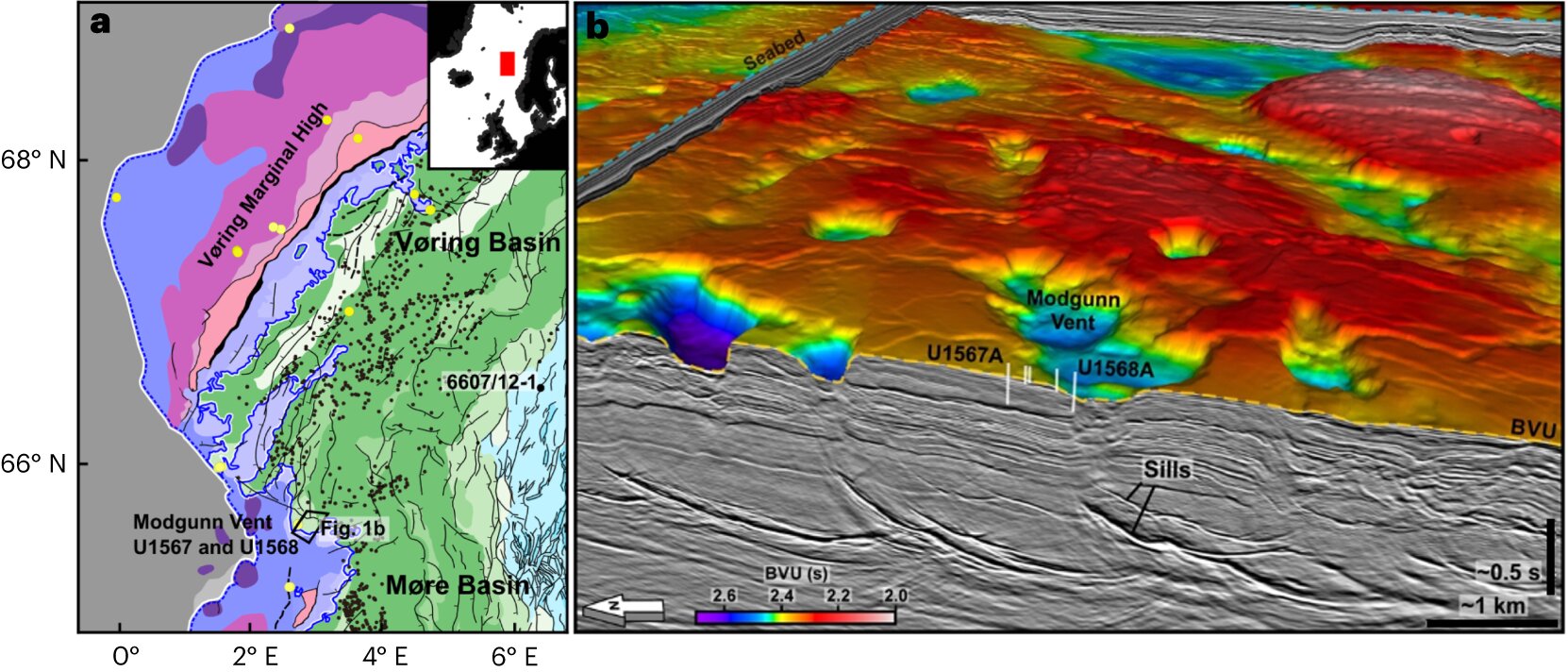
A new study published in Nature Geoscience reveals that volcanic activity 56 million years ago, during the Paleocene-Eocene boundary, released more methane into the atmosphere than previously thought. Researchers collected samples from a large igneous province located between Greenland and Europe, which showed evidence of hydrothermal vents active at shallow depths or even above sea level. This suggests that larger quantities of greenhouse gases, including methane, entered the atmosphere during this period, contributing to global warming and the Paleocene-Eocene Thermal Maximum. The study also highlights the Earth's ability to self-regulate over long time scales but emphasizes the urgency of addressing the current climate crisis.