
Manhattan-Sized Ice Island Calves from Petermann Glacier in Northwest Greenland
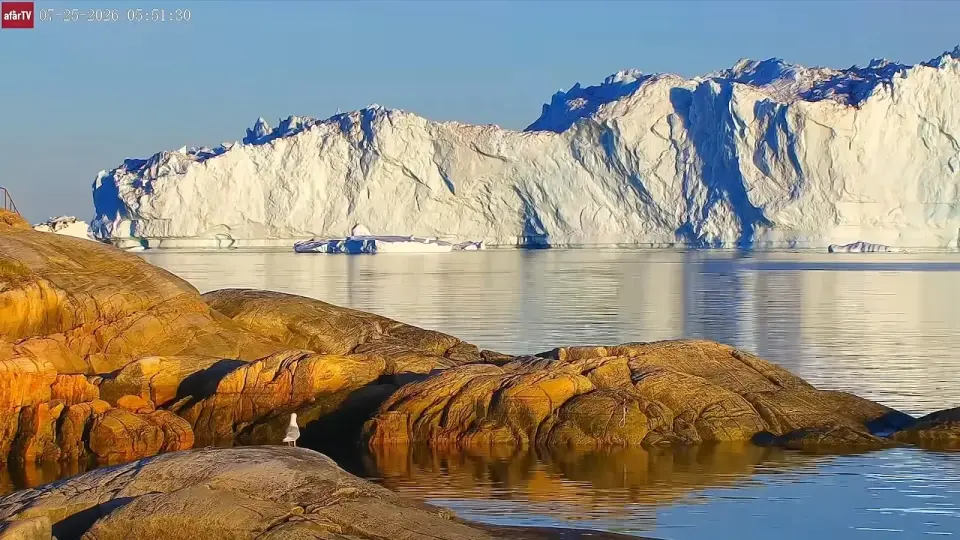
A 76 square kilometer section of floating ice broke away from Petermann Glacier in northwest Greenland on August 4, 2026. This calving event, the largest for the glacier since 2012 and the most significant in the Arctic since 2020, produced a tabular iceberg roughly the size of Manhattan and up to 150 meters thick. European Copernicus Sentinel-1 radar imagery captured the rapid fracture propagation leading to the breakup, which had been anticipated by researchers monitoring the glacier since 2019. While the primary source highlights a separate iceberg capsize in Ilulissat, the secondary sources confirm this major calving event as the dominant scientific development, with potential risks to Arctic shipping routes.
Key points
- A 76 sq km ice island calved from Petermann Glacier on August 4, 2026, marking the largest loss of floating ice since 2012.
- The new iceberg is approximately the size of Manhattan and estimated to be up to 150 meters thick.
- Sentinel-1 radar images from August 3 showed significant deterioration along the ice tongue's centerline before the breakup.
- Researchers from the University of Ottawa, UK universities, and Environment and Climate Change Canada had monitored growing fractures since 2019.
- Two additional ice islands, estimated at 97 and 87 sq km, may detach as existing rifts continue to spread.
- Environment and Climate Change Canada is tracking the iceberg's path to assess risks to Arctic shipping routes and infrastructure.
Background
Petermann Glacier has a documented history of major calving events, producing large ice islands in 2008, 2010, and 2012. Since 2012, its floating ice tongue remained relatively stable aside from smaller calvings. Recent archive coverage from August 2026 noted the presence of icebergs and glaciers during a total solar eclipse expedition in Greenland, highlighting the region's dynamic polar landscape.
How outlets are covering it
Science Daily and the European Space Agency (ESA) emphasize the scientific significance of the calving event, noting it as the largest in the Arctic since 2020 and highlighting the value of Sentinel-1 radar data for monitoring rapid fracture propagation. They stress the rarity of such large tabular icebergs in the Arctic compared to Antarctica. Laughing Squid focuses on a different event, a colossal iceberg flipping over in Ilulissat, which occurred near the UNESCO-listed Ilulissat Icefjord. While both events involve significant ice movements in Greenland, the secondary sources confirm the Petermann Glacier calving as a major, scientifically documented event, whereas the Ilulissat capsize is presented as a visual phenomenon. Space.com's coverage aligns with the scientific focus, highlighting the satellite observation aspect.
Why it matters
This calving event underscores the rapid changes occurring in Earth's polar regions and the potential impacts on sea-level rise and glacier dynamics. The ability to monitor such events in near-real time using satellite radar provides critical data for understanding Arctic climate change. Additionally, the movement of such large ice masses poses practical risks to Arctic navigation and offshore operations, requiring ongoing monitoring by agencies like Environment and Climate Change Canada.
What to watch
Researchers will continue to monitor Petermann Glacier and the newly calved iceberg using satellite imagery, aerial observations, and tracking data. They aim to understand the behavior of large Arctic ice islands and the forces driving the glacier's evolution. Environment and Climate Change Canada will assess the iceberg's trajectory for potential threats to shipping routes. Two additional ice islands may detach as existing rifts continue to propagate.
- A Stunning Timelapse of a Colossal Iceberg Collapsing and Flipping Over in Ilulissat, Greenland Laughing Squid
- A Manhattan-sized ice island just broke free from Greenland Science Daily
- Huge iceberg breaks apart from Greenland's Petermann Glacier The Weather Channel
- Satellite sees Greenland's most significant floating ice loss in over a decade photo of the day for Aug. 24, 2026 Space
- Sentinel-1 captures major ice loss from Greenland glacier European Space Agency
Want the full story? Read the original reporting
Read on Laughing Squid