
Honeybees Aggressively Displace Wild Pollinators in UK Study
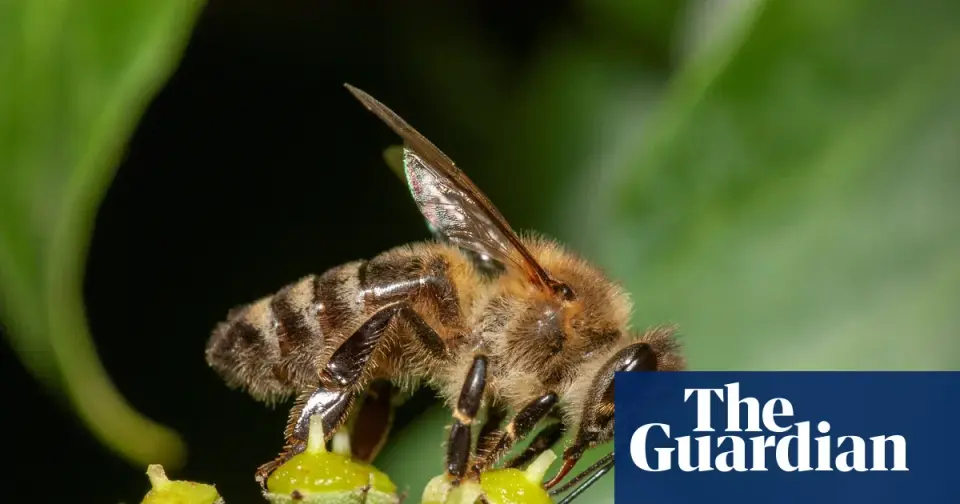
A two-year study in Cambridgeshire reveals that managed honeybees actively outcompete wild pollinators for nectar and pollen through direct physical interference, not just resource depletion. As UK beekeeping numbers surge, this aggressive behavior threatens wild species like bumblebees and hoverflies, particularly in areas with high hive densities or rising temperatures.
Key points
- Researchers from Anglia Ruskin University observed 300 interactions between honeybees and wild pollinators (bumblebees, solitary bees, hoverflies) on bramble and ivy over two years.
- Honeybees won the majority of competitive encounters, often by physically displacing rivals or chasing them away, a behavior termed 'interference competition'.
- Wild pollinators actively avoided honeybees in 28.4% of interactions on bramble and 35.6% on ivy, often leaving without physical contact.
- The only species consistently able to hold its ground against honeybees was the ivy bee, which was observed displacing and chasing honeybees on ivy flowers.
- Higher honeybee densities correlated with fewer wild pollinators; on bramble, double the honeybee density was associated with 14% fewer bumblebees.
- Competitive interactions increased at higher temperatures, likely due to nectar scarcity and plant heat stress, a trend expected to worsen with climate change.
Background
This study adds to ongoing debates about the ecological impact of managed honeybees. Previous research, such as the 2026 Cornell study on solitary bees in Ithaca, New York, highlighted the massive populations of wild pollinators in undisturbed urban spaces, suggesting that managed hives could disrupt these hidden ecosystems. Additionally, a 2026 review paper redefining honeybee colonies as mortal lineages rather than immortal superorganisms has challenged conventional beekeeping practices, potentially influencing how hives are managed to reduce ecological impact. The current findings underscore the need for conservation strategies that consider the competitive dynamics between managed and wild pollinators, especially as climate change intensifies resource scarcity.
How outlets are covering it
The Guardian and UA.NEWS emphasize the aggressive, direct nature of honeybee competition, highlighting physical displacement and chasing as key mechanisms. Earth.com, however, notes that many interactions involved no physical contact, with wild pollinators simply avoiding honeybees, suggesting that the mere presence of honeybees may deter wild species. While all sources agree on the negative impact of high honeybee densities on wild pollinators, Earth.com points out that the study cannot definitively prove causation, as wild insects might avoid patches where honeybees have already depleted resources. The Guardian and UA.NEWS focus on the implications for conservation and beekeeping practices, while Earth.com stresses the need for further research to understand the long-term effects on wild pollinator survival and reproduction.
Why it matters
The findings highlight a critical tension between popular beekeeping initiatives and the conservation of wild pollinators. As honeybee populations grow, they may inadvertently harm wild species that are essential for ecosystem resilience. Understanding these competitive dynamics is crucial for developing effective conservation strategies that protect both managed and wild pollinators, especially in the face of climate change and habitat loss.
What to watch
Researchers call for further studies to determine how wild pollinators can be better protected and how beekeepers can adjust their practices to minimize negative impacts on wild species. This may include monitoring hive densities, promoting diverse flowering plants, and implementing guidelines for sustainable beekeeping. Additionally, more research is needed to understand the long-term effects of competitive interactions on wild pollinator populations and their ecological roles.
- Honeybees are barging aside wild pollinators in hunt for pollen and nectar, study finds The Guardian
- Study: Honey bees are displacing wild pollinators — The Guardian UA.NEWS
- Honeybees push wild pollinators off flowers without even touching them Earth.com
- Ivy bees fight back against honeybees that drive other pollinators off flowers Phys.org
Want the full story? Read the original reporting
Read on The Guardian