
Microscopic Life Discovered Inside Deep-Sea Nodules Raises Mining Concerns
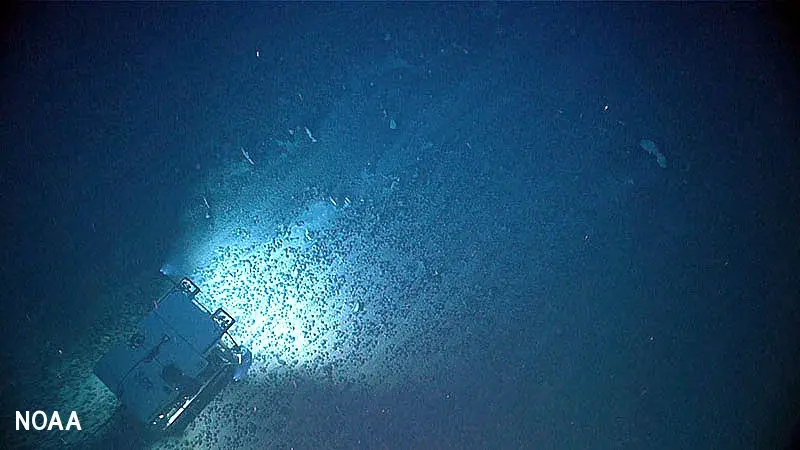
Researchers have discovered that polymetallic nodules in the Pacific Ocean harbor unique communities of microscopic animals within their internal cracks. This finding complicates plans for commercial deep-sea mining, as removing these nodules could destroy habitats that do not exist elsewhere on the seafloor. The discovery arrives as the US moves to approve the first commercial mining permit, bypassing international regulatory delays.
Key points
- A study in Scientific Reports found 4,139 animals across 244 nodules in the Clarion-Clipperton Zone, averaging 17 per nodule.
- The nodules contain species like roundworms, crustaceans, and a protist called Thurammina sp. 1, which are distinct from surrounding sediment communities.
- The US subsidiary of The Metals Company (TMC) expects a commercial recovery permit before the end of Q1 2027, bypassing the International Seabed Authority.
- NOAA found TMC’s application compliant, but must still finalize an environmental impact statement.
- Forty-five countries have called for a moratorium on deep-sea mining, while others like Japan and China continue exploration.
Background
Recent concerns about deep-sea mining have expanded beyond biodiversity to include safety hazards. In October 2026, USGS researchers reported that certain deep-sea sulfide rocks can spontaneously combust when exposed to air, highlighting a significant risk for the emerging industry. This adds to the environmental and logistical challenges facing deep-sea extraction projects.
How outlets are covering it
Oceanographic emphasizes the regulatory bypass by TMC and the US government’s push to counter China’s dominance in critical metals. ScienceAlert highlights the unique nature of the internal habitats, noting that communities in nodules 1,000 kilometers apart are more similar to each other than to nearby sediment. Scientific American focuses on the potential for irreversible biodiversity loss and the lack of responsible mining rules. Nature Today stresses the need for future research to determine if these species can survive elsewhere, underscoring the importance of protecting microscopic life in environmental assessments.
Why it matters
The discovery of unique microscopic life within polymetallic nodules challenges the assumption that protecting sediment habitats is sufficient for deep-sea conservation. As commercial mining approaches, this finding could influence environmental impact assessments and international regulations, potentially leading to stricter protections or moratoriums to prevent irreversible biodiversity loss.
What to watch
NOAA must finalize an environmental impact statement for TMC’s permit. Dr. Tanja Stratmann is leading a new expedition to the Clarion-Clipperton Zone to determine if the loss of these communities could lead to global extinctions. The International Seabed Authority continues to delay rules for commercial recovery, while 45 countries call for a moratorium.
- Tiny animals found living inside deep-sea nodules as US weighs first commercial mining permit Oceanographic Magazine
- Strange 'Metal Potatoes' Contain a Microcosm of Life Not Seen Anywhere Else on The Seafloor, Scientists Find ScienceAlert
- These deep-sea ‘nodules’ are rich in critical minerals—and in ocean life Scientific American
- A crustacean of the species Munidopsis sp. among polymetallic nodules in the Clarion-Clipperton Fracture Zone (CCZ) EurekAlert!
- Tiny marine animals found living inside deep-sea polymetallic nodules Nature Today
Want the full story? Read the original reporting
Read on Oceanographic Magazine