
New 'Permafrost Detachment Slides' Emerge in Canada as Wildfires and Warming Trigger Bottom-Up Thaw
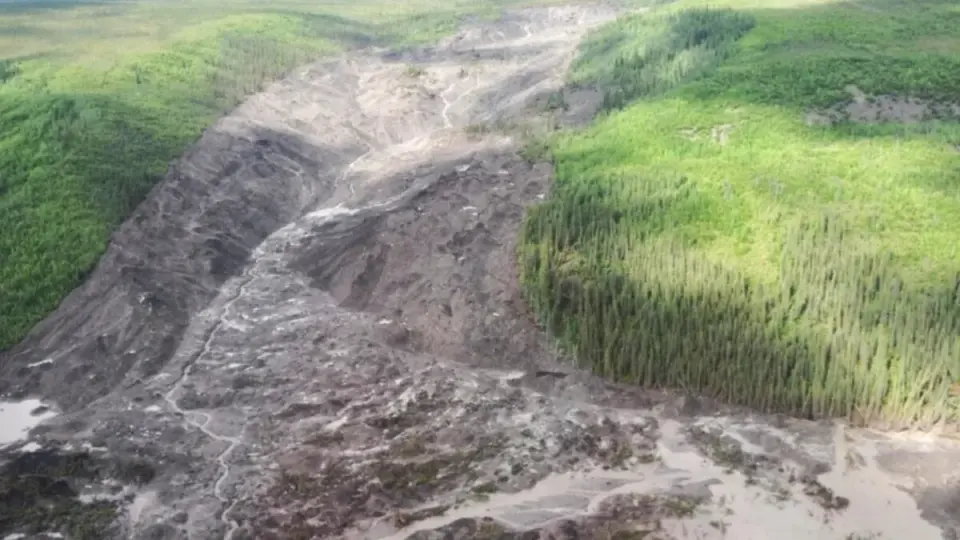
Researchers have identified a novel landslide mechanism in Canada’s Northwest Territories, termed 'permafrost detachment slides.' Unlike typical surface melting, these events involve the rapid downslope movement of large, cohesive frozen blocks. Triggered by a combination of long-term warming and historical wildfires, this phenomenon has occurred over 150 times in the Mackenzie Valley and is expected to increase in frequency as temperatures rise.
Key points
- A new class of landslides, 'permafrost detachment slides,' was identified following massive events in the Johnson River Valley (2017) and Redstone River Valley (2018) in Canada’s Northwest Territories.
- The 2017 event displaced a massive volume of debris, while the 2018 event moved approximately 160 million cubic feet of material, both involving large slabs of frozen ground rather than typical muddy slurry.
- The mechanism involves 'bottom-up' thawing: cracks formed by surface heating allow water to penetrate deep into the permafrost layer, melting the base and causing the entire frozen layer to slide as a cohesive unit.
- The 1995 wildfires in the region likely initiated the process, with water taking approximately 20 years to travel through cracks and reach the base of the permafrost, triggering the 2017 and 2018 events.
- Researchers have identified hundreds of similar potential sites in the Mackenzie Valley where permafrost is less than 131 feet thick and warmer than 30.2 degrees Fahrenheit.
- While no infrastructure has been damaged yet, these landslides have dammed rivers to create new lakes, and the phenomenon is expected to become more common in Canada and Alaska due to climate change.
Background
This development aligns with broader trends of accelerating glacial retreat and record greenhouse gas levels reported in 2025. While previous archive entries noted that human emissions halted a glacial advance that began 2,000 years ago, the current focus is on the immediate destabilization of frozen ground in high-latitude regions. The identification of this new landslide type adds to the growing body of evidence regarding the complex, non-linear impacts of warming on permafrost zones, distinct from the gradual surface melting previously documented.
Why it matters
The emergence of permafrost detachment slides represents a significant shift in how scientists understand the stability of frozen ground. Unlike gradual thawing, which creates surface hazards, these events involve the sudden, large-scale movement of cohesive ice blocks, posing potential risks to infrastructure and altering landscapes through river damming. As climate change intensifies wildfire dynamics and raises temperatures, the frequency of these events is likely to increase, requiring new monitoring and mitigation strategies in vulnerable regions like Canada and Alaska.
What to watch
Researchers expect to observe more frequent permafrost detachment slides in the coming years as temperatures continue to rise and wildfires become larger and more intense. Future events will provide opportunities to further study this emerging hazard and understand its long-term impact on the landscape and infrastructure in permafrost zones.
Want the full story? Read the original reporting
Read on Gizmodo