
New 'Permafrost Detachment' Slides Move Frozen Earth in Canada
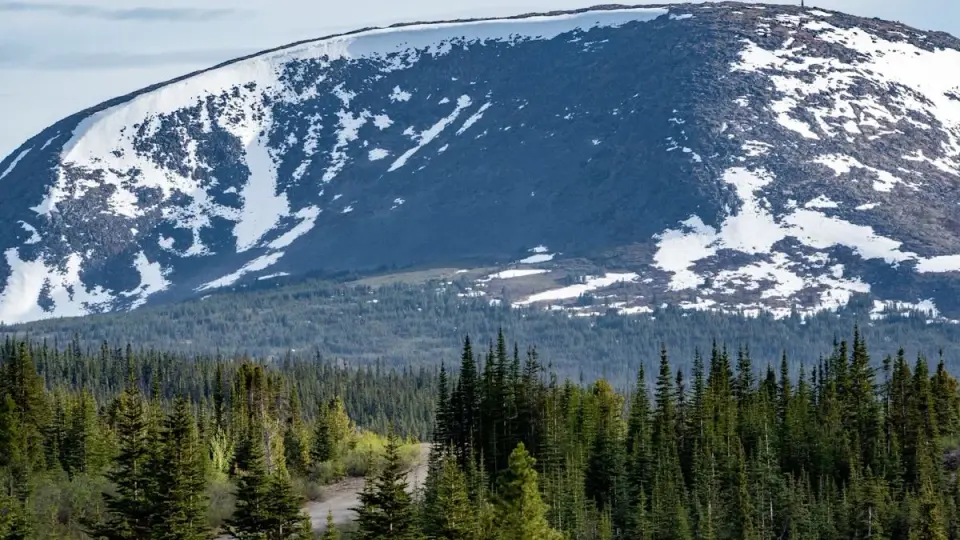
Researchers have identified a new type of landslide in Canada’s Northwest Territories where frozen permafrost detaches from below, triggered by water infiltration and past wildfires.
Key points
- A 2018 landslide in the Mackenzie Valley moved 18 million cubic meters of earth, blocking the Redstone River.
- The 2017 event displaced 4.5 million cubic meters of material in the same region.
- Both events involved large blocks of still-frozen ground moving hundreds of meters downhill.
- The slides initiated at flat surfaces approximately 20 meters underground, at the base of the permafrost layer.
- Satellite data revealed decades of gradual ground movement prior to the catastrophic failures.
- More than 150 similar slides have been identified in the region via satellite observations.
Background
Permafrost, defined as ground frozen for at least two consecutive years, underlies nearly 20% of the Northern Hemisphere’s land surface. Recent global studies indicate that active layer thickness is increasing significantly in Arctic and high-elevation regions, signaling widespread thawing. This broader trend of permafrost degradation poses risks to infrastructure and releases stored carbon, but the specific mechanism of sudden, massive detachment remains a newer area of study.
How outlets are covering it
While all sources agree on the volume and location of the 2017 and 2018 slides, they differ in emphasis. Yahoo News and Science News focus on the novelty of the 'permafrost detachment slide' category, highlighting that the material was still frozen when it moved, which contradicts the typical top-down thawing process. Popular Mechanics provides broader context on the Mackenzie River basin and notes that thawing permafrost is also releasing trapped metals into riverbeds. The University of Montana article, while not directly covering the Canadian slides, supports the global trend by citing a study showing active layer thickness has increased at 55% of Arctic sites, reinforcing the premise that permafrost is destabilizing worldwide. Dmitry Nicolsky, a geophysicist not involved in the primary study, emphasized the uncertainty of how these grounds will move, noting that failure could be slow or catastrophic.
Why it matters
The discovery of permafrost detachment slides indicates that climate change and wildfire history can destabilize frozen ground from below, leading to sudden, large-scale failures rather than gradual erosion. This poses significant risks to infrastructure and communities in permafrost regions, as the ground may fail unpredictably. The phenomenon suggests that past environmental disturbances, such as wildfires decades ago, can have long-term geological consequences, reshaping landscapes and potentially triggering secondary landslides as exposed ice-rich scarps continue to thaw.
What to watch
Researchers are continuing to monitor underground temperatures and use computer simulations to model how ground conditions evolve after wildfires. The goal is to better predict where and when these detachment slides might occur in other regions with thin, warm permafrost layers. Further expansion of long-term monitoring in Antarctica and mountain regions is expected to improve the understanding of regional drivers of permafrost change.
- Canada landslide sent seven Great Pyramids' worth of earth downhill, much of it still frozen Yahoo
- Permafrost Is Thawing From the Inside Out—and It’s Unleashing an Entirely New Kind of Landslide Popular Mechanics
- Melting permafrost has birthed a new type of large landslide Science News
- UM Professor’s Global Study Indicates Widespread Permafrost Degradation University of Montana
- Scientists uncover a troubling pattern beneath Earth’s frozen ground Earth.com
Want the full story? Read the original reporting
Read on Yahoo