
New Studies Confirm Thwaites Glacier Has Crossed Irreversible Tipping Point
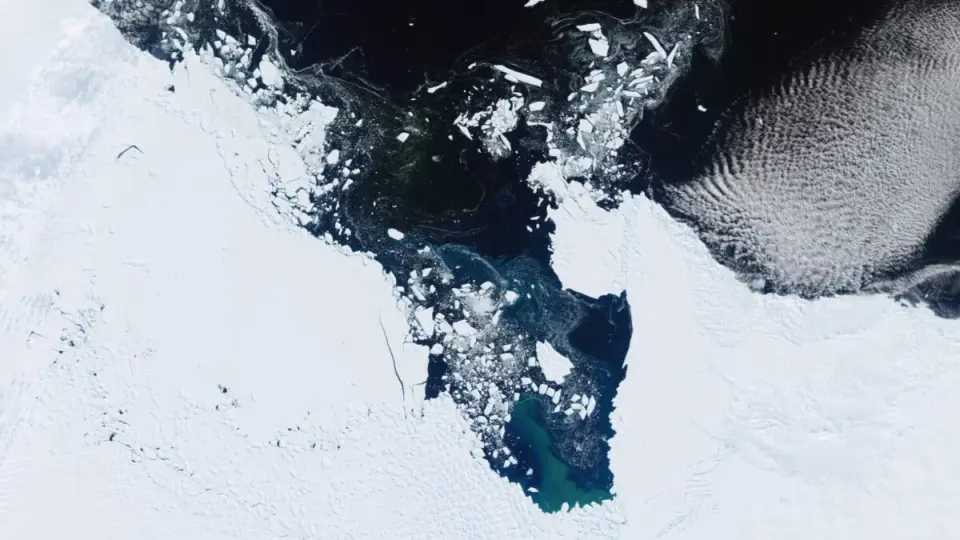
Recent research confirms that Thwaites Glacier, often called the 'doomsday glacier,' has passed a critical threshold where ice loss is now irreversible regardless of future cooling. A study in Nature Communications shows that past natural warm periods caused similar collapses, while new modeling indicates that seawater intrusion beneath the ice could double projected sea-level contributions by 2100. With global temperatures set to overshoot the 1.5-degree Celsius target, scientists warn that the glacier's collapse could eventually destabilize the entire West Antarctic Ice Sheet, raising global sea levels by over three meters.
Key points
- A study published in Nature Communications by the British Antarctic Survey found that Thwaites and Pine Island glaciers repeatedly collapsed during natural warm periods over the last 800,000 years, even when global temperatures were only 1 to 1.5 degrees Celsius warmer than pre-industrial levels.
- New modeling by Poinelli et al. suggests that seawater intrusion beneath the grounded ice of Thwaites Glacier could double its projected contribution to sea-level rise by 2100, reaching approximately 30 millimeters, compared to previous estimates of around 15 millimeters.
- Researchers state that Thwaites Glacier has reached a tipping point where ice loss is committed for the next 150 years and cannot be reversed by cooling the ocean, even if global temperatures are stabilized.
- The complete collapse of Thwaites Glacier would raise global sea levels by 65 centimeters, but it also acts as a barrier holding back the West Antarctic Ice Sheet, which contains enough ice to raise levels by 3.3 to 5.3 meters.
- UN scientists have determined that global average temperatures are set to exceed the 1.5-degree Celsius Paris Agreement target within the next few years, with the 31st UN climate conference in Antalya, Turkey, focusing on pathways to reverse this overshoot.
Background
In October 2026, satellite data indicated that Thwaites Glacier's eastern ice shelf was collapsing and its western shelf had effectively vanished, removing critical structural support and accelerating ice flow into the ocean. This recent structural loss aligns with the new findings that the glacier is now in a state of irreversible retreat. The current situation is part of a broader pattern where West Antarctic ice loss has contributed approximately 3.1 centimeters to global sea levels over the past 47 years, with projections suggesting up to 10 feet of rise if the entire ice sheet disintegrates.
How outlets are covering it
Gizmodo and The Scotsman emphasize the historical inevitability of the glacier's collapse, citing the British Antarctic Survey study that shows past natural warm periods triggered similar retreats. The Scotsman highlights the irreversibility of the tipping point, noting that even if ocean warming stops, Thwaites will continue to lose ice for 150 years. In contrast, The Watchers focuses on the mechanical drivers of this collapse, detailing how new models account for seawater seeping beneath the grounded ice, a process that significantly increases projected sea-level rise. While Gizmodo frames the current warming as an 'interglacial on steroids,' The Watchers provides specific data on how grounding-zone width affects projections, suggesting that the physical process of intrusion is the key variable in accelerating the glacier's demise. All sources agree that the current rate of warming is unprecedented compared to historical natural cycles.
Why it matters
The confirmation that Thwaites Glacier has crossed an irreversible tipping point signals that significant sea-level rise is now a locked-in outcome for future generations. If the glacier collapses, it could trigger the destabilization of the entire West Antarctic Ice Sheet, potentially raising global sea levels by over three meters and rendering many major coastal cities uninhabitable. This development underscores the urgency of the current UN climate negotiations, as the failure to limit warming to 1.5 degrees Celsius is now seen as a certainty rather than a risk, demanding immediate and drastic action on fossil fuel phase-out to mitigate the speed and scale of the resulting sea-level rise.
What to watch
Negotiators at the 31st UN climate conference in Antalya, Turkey, are currently discussing pathways to reverse the projected temperature overshoot, which requires a global commitment to rapidly phase out fossil fuels. Scientists are calling for more in-situ measurements of temperature, salinity, and circulation beneath the ice shelf to better constrain future models. Additionally, researchers are developing more complete ice-ocean circulation models to account for evolving subglacial hydrology and basal friction, which are critical for narrowing the uncertainty in Thwaites Glacier's future contribution to sea-level rise.
- Previous Doomsday Glacier Collapses Are a Warning for the Future Gizmodo
- Seafloor clay reveals past dramatic ice loss in West Antarctica Phys.org
- Repeated loss of the West Antarctic Ice Sheet’s Amundsen Sea sector during late Pleistocene interglacials Nature
- A new model of Antarctica’s Thwaites Glacier that lets seawater seep beneath its grounded ice projects up to about 30 millimeters of sea-level rise by 2100 from that glacier alone, roughly twice the earlier average projection, in a scenario its authors call a lower The Watchers - Watching the world evolve and transform
- As COP climate summit dithers, massive 'Doomsday Glacier' sounds a terrifying warning – Ian Johnston The Scotsman
Want the full story? Read the original reporting
Read on Gizmodo