
New Data Suggests San Andreas Fault Slipping Faster Than Expected
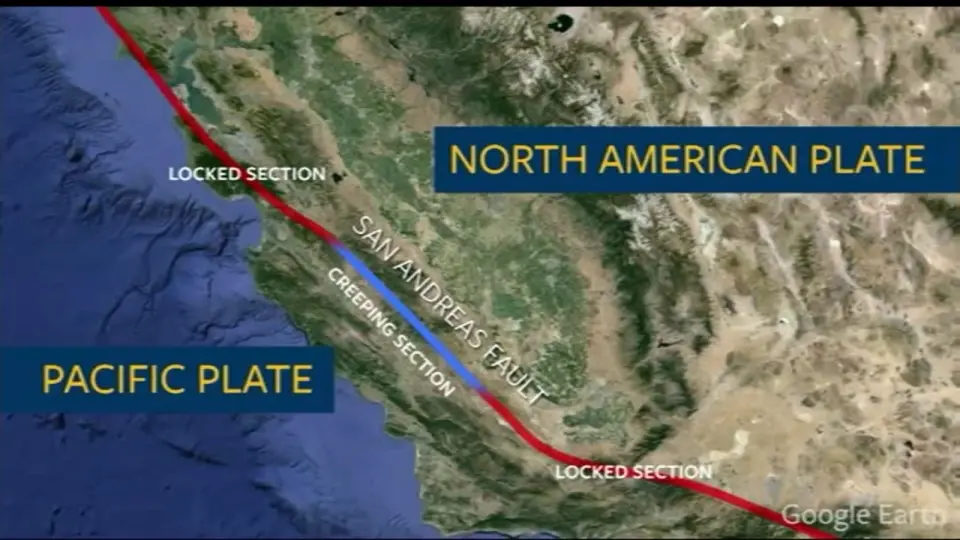
San Jose State University researchers found that the San Andreas Fault is slipping at a constant, higher rate than previously assumed, potentially increasing earthquake frequency. This finding follows a recent 3.9-magnitude quake in the Bay Area and highlights ongoing seismic risks despite decades without a major event.
Key points
- San Jose State University geologist Kim Blisniuk reports that the San Andreas Fault is slipping faster than previously thought, with rates remaining constant over a 10,000-year window.
- The research, conducted at Sanborn County Park, suggests higher slip rates correlate with more frequent and potentially larger earthquakes.
- The Bay Area has not experienced a major earthquake since 1989, but the new data indicates the fault may be more active than models suggested.
- California officials cite over $125 million in investments for earthquake early warning and infrastructure, though experts warn that aging water systems and building codes may still lead to significant damage.
- The study has not yet been peer-reviewed or published, but it aligns with other recent findings regarding stress levels on the fault.
Background
This development follows earlier research in July 2026 that used AI to identify slow-slip events along the San Andreas Fault near Parkfield, suggesting these events contribute to stress accumulation. Additionally, a June 2026 study from the University of Hawaii found that the southern portion of the fault northeast of Los Angeles is experiencing stress levels not seen in 1,000 years. These findings add to a growing body of evidence that the fault system may be more active than previously modeled.
How outlets are covering it
ABC7 Los Angeles and The Inertia focus on the new findings from San Jose State University, emphasizing that higher slip rates could lead to more frequent earthquakes. Daily Signal provides a broader perspective on California’s preparedness, noting that while the state has invested in early warning systems and infrastructure, experts like Caltech seismologist Allen Husker warn that even well-prepared regions can suffer significant damage, especially from smaller quakes occurring directly under populated areas. Noticias Ambientales, while primarily focused on dynamic activation of faults by seismic waves, does not directly address the slip rate findings but highlights the complex interactions within the fault system. The sources generally agree on the increased risk but differ in emphasis: some focus on the scientific data, while others highlight the practical challenges of preparedness and infrastructure vulnerability.
Why it matters
Understanding the slip rate of the San Andreas Fault is crucial for predicting earthquake frequency and magnitude. If the fault is indeed slipping faster than previously thought, it could mean that the Bay Area and other regions along the fault are at higher risk for significant seismic events. This has direct implications for urban planning, infrastructure investment, and public safety measures. The finding also underscores the need for continued research and preparedness, as the consequences of a major earthquake could be devastating in terms of both human life and economic damage.
What to watch
The research from San Jose State University is expected to be published and peer-reviewed in the coming months, which will provide more detailed insights into the slip rates and their implications. California officials are likely to continue investing in earthquake preparedness, including early warning systems and infrastructure upgrades. Experts may also call for further studies to assess the vulnerability of aging water systems and building codes. Public awareness campaigns may increase to encourage residents to prepare for potential earthquakes, including having emergency kits and understanding evacuation procedures.
- San Andreas Fault: New San Jose State University research finds fault is slipping faster than previously thought ABC7 Los Angeles
- San Andreas Fault just south of Bay Area is slipping faster than previously thought, geologist says San Francisco Chronicle
- San Andreas Fault Could Shake Northern California Sooner Than Scientists Thought The Inertia
- The ‘Big One’ Is Coming: Is California Ready for the Next Major Earthquake? Daily Signal
- Dynamic activation: how seismic waves can trigger movements in the San Andreas Fault from afar Noticias Ambientales
Want the full story? Read the original reporting
Read on ABC7 Los Angeles