
Study: Fossil Fuel Emissions Reversed a 2,000-Year Glacial Advance
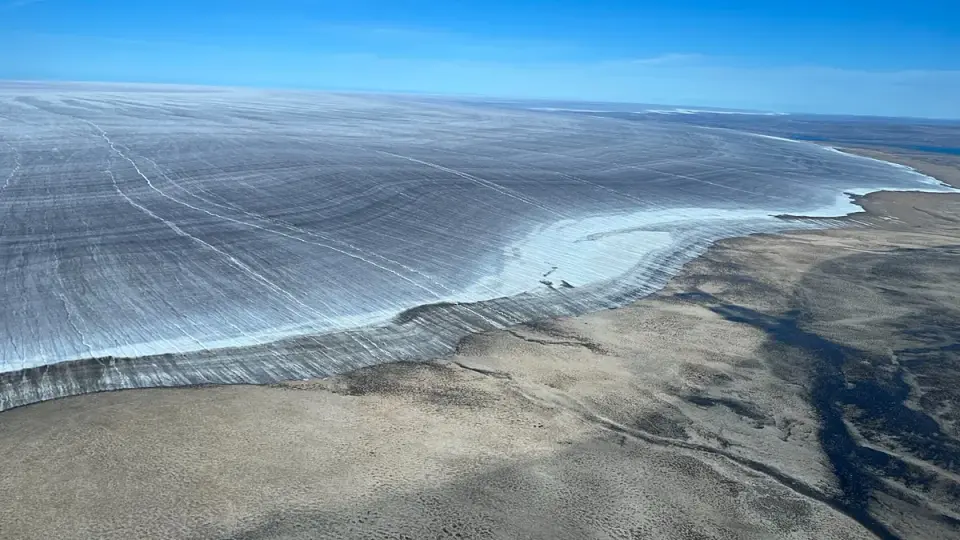
A new study in the journal Science argues that human-driven climate change halted the onset of a new ice age. Researchers found that the Barnes Ice Cap in Canada began expanding 2,000 years ago, signaling a glacial period, but reversed course in the 1960s due to rising temperatures. While some scientists dispute the timing, the findings highlight how human activity has disrupted natural climate cycles.
Key points
- The study focuses on the Barnes Ice Cap, the last remnant of the massive Laurentide Ice Sheet, which covered North America from 95,000 to 20,000 years ago.
- Researchers used carbon-14 dating of vegetation and beryllium-10 analysis of rocks to reconstruct the ice cap's history.
- Data shows the ice cap reached its minimum size 3,000 years ago and began expanding 2,000 years ago, marking the start of a new glacial period.
- By the 1960s, warming summers caused the ice cap to shrink, reversing the glacial trend.
- Lead author Nicolás Young states that this reversal was caused by anthropogenic warming, effectively 'jolting the system' out of balance.
- The study challenges previous models that predicted the next ice age would not begin for 50,000 years.
Background
This story follows earlier coverage in October 2026 that highlighted the same study's findings. Previous reports emphasized the 'aborted' nature of the ice age and the debate among scientists regarding the definition of a glacial period's onset. The current briefing synthesizes these reports with new details from Euronews, CNN, ScienceAlert, and Yale E360, focusing on the specific dating methods and the implications for future climate cycles.
How outlets are covering it
Euronews and CNN emphasize the dramatic nature of the finding, quoting Nicolás Young's description of the ice cap's sudden stop. CNN notes the controversy surrounding the 1970s 'Cooling World' hypothesis, which Young now supports. ScienceAlert provides technical detail on the dating methods, specifically mentioning beryllium-10 and carbon-14, and notes the Little Ice Age context. Yale E360 highlights the challenge to previous models. CNN also includes dissenting views from Andrey Ganopolski and Meredith Kelly, who argue that the evidence is insufficient to confirm a full ice age had begun and that other regions should be compared. Euronews notes that the melting of the Barnes Ice Cap could alter future glacial dynamics, potentially even triggering a new ice age in Europe if the cooling feedback is lost, though this is speculative.
Why it matters
The study provides concrete evidence that human activity has disrupted natural climate cycles, potentially delaying or preventing future glacial periods. It challenges the assumption that the next ice age is decades away and highlights the profound impact of fossil fuel emissions on Earth's systems. The findings also have implications for understanding future climate dynamics, as the loss of the Barnes Ice Cap could alter feedback mechanisms that influence global cooling.
What to watch
Researchers will continue to monitor the Barnes Ice Cap and other glaciers to understand the long-term impacts of its disappearance. The study may prompt further research into the mechanisms of glacial onset and the role of human activity in disrupting natural climate cycles. It may also influence public discourse on climate change, providing a tangible example of how human activity has altered Earth's systems.
- Did climate change stop the onset of a new ice age? Euronews.com
- Humans accidentally canceled the next ice age — but it’s no reason to celebrate, scientists say CNN
- Climate Change Appears to Have Stopped The Next Ice Age ScienceAlert
- Human-Driven Warming May Have Halted the Onset of a New Ice Age Yale E360
- An Earth-saving benefit of global warming?: How fossil fuel-burning humans stopped the looming Ice Age Genetic Literacy Project
Want the full story? Read the original reporting
Read on Euronews.com