Tag

Laurentide Ice Sheet

All articles tagged with #laurentide ice sheet

science17 days ago

Study: Human Emissions Halted a Glacial Period That Began 2,000 Years Ago

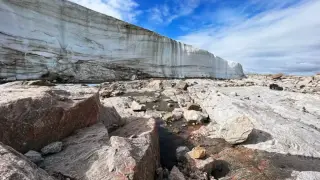
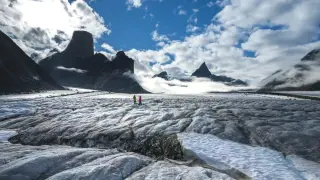
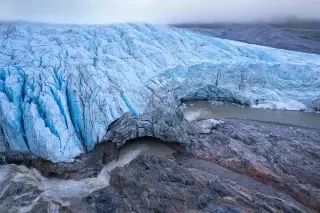
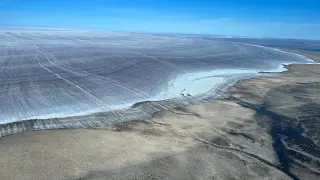
Researchers at Columbia University argue that human-driven warming abruptly stopped the onset of a new glacial period that had begun approximately 2,000 years ago. By analyzing the Barnes Ice Cap in Canada, they found that rising greenhouse gas concentrations caused the ice to retreat by 1960, effectively ending the natural cycle of re-glaciation.
Columbia Study: Greenhouse Gases Aborted a New Ice Age in 1960
science21 days ago

Columbia Study: Greenhouse Gases Aborted a New Ice Age in 1960

Researchers at Columbia University have identified 1960 as the year human-induced warming halted the onset of a new glacial period that had begun 2,000 years ago. By analyzing the Barnes Ice Cap in Canada, the team found that rising greenhouse gas concentrations caused the ice to lose mass in summer, effectively ending the next ice age before it could fully develop. This finding challenges the conventional timeline of Earth's current interglacial period and highlights the profound impact of anthropogenic climate change on natural geological cycles.

Study: Fossil Fuel Emissions Reversed a 2,000-Year Glacial Advance
science-and-environment23 days ago

Study: Fossil Fuel Emissions Reversed a 2,000-Year Glacial Advance

A new study in the journal Science argues that human-driven climate change halted the onset of a new ice age. Researchers found that the Barnes Ice Cap in Canada began expanding 2,000 years ago, signaling a glacial period, but reversed course in the 1960s due to rising temperatures. While some scientists dispute the timing, the findings highlight how human activity has disrupted natural climate cycles.

Fossil Fuels Aborted the Next Ice Age, Which Began 2,000 Years Ago
science26 days ago

Fossil Fuels Aborted the Next Ice Age, Which Began 2,000 Years Ago

A new study in Science argues that human-driven warming halted the onset of a new ice age. Researchers found that the Barnes Ice Cap in Canada began expanding 2,000 years ago, signaling a glacial period, but reversed course in the 1960s due to rising greenhouse gas emissions. While some scientists dispute the timing, the findings highlight how human activity has disrupted natural climate cycles.

Study: Human Emissions Aborted the Next Ice Age, Which Began 2,000 Years Ago
science28 days ago

Study: Human Emissions Aborted the Next Ice Age, Which Began 2,000 Years Ago

A new study in Science argues that human greenhouse gas emissions halted the onset of a new ice age. Researchers found that the Barnes Ice Cap in Canada began expanding 2,000 years ago, signaling a glacial period, but reversed course in the 1960s due to warming. While some scientists dispute the timing, the findings highlight how human activity has disrupted natural climate cycles.

Fossil Fuels Halted a Glacial Rebound That Began 2,000 Years Ago
science-and-environment28 days ago

Fossil Fuels Halted a Glacial Rebound That Began 2,000 Years Ago

A new study in Science argues that human-driven warming abruptly reversed the natural regrowth of the Barnes Ice Cap in the 1960s, effectively canceling the onset of the next ice age. Researchers used ancient plant remains and rock isotopes to show that the last remnant of the massive Laurentide Ice Sheet began expanding roughly 2,000 years ago but started shrinking as fossil fuel emissions rose. While some experts question whether this single site proves a global glacial inception, the findings suggest anthropogenic climate change has fundamentally altered Earth’s natural orbital cycles, potentially delaying future glaciations for millennia.

Fossil Fuels Halted a 2,000-Year Ice Age Trend
science1 month ago

Fossil Fuels Halted a 2,000-Year Ice Age Trend

A new study in Science confirms that the Barnes Ice Cap, the last remnant of the Laurentide Ice Sheet, began re-expanding approximately 2,000 years ago, signaling the start of a new glacial period. However, this natural cooling trend reversed in the 1960s due to rising carbon emissions. Researchers used preserved vegetation and rock dating to confirm that human-caused warming halted the ice sheet's growth, effectively preventing the onset of a new ice age.

Fossil Fuel Emissions Reversed a 2,000-Year Ice Age Trend
science1 month ago

Fossil Fuel Emissions Reversed a 2,000-Year Ice Age Trend

A new study published in Science indicates that the Barnes Ice Cap, the final remnant of the Laurentide Ice Sheet, began expanding approximately 2,000 years ago, signaling the start of a new glacial period. However, this natural cooling trend reversed in the 1960s due to rising carbon emissions. Researchers used preserved vegetation and rock dating to confirm that human-caused warming halted the ice sheet's growth, effectively preventing the onset of a new ice age.

Canada’s gravity puzzle: mantle dynamics take the lead over ice rebound
science5 months ago

Canada’s gravity puzzle: mantle dynamics take the lead over ice rebound

GRACE satellite data show that the Hudson Bay gravity low cannot be explained by glacial rebound alone; older ice-sheet models account for only about 25–45% of the anomaly, leaving a substantial portion attributed to deep mantle structure and slow convection beneath Laurentia. The mantle’s buoyancy and deep-root dynamics, not surface ice history, appear to shape the regional gravity field, though quantifying the split depends on rebound modeling and longer observation records from GRACE Follow-On.

Tiny Arctic lake slices Canada's oldest ice cap, seen from space
space7 months ago

Tiny Arctic lake slices Canada's oldest ice cap, seen from space

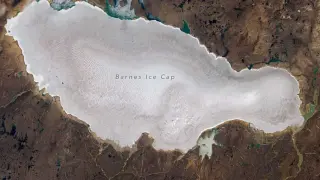
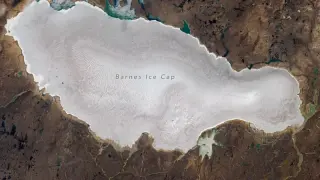
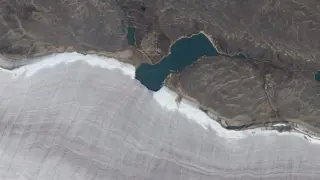
A 2010 NASA Earth Observatory image shows Gee Lake bending across the snowy rim of the Barnes Ice Cap on Baffin Island, the last remnant of Canada’s ancient Laurentide Ice Sheet. The roughly 3.2-kilometer lake sits at the edge of a glacier up to 500 meters thick, where meltwater has carved grooves that appear as ridges across the ice. The Barnes Ice Cap, exposed in this scene as snow-free at the edge, dates back about 20,000 years and is shrinking like other Arctic glaciers due to warming temperatures; a 2017 study estimated most of the ice could disappear within about 300 years. The image illustrates how small melt lakes and glacial dynamics shape this ancient landscape and how the Laurentide legacy continues to influence oceans and sea-level rebound today.