
Microplastics Generate Reactive Oxygen Species at Water Interfaces, Challenging Plastic Inertness Paradigm
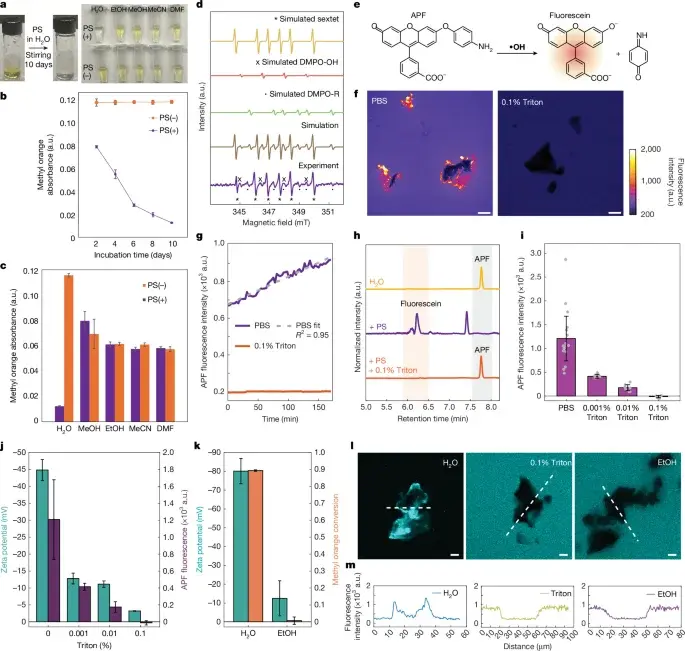
A new study in Nature reveals that microplastics are not chemically inert but actively generate reactive oxygen species (ROS) when in contact with water. This intrinsic physicochemical activity, driven by hydrophobicity and interfacial electrostatics, may explain how microplastics cause cellular damage, protein aggregation, and inflammation in the human body.
Key points
- Microplastics generate hydroxyl radicals spontaneously at water interfaces, with activity increasing as surface hydrophobicity rises.
- The mechanism involves partial solvation and electrostatic effects that lower the energy barrier for radical formation, similar to microdroplet chemistry.
- This activity leads to biomolecular adsorption, protein aggregation, and cellular damage, such as hemolysis in red blood cells.
- The findings challenge the long-held assumption that plastics are chemically inert and provide a potential mechanism for microplastic-related health risks.
- The study suggests that surface-water interactions should be considered in the design of safer and more sustainable plastic materials.
Background
Previous research has linked microplastics to various health issues, including cardiovascular problems, neurological diseases, and cancer, but the molecular mechanisms remained unclear. This study builds on earlier findings that microplastics can cause inflammation and oxidative stress, providing a concrete chemical explanation for these effects.
How outlets are covering it
NBC News and Scientific American highlight the study's potential to explain how microplastics damage the body, emphasizing the generation of reactive molecules. The Jewish News of Northern California focuses on practical steps to reduce microplastic exposure, such as using glass containers and avoiding plastic cookware. The Nature article provides the detailed scientific basis, including ab initio calculations and molecular dynamics simulations, that support the findings.
Why it matters
Understanding the intrinsic physicochemical activity of microplastics at water interfaces is crucial for assessing their health and environmental risks. This knowledge can inform the development of safer plastic materials and strategies to mitigate microplastic exposure.
What to watch
Further research is needed to connect fundamental interfacial chemistry with quantitative measurements of biological effects in humans. This will help better understand the potential health risks of microplastics and guide the design of safer materials.
- Intrinsic physicochemical activity at microplastic–water interfaces Nature
- How exactly do microplastics damage the body? New research offers an answer NBC News
- Microplastics are linked to inflammation—scientists might have finally worked out why Scientific American
- Microplastics are chemically active and could cause biological harm Phys.org
- How to protect yourself from ubiquitous microplastics The Jewish News of Northern California
Want the full story? Read the original reporting
Read on Nature