
SRSF1 Gene Overexpression Slows Aging in Mice and Rejuvenates Cells Without Erasing Identity
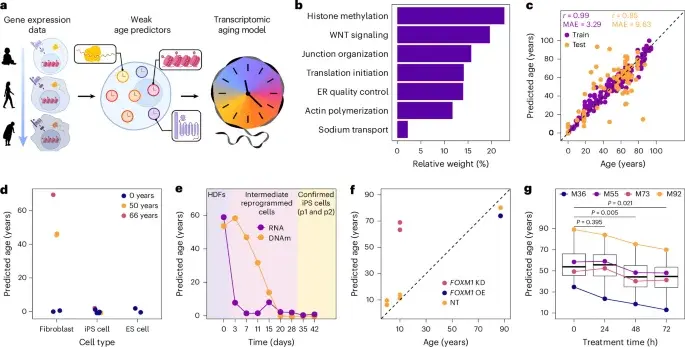
Researchers at Harvard and CIC bioGUNE identified SRSF1, an RNA splicing factor, as a potential anti-aging target. Using a new transcriptomic age predictor, they found that overexpressing SRSF1 in aged human fibroblasts restored youthful gene expression without causing loss of cell identity or pluripotency. In aged mice, liver-targeted delivery of SRSF1 via adeno-associated virus reduced frailty progression by 44% and extended median lifespan by 14%, suggesting systemic benefits from a single organ intervention.
Key points
- A machine learning model trained on 464 human fibroblast samples was developed to predict biological age based on gene expression, offering a scalable alternative to epigenetic clocks for screening rejuvenation candidates.
- SRSF1 was identified through a cDNA overexpression screen as the factor that most effectively shifted aged cells toward a youthful transcriptomic state while preserving cellular identity, unlike Yamanaka factors which risk cancer and identity loss.
- In vitro, SRSF1 induction reduced senescence, proteostatic stress, and inflammatory signaling, and restored DNA repair programs in aged human skin cells.
- In vivo, inducible SRSF1 expression in the livers of aged mice slowed frailty progression by 44% and increased median lifespan by 14%, with benefits observed systemically despite localized delivery.
- The study highlights SRSF1 as a conserved geroprotective target, though clinical application requires further development of safe delivery systems and dosing strategies.
Background
This research builds on the 2006 discovery of Yamanaka factors, which can reprogram cells to a pluripotent state but carry risks of cancer and loss of cellular identity. Recent debates in the field, as noted in our September 2026 coverage, emphasize the need for functional metrics beyond molecular biomarkers to define aging reversal. The current study addresses these concerns by demonstrating that SRSF1 rejuvenates cells without erasing their specialized functions, offering a safer alternative to full reprogramming. It also aligns with broader efforts to identify single-gene interventions that can extend healthspan, similar to recent findings on Lsp2 in fruit flies.
How outlets are covering it
Nature and Bioengineer.org emphasize the novelty of using a transcriptomic age predictor to screen for rejuvenation factors, highlighting SRSF1's ability to reverse aging hallmarks without compromising cell identity. Bioengineer.org notes the potential for tissue-specific gene therapy, while Nature focuses on the mechanistic insights into RNA splicing. 매금경제 (Maeil Kyungje) frames the discovery as an AI-driven breakthrough, stressing the 44% reduction in frailty and 14% lifespan extension in mice, but cautions that human application requires advanced delivery technologies. All sources agree on the significance of SRSF1 as a geroprotective target but differ in emphasis: Nature and Bioengineer.org focus on the methodological innovation and safety profile, while 매금경제 highlights the practical implications for aging intervention.
Why it matters
Identifying SRSF1 as a single-gene target for aging reversal offers a potential pathway to safer, more controllable anti-aging therapies compared to Yamanaka factors. The ability to rejuvenate cells without losing their identity reduces the risk of cancer and functional disruption, addressing a major barrier in reprogramming-based interventions. If translated to humans, this could lead to treatments that extend healthspan and improve quality of life in older adults, potentially reducing the burden of age-related diseases.
What to watch
Researchers will continue to investigate the mechanisms by which SRSF1 influences alternative splicing and downstream rejuvenation pathways. Further studies are needed to optimize delivery systems, such as adeno-associated viruses, for targeted tissue-specific expression in humans. Clinical trials may eventually assess the safety and efficacy of SRSF1-based interventions in aging populations, with a focus on functional outcomes and long-term healthspan extension.
- Transcriptomic reprogramming screen identifies SRSF1 as a regulator of aging Nature
- Reversing age by reprogramming gene expression networks Medical Xpress
- New Screening Platform Helps Identify Genes With Tissue-Rejuvenation Potential Harvard Medical School
- Scientists Reverse Aging in Cells and Mice With a Single Gene Bioengineer.org
- A new gene has been discovered that uses artificial intelligence (AI) to slow aging. Old mice admini.. 매일경제
Want the full story? Read the original reporting
Read on Nature