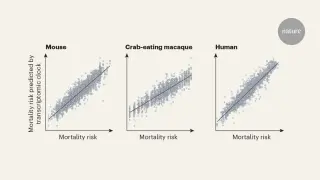
Nature News & Views describes Tyshkovskiy et al.’s cross-tissue, cross-species transcriptomic model that estimates chronological age and predicts mortality from RNA data across four mammalian species, revealing universal ageing hallmarks and potentially accelerating anti-ageing interventions.
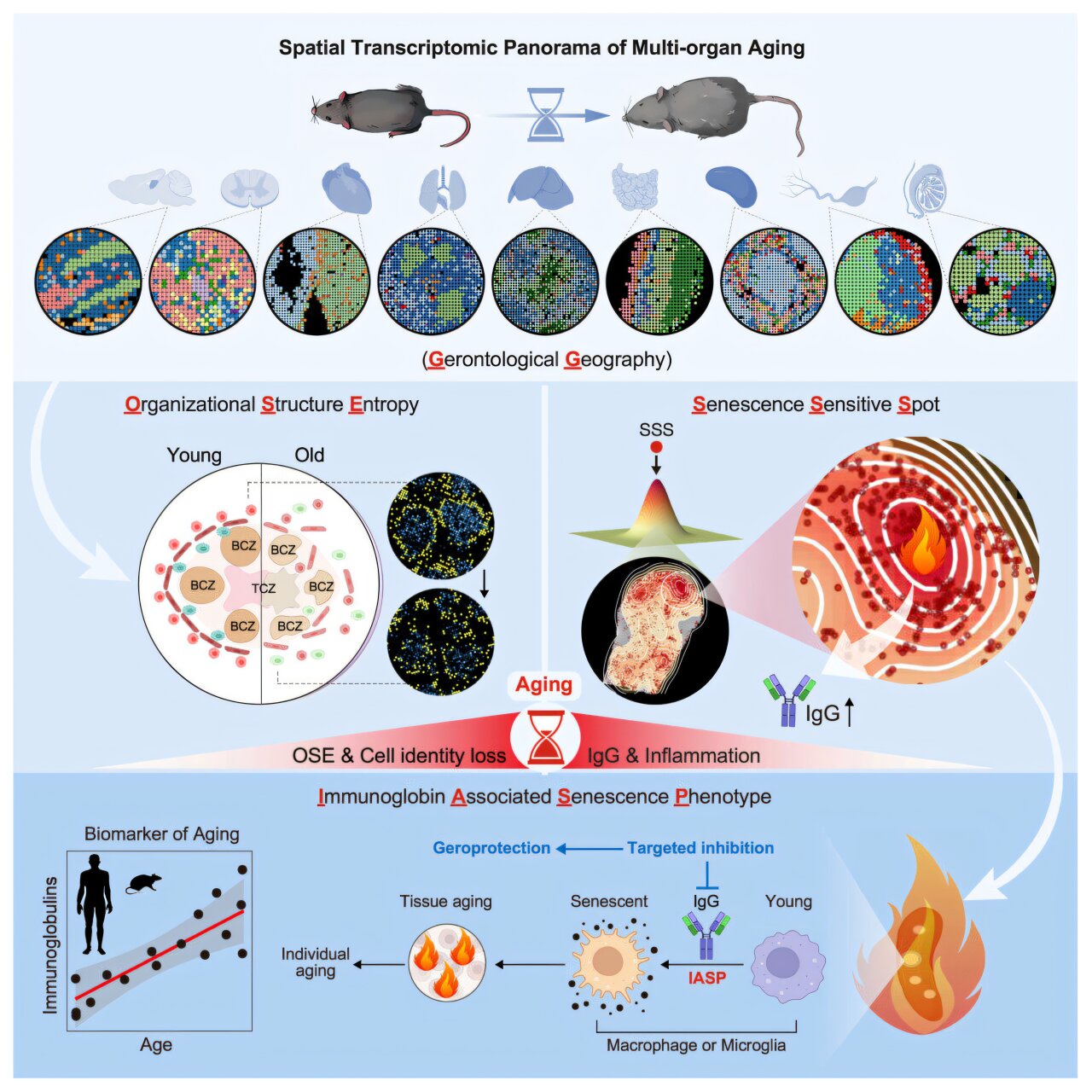
Scientists from the Chinese Academy of Sciences and BGI Research have discovered that immunoglobulins play a dual role in the aging process, potentially reshaping our understanding of aging. By creating high-precision spatial transcriptomic maps of nine organs in mice, the study identified immunoglobulin G (IgG) as a key driver of aging, which accumulates in tissues and induces aging effects. The research suggests IgG levels could serve as biomarkers for aging and introduces an intervention using antisense oligonucleotides to reduce IgG and delay aging.
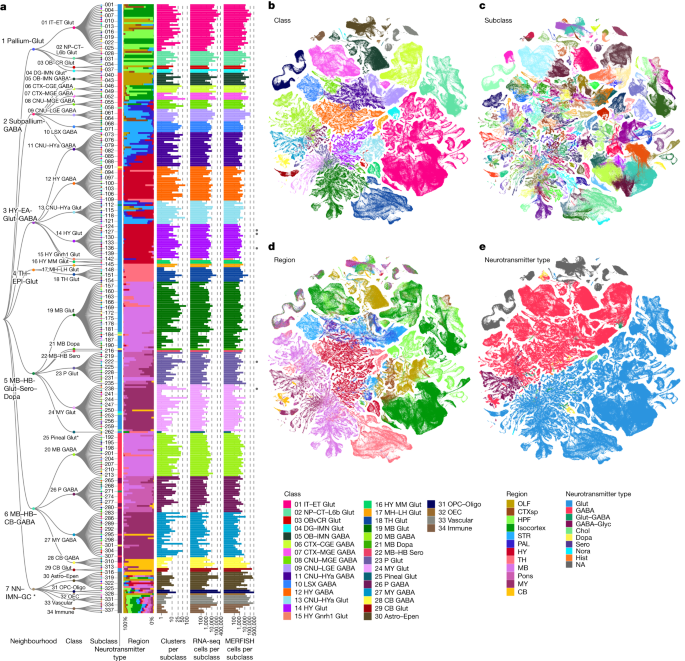
Scientists have created a comprehensive and high-resolution transcriptomic and spatial atlas of cell types in the entire adult mouse brain. Using single-cell RNA sequencing and spatial transcriptomics analysis, they identified 34 classes, 338 subclasses, 1,201 supertypes, and 5,322 clusters or types of cells in the mouse brain. The atlas provides detailed information about the molecular and anatomical properties of different cell types, allowing researchers to study the relationships between cell types and their spatial distribution in the brain. The data is available through the Allen Brain Cell Atlas, an online platform that enables researchers to explore and analyze the cell types in the mouse brain.
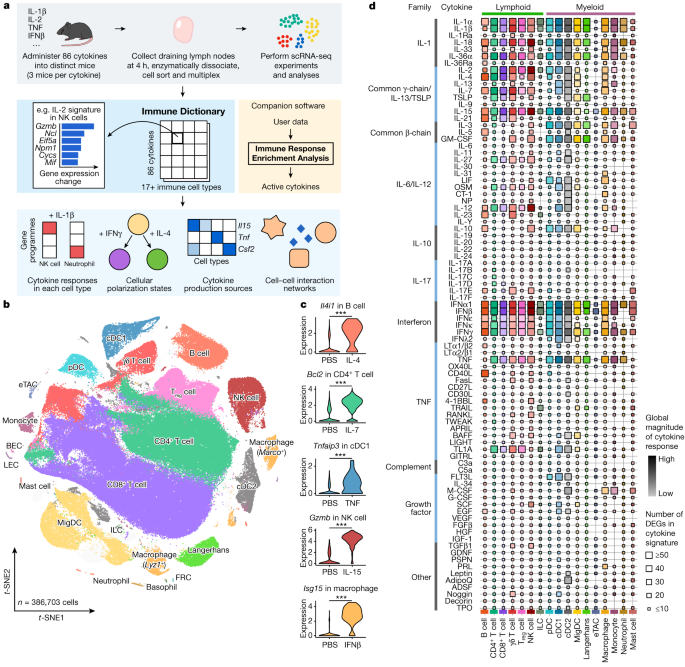
Researchers have created a comprehensive dictionary of immune responses to cytokines at single-cell resolution. Using single-cell transcriptomic analysis, they profiled the responses of more than 17 immune cell types to 86 different cytokines in mouse lymph nodes. The study revealed cell-type-specific gene expression changes and identified distinct polarization states induced by cytokines in each cell type. The findings provide a molecular map of immune responses to cytokines and shed light on the complex interactions between cytokines and immune cells.
Researchers at EPFL and TU Dresden have discovered new insights into the limb regeneration abilities of axolotls, challenging previous assumptions. By creating an atlas of single-cell transcriptomes from multiple species, including humans and axolotls, the study revealed that axolotls have cells with characteristics similar to those essential for limb development in other species. However, the study also found that axolotls do not fully reform apical-ectodermal-ridge (AER) cells during limb regeneration, suggesting a unique approach to limb regrowth. These findings open up new possibilities for exploring limb regeneration strategies in mammals, including humans.