
Félicette’s 1963 Space Flight: A Brief Journey with a Tragic End
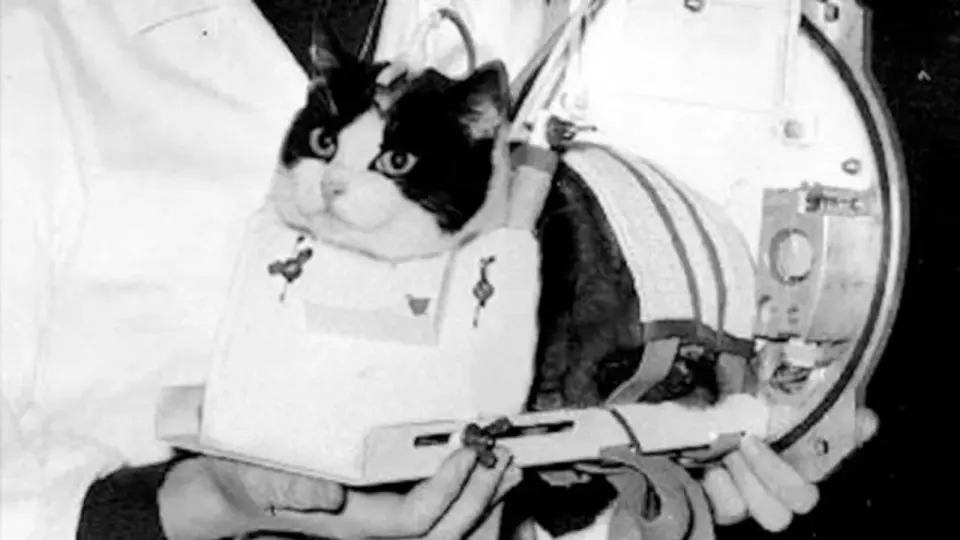
On October 18, 1963, a French cat named Félicette became the first feline to travel to space, reaching an altitude of over 150 kilometers. Although she survived the brief flight and returned safely via parachute, she was euthanized two months later for brain analysis.
Key points
- Félicette, designated C341, was selected from 14 cats for her calm temperament after months of training in special harnesses.
- Launched on a Véronique rocket, she reached an altitude of 150 kilometers, experiencing five minutes of weightlessness, though not enough to achieve orbit.
- Brain-scanning electrodes monitored her neuron activity during the flight, showing she remained calm and composed.
- She was recovered by helicopter and appeared to return to normal behavior, but was euthanized two months later to study her brain.
- Her mission is commemorated by postcards, stamps, and a statue at the International Space University in Strasbourg.
Background
Our archive notes that Félicette was a stray tuxedo cat launched by France, and that a subsequent failed cat launch led France to shift its animal research focus to monkeys. This 1963 mission was part of a broader history of animal testing in space, which began with fruit flies in 1947 and included various species like monkeys, dogs, and mice, many of whom did not survive their missions.
Why it matters
Félicette’s flight provided early data on how spaceflight affects biological systems, contributing to our understanding of muscle atrophy and cardiovascular changes in space. While animal testing has evolved, it remains relevant for developing future space habitats and colonies that will require flora and fauna.
What to watch
Researchers continue to study how to strengthen the human heart for potential long-duration missions, such as to Mars, building on foundational knowledge from early animal experiments like Félicette’s.
Want the full story? Read the original reporting
Read on Nautilus