
First Footage of Dolphin 'Shelling' Tool Use Captured in Queensland
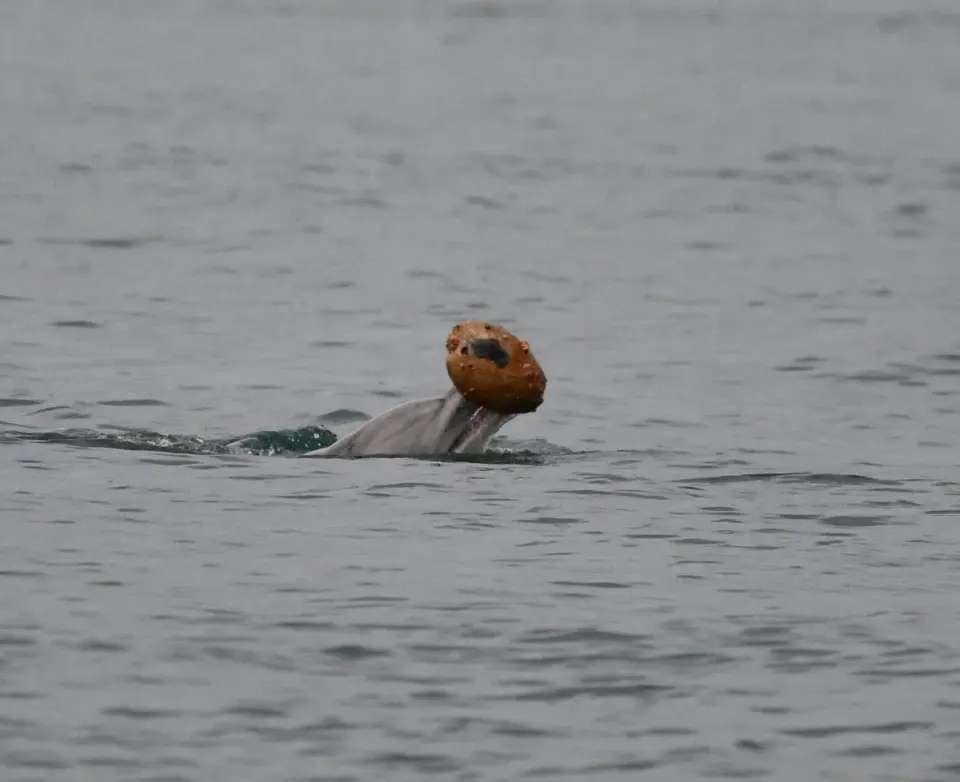
Researchers from the University of the Sunshine Coast have documented the first video evidence of Indo-Pacific bottlenose dolphins using large seashells as hunting tools in Queensland, Australia. The footage, recorded in the Great Sandy Marine Park, shows dolphins employing a technique known as 'shelling' to catch fish. This discovery marks the second confirmed location for this behavior globally and provides the first potential evidence of mothers teaching this skill to their calves, challenging previous assumptions about how dolphins learn tool use.
Key points
- The University of the Sunshine Coast (UniSC) team recorded two instances of 'shelling' by Indo-Pacific bottlenose dolphins (Tursiops aduncus) off Hervey Bay, Queensland, in July and October 2025.
- Shelling involves dolphins chasing fish into large, empty gastropod shells (specifically the bailer shell, Melo amphora), lifting them to the surface, and shaking them to drain the fish into their mouths.
- This is the first published video record of shelling on Australia's east coast; the only prior evidence was photographic data from Shark Bay in Western Australia, which lacked video confirmation.
- In one October 2025 incident, a mother dolphin named Maserati and her calf, Bentley, were observed performing the behavior in sequence, suggesting vertical social transmission or maternal teaching.
- The findings were published in the journal Marine Mammal Science on August 8, 2026, highlighting the cognitive complexity and cultural transmission of tool use in cetaceans.
Background
While our archive contains no prior coverage of dolphin tool use, the discovery adds to a broader scientific interest in animal cognition and cultural transmission. The behavior parallels other documented tool uses in marine mammals, such as humpback whales using seaweed, but shelling is distinct in its reliance on external objects to manipulate prey. The study expands the known geographic range of this behavior from Western Australia to Queensland, suggesting a wider distribution than previously thought.
How outlets are covering it
Both Discover Wildlife and Sci.News report the core findings from the same UniSC study, but they emphasize different aspects. Discover Wildlife focuses on the emotional reaction of the lead researcher, Alexis Levengood, and the novelty of the footage, framing it as a rare and exciting wildlife moment. Sci.News provides more technical detail, specifying the species as Indo-Pacific bottlenose dolphins and the shell type as the bailer shell (Melo amphora). Sci.News also clarifies the timeline, noting that while the video footage is from 2025, the paper was published in August 2026, and mentions older photographs from 2013 supplied by a local operator. Both outlets agree that the mother-calf interaction challenges the prevailing belief that dolphins learn tool use primarily from peers rather than parents.
Why it matters
This discovery provides critical evidence for the existence of cultural transmission in dolphins, specifically through vertical (parent-to-offspring) learning. It demonstrates that tool use in cetaceans is not limited to a single region or population, suggesting a more widespread cognitive capability. Understanding how animals like dolphins learn complex behaviors through observation and imitation offers insights into the evolution of intelligence and social learning in non-human species.
What to watch
Researchers plan further studies to understand the nuances of shelling, including its ecological drivers, cognitive demands, and transmission pathways. They aim to determine if this behavior is widespread in Queensland or limited to specific populations, and to investigate whether the skill is learned exclusively from mothers or also from peers. Additional footage and long-term monitoring will help clarify the role of culture in dolphin hunting strategies.
Want the full story? Read the original reporting
Read on BBC Wildlife Magazine