
Lake Vostok: The Hidden Antarctic Giant That Outvolumes Four Great Lakes
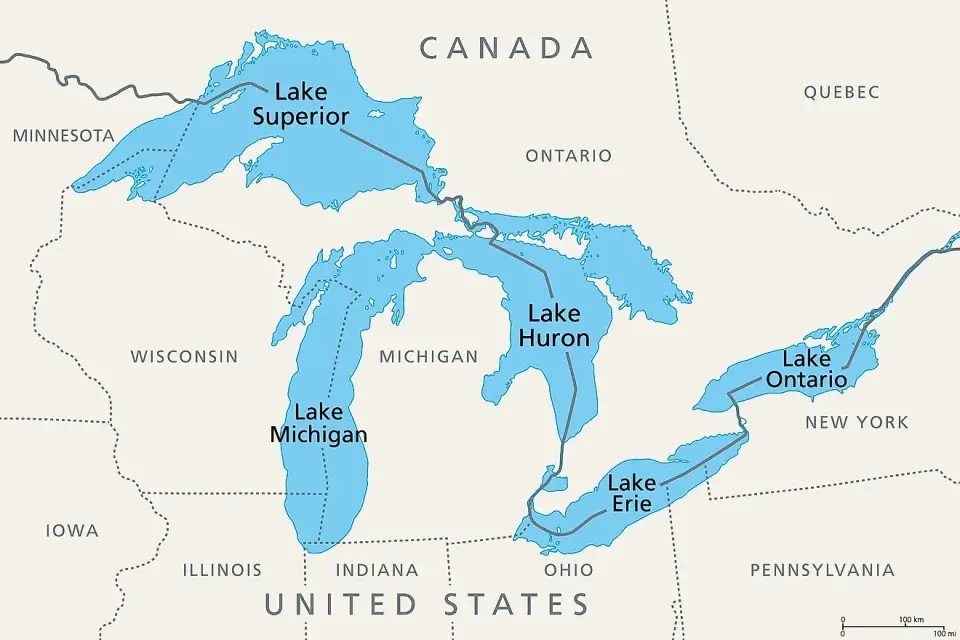
Lake Vostok, hidden beneath 4 kilometers of Antarctic ice, is smaller in surface area than all Great Lakes but holds more water than four of them combined. Discovered via radar in the 1990s and first accessed by drill in 2012, this ancient body of water remains liquid due to immense pressure and geothermal heat. It serves as a critical analogue for extraterrestrial oceans on moons like Europa and Enceladus, though its exact volume and dimensions remain subject to significant measurement error.
Key points
- Lake Vostok is the sixth-largest lake on Earth by volume (approx. 5,400 cubic kilometers) but the sixteenth by surface area (approx. 12,500 square kilometers), making it smaller than Lake Ontario but deeper than Lake Superior.
- The lake lies beneath 3,700 to 4,100 meters of solid ice in Antarctica, sealed from the atmosphere for an estimated 15 to 25 million years.
- Despite temperatures of minus 3 degrees Celsius, the water remains liquid due to 350 to 400 atmospheres of pressure from the overlying ice and geothermal heat from below.
- A Russian team completed the longest ice core drill in 2012, reaching the lake, with cleaner samples retrieved in 2015; concerns arose about contaminating the pristine environment with drilling fluids.
- The lake’s water is supersaturated with oxygen at 50 times normal levels but extremely oligotrophic, creating a unique chemical environment for potential microbial life.
- Research on Vostok primarily aims to model subsurface oceans on Jupiter’s moon Europa and Saturn’s moon Enceladus, rather than for local Antarctic utility.
Background
Recent coverage has highlighted the geological youth of the Great Lakes, which formed roughly 10,000 to 14,000 years ago, contrasting sharply with the ancient age of subglacial basins. While public attention has also focused on political proposals to rename Lake Erie and meteorite sightings over the Great Lakes, Lake Vostok represents a fundamentally different class of water body. Unlike the Great Lakes, which are geologically recent and accessible, Vostok has been isolated for millions of years, offering a window into pre-Himalayan geological conditions and extreme-pressure biology.
Why it matters
Lake Vostok provides the most accessible terrestrial analogue for extraterrestrial subsurface oceans, offering crucial insights into the potential for life in environments cut off from the atmosphere. Its unique chemical properties, such as extreme oxygen saturation and nutrient scarcity, challenge existing biological models and highlight the resilience of life under high pressure. Furthermore, the difficulty in measuring its exact volume and depth underscores the limitations of remote sensing technologies in polar regions, emphasizing the need for careful, contamination-free exploration methods to preserve these pristine environments for future scientific study.
What to watch
Future research will likely focus on analyzing the microbial samples retrieved from the 2015 core to understand life in extreme, isolated environments. Continued efforts to refine volume and depth measurements using advanced radar and drilling techniques may reduce the current large margins of error. Additionally, international scientific collaboration will be critical to ensure that any future drilling operations do not contaminate the lake, preserving its value as a model for extraterrestrial oceanography.
Want the full story? Read the original reporting
Read on WorldAtlas