
Miners Unearth Rare Carboniferous 'Bolsover Dragonflies' in Derbyshire
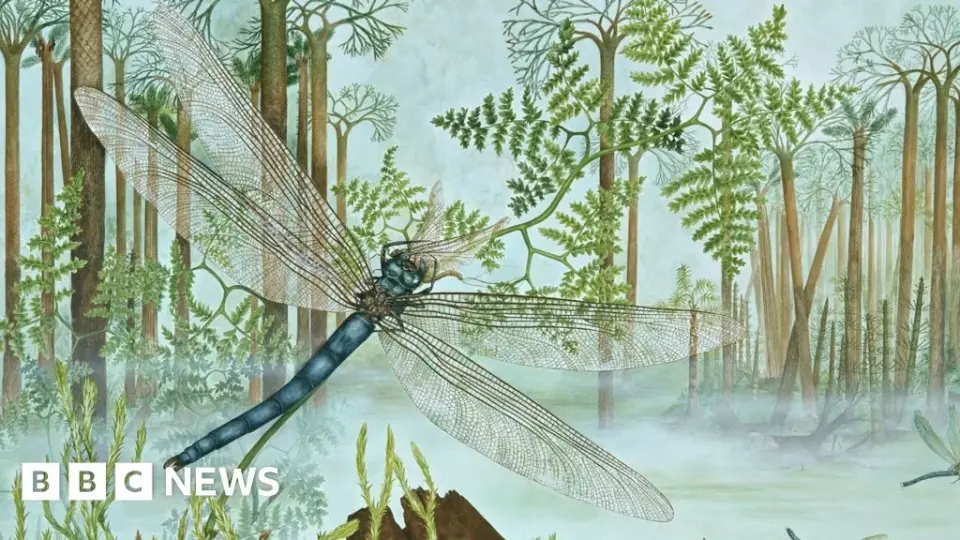
In 1979, miners at Bolsover Colliery in Derbyshire discovered two unique fossils of giant prehistoric insects, now known as the 'Bolsover Dragonflies.' These specimens, representing the species Whalleyala bolsoveri and Arctotypus diluculum, are the only known examples of their kind and are housed at London's Natural History Museum. A new sculpture commemorating the find, created by local students, is being unveiled in the town.
Key points
- Two irreplaceable fossils were found 500m underground at Bolsover Colliery in 1979 by miners Malcolm Spencer and Graham Ball.
- The specimens represent Whalleyala bolsoveri (17.4cm wingspan) and Arctotypus diluculum (approx. 50cm wingspan), both from the Carboniferous period.
- The Natural History Museum notes these are the only known examples of these species, as the colliery is no longer active.
- A sculpture of the insect, made by local school students over 20 weeks, is being unveiled on a roundabout in Bolsover.
- The fossils were preserved in wet, swampy ground from the Carboniferous era, later covered by Permian limestone.
Background
The Carboniferous period, spanning 359 to 299 million years ago, was characterized by high oxygen levels (around 35%) due to vast forests, allowing insects to grow significantly larger than modern species. This era also featured other giant creatures, such as 2-meter centipedes and 1-meter cockroaches. The discovery of these fossils in Derbyshire highlights the region's rich geological history, where coal deposits formed from ancient bark-bearing trees. The recent unveiling of a student-made sculpture in Bolsover serves as a public tribute to this rare paleontological find, connecting the community to its deep geological past.
Why it matters
The discovery of the Bolsover Dragonflies provides critical insights into the evolution of insect size and predation during the Carboniferous period. The unique nature of these fossils, being the only known specimens of their species, underscores the importance of preserving such irreplaceable scientific artifacts. The community engagement through the student-made sculpture also highlights how local heritage can be celebrated and educational opportunities provided through paleontological discoveries.
What to watch
The sculpture will remain a focal point in Bolsover, visible from Bolsover Castle, serving as a long-term tribute to the fossils. The Natural History Museum will continue to house the specimens, ensuring their preservation for future research and study, though they are not currently exhibited in public galleries due to their irreplaceable nature.
Want the full story? Read the original reporting
Read on BBC