
August 'Sturgeon Moon' Turns Red as 96% Partial Eclipse Peaks
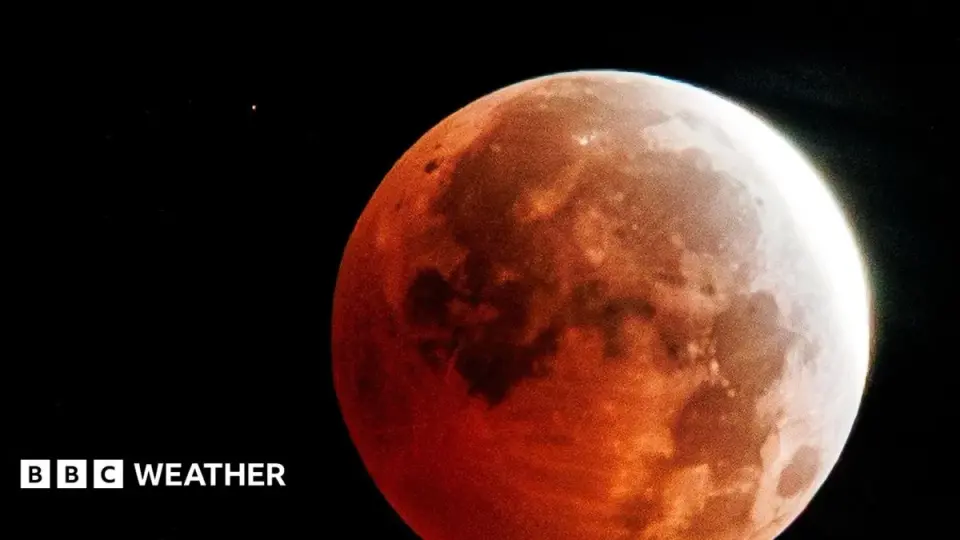
A partial lunar eclipse occurred on August 27-28, 2026, with up to 96% of the Moon entering Earth's umbra. The event, known as the 'Sturgeon Moon,' produced a reddish hue visible in the UK, Hawaii, and other regions. It was the deepest partial eclipse until 2028.
Key points
- The August full Moon, nicknamed the 'Sturgeon Moon' after North American fishing seasons, was partially eclipsed on August 27-28, 2026.
- Up to 96% of the Moon entered Earth's umbra, creating a deep partial eclipse visible across the Americas, Europe, and Asia.
- The Moon appeared reddish because Earth's atmosphere scattered blue light while allowing red wavelengths to pass through and reflect off the lunar surface.
- In the UK, the eclipse peaked pre-dawn, with clear skies in Kent and Hampshire offering unobstructed views, while cloud cover affected other areas.
- Hawaii residents viewed the event near the end of the eclipse phase, with experts recommending dark locations to minimize light pollution interference.
Background
This event followed earlier predictions that the August 2026 eclipse would be the deepest partial lunar eclipse until 2028. Previous coverage noted that no special equipment was required for viewing, though binoculars or telescopes could enhance the experience. The next full Moon, the 'Harvest Moon,' is scheduled for September 26, 2026.
How outlets are covering it
BBC Weather emphasized the visual impact in the UK, highlighting photos from locations like Petersfield and Guildford, and explained the 'Sturgeon Moon' name based on North American sturgeon abundance. Space.com focused on the global scale of the event, describing it as an 'almost blood moon' and noting that the Americas offered the best viewing conditions. Hawaii News Now reported on local viewing efforts in East Oahu, noting that the eclipse was only visible at the very end of the event for Hawaiian observers. All sources agreed on the reddish hue caused by atmospheric scattering but differed in their regional focus and timing details.
Why it matters
The 2026 partial lunar eclipse was a significant astronomical event, being the deepest partial eclipse until 2028. It provided a rare opportunity for skywatchers worldwide to observe the Earth's shadow on the Moon and the resulting reddish coloration, which occurs due to the scattering of sunlight by Earth's atmosphere. The event also highlighted the seasonal naming conventions of full Moons, such as the 'Sturgeon Moon,' which help track natural cycles.
What to watch
The next lunar eclipse visible in the UK is expected in February 2027. A total lunar eclipse is anticipated on New Year's Eve 2028. The next full Moon, the 'Harvest Moon,' will occur on September 26, 2026.
- Blood Moon partial lunar eclipse: Stunning photos capture August's full Moon BBC
- Partial lunar eclipse stuns skywatchers with an ‘almost blood moon’. Here are the best photos space.com
- Your best photos of Thursday night’s lunar eclipse Colorado Public Radio
- Partial lunar eclipse draws viewers across Hawaii Hawaii News Now
Want the full story? Read the original reporting
Read on BBC