
Autonomous Saildrone SD-1092 Begins 200-Day Antarctic Circumnavigation to Measure Carbon Flux
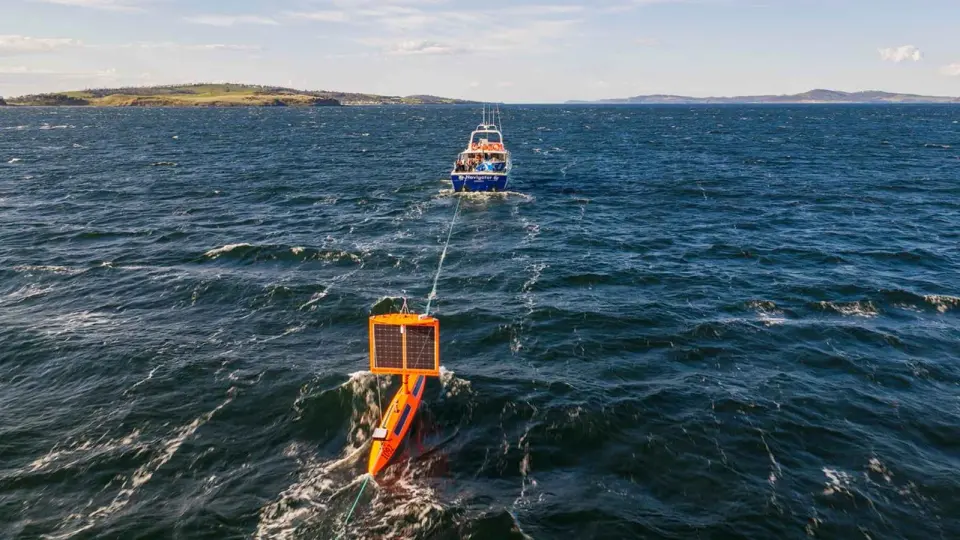
Saildrone Explorer SD-1092 departed Tasmania on September 20 to circumnavigate Antarctica autonomously for 200 days. The 23-foot, engineless vessel aims to collect critical winter data on carbon dioxide exchange in the Southern Ocean, a region where traditional research ships rarely operate due to harsh conditions. This mission is the first of four planned over five years to improve climate model accuracy.
Key points
- SD-1092 launched from Storm Bay, Tasmania, on September 20, 2026, with no crew or engine, relying on solar power and a rigid wing.
- The vessel encountered 26-foot waves and 50-knot winds within days of departure, conditions typical for the Southern Ocean.
- The primary goal is to measure carbon dioxide partial pressure to determine if the ocean is absorbing or releasing carbon during winter.
- A fleet of four drones will operate continuously for five years, with sensors swapped upon return to Hobart.
- Routes are adjusted using AI-driven models from Columbia University to target areas with the largest data gaps.
Background
This mission follows a successful 2019 voyage by Saildrone SD-1020, which completed a 196-day Antarctic circumnavigation and provided the first direct winter measurements of carbon exchange. The current initiative expands on that single-lap test by deploying multiple vessels to create a comprehensive dataset for the Global Carbon Budget, which is due in November 2026.
Why it matters
Accurate measurements of carbon absorption in the Southern Ocean are essential for refining global climate models. Since this region absorbs a significant portion of human emissions, precise data will directly impact the calculation of humanity's carbon budget and future emissions targets.
What to watch
SD-1092 is expected to return to Hobart in early April 2027. Three additional Saildrones are scheduled to launch at three-month intervals during 2027 to maintain continuous coverage.
Want the full story? Read the original reporting
Read on Autonocion.com