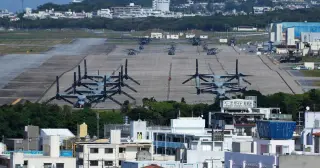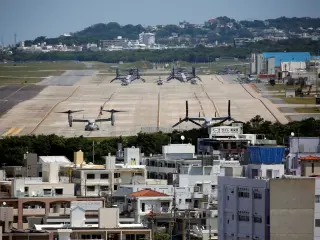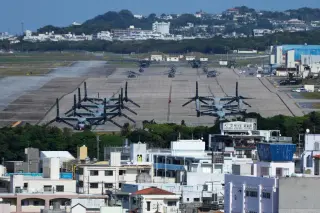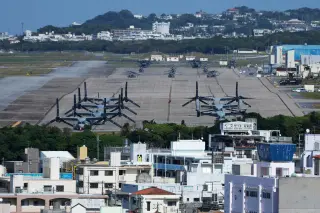
Over 2,200 Okinawa-based Marines from the 31st Marine Expeditionary Unit, along with the USS Tripoli, are being sent to the Middle East amid ongoing U.S.-Iran tensions and attacks in the Strait of Hormuz.
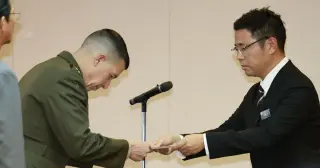
U.S. military police in Okinawa mistakenly detained a civilian, violating the Japan-U.S. agreement that prohibits such actions outside U.S. bases. The incident occurred during patrols initiated after local sexual abuse cases, sparking criticism over sovereignty concerns, though the U.S. plans to resume patrols after training.
On the 80th anniversary of the Battle of Okinawa, the President commemorates the fierce and costly victory of American forces over Japan in 1945, honoring the bravery and sacrifice of those who fought and died, and emphasizing the enduring legacy of freedom, alliance, and peace.
An explosion at a Japanese Self-Defense Force storage facility near U.S. Kadena Air Base in Okinawa injured four personnel, with no evacuation or further risks reported.
Japan issued an emergency warning for residents in Okinawa to take cover due to a potential North Korean missile threat, following North Korea's notification of a planned satellite launch.
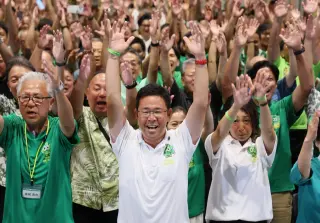
President Biden and Japanese Prime Minister Kishida are discussing upgrades to the U.S.-Japan alliance, impacting Okinawa, which hosts 70% of U.S. military bases in Japan. Efforts to beef up defenses in Japan's southwest islands include setting up missile bases and establishing a new Marine unit. However, plans to reform the Marines have faced criticism, and Okinawa's long-running peace movement is encountering challenges as younger generations express less concern about the bases.
A study found that older women who closely followed a traditional Japanese diet had less brain shrinkage compared to those on a Western diet, potentially due to the diet's focus on rice, soybean products, vegetables, fish, and low fat intake. The study, which analyzed data from over 1,600 Japanese adults, highlighted the potential protective effects of the Japanese diet's nutritional components on the aging brain, with no similar association found for men. While the findings suggest a link between diet and brain health, larger, long-term trials are needed to establish a direct causal relationship.
A family from Massachusetts discovered 22 looted artifacts from WWII in their late father's belongings and helped return them to Japan. The artifacts, including portraits, a hand-drawn map, and pottery, represent a significant piece of Okinawan history and had been missing for almost 80 years. The FBI authenticated the artworks and orchestrated their return to the government of Japan, Okinawa prefecture, highlighting the important role of the public in recognizing and reporting possible stolen art.
The FBI has returned a collection of looted Japanese art, including scrolls, pottery, and an ancient map, found in a Massachusetts attic to Japan. The artifacts, determined to be valuable Asian art, were discovered by the family of a deceased World War II veteran and were confirmed to have been looted during the war's final days. The items, representing a substantial piece of Okinawan history, were returned to Okinawa, but several Okinawan objects are still missing and listed in the National Stolen Art File.
The FBI recovered 22 stolen Japanese artifacts, including portraits of Okinawan kings and a hand-drawn map, from a Massachusetts home. The items, dating back to the 1700s, were found in the attic of a World War II veteran's home and have been returned to Japan. The family discovered the items while sorting through the veteran's belongings and alerted the authorities. The artifacts were part of a trove taken from the Ryukyu Kingdom during World War II, and efforts are ongoing to repatriate other missing items.
The FBI has returned 22 looted artifacts, including scrolls, pottery, and a hand-drawn map, to Okinawa, Japan, after they were discovered in a Massachusetts attic. The items, dating back to the 18th and 19th centuries, were looted following the Battle of Okinawa during World War II. The artifacts were found by a family while sorting through their late father's belongings, and after a lengthy investigation, the FBI confirmed their origins and transported them to the Smithsonian Institution’s National Museum of Asian Art in Washington DC. The family, who wishes to remain anonymous, requested the return of the artifacts to Okinawa, emphasizing the importance of preserving cultural heritage.
Satoru Kikugawa, inspired by a childhood dream and a desire to protect the environment, built an upscale treehouse resort called Treeful in Okinawa, Japan. With the support of his daughter, Kikugawa taught himself carpentry skills and created four treehouses that minimize disturbance to the environment. The resort has won design awards and recognition for having the world's lowest treehouse. Kikugawa plans to expand internationally and is working on a project in Cambodia to combat illegal logging.
Japan's Supreme Court has dismissed Okinawa's rejection of a government plan to build U.S. Marine Corps runways on the island, ordering the prefecture to approve it despite local protests. The ruling upholds a previous high court decision and allows for the construction to proceed, as Okinawa's strategic role becomes increasingly important for the Japan-U.S. military alliance amid tensions with China. Okinawa Governor Denny Tamaki has called for a reduction of the U.S. military presence on the island and the closure of the Futenma base, but Tokyo and Washington insist on relocating it within Okinawa.
Japan's Supreme Court has ordered Okinawa to approve the central government's plan to build U.S. Marine Corps runways on the island, dismissing the prefecture's rejection. The construction, which was suspended due to protests, will now move forward despite concerns about environmental damage. Okinawa, which hosts the majority of U.S. military facilities in Japan, has long called for a reduction of American troops and the closure of the Futenma base. The decision comes as tensions with China increase and Okinawa's strategic role in the Japan-U.S. military alliance becomes more important.
Okinawa, Japan, known for its high number of centenarians, attributes its longevity to a plant-heavy diet rich in antioxidants, fiber, and complex carbs. Traditional Okinawan foods such as purple sweet potatoes, green mulberry leaves, squid ink soup, asa seaweed, mugwort, goya (bitter gourd), and Okinawan tofu are believed to promote health and longevity. These foods are packed with nutrients that help combat inflammation, regulate blood sugar and cholesterol, boost immunity, and improve heart health. While it may be challenging to find these exact foods, adopting a diet focused on plant-based, nutrient-rich foods and practicing portion control can help mimic the Okinawan approach to eating.