Tag

Underwater Archaeology

All articles tagged with #underwater archaeology

Sharp 3,300-Year-Old Bronze Sword Recovered from Submerged Village in Italian Volcanic Lake
archaeology6 days ago

Sharp 3,300-Year-Old Bronze Sword Recovered from Submerged Village in Italian Volcanic Lake

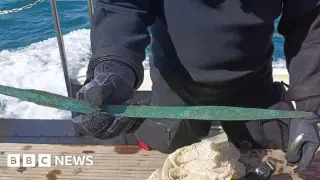
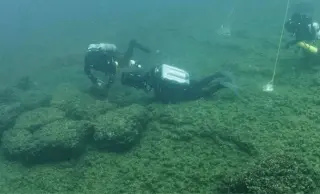
Italian authorities announced the recovery of a 3,300-year-old bronze sword from Lake Mezzano, a volcanic crater lake in central Italy. The artifact, dating to the 13th century B.C., retains a sharp edge and was found alongside other metal tools in a submerged Bronze Age settlement. This is the third sword discovered at the site since the 1970s, suggesting ritual deposits by high-status individuals.
Submerged 'Aquaterra' Could Rewrite Human History as Sea Levels Rise
science10 days ago

Submerged 'Aquaterra' Could Rewrite Human History as Sea Levels Rise

Geographer Jerome Dobson’s concept of 'Aquaterra' highlights a 22.5-million-square-kilometer landmass currently underwater that may hold key to early human history. Rising seas are eroding coastal sites, such as Roanoke’s Fort Raleigh, while recent studies in the Americas have uncovered submerged pre-contact settlements, suggesting that major historical timelines may need revision.

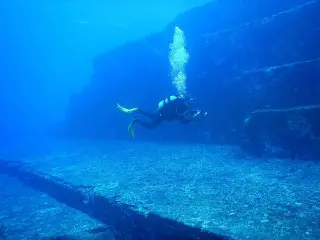
Yonaguni Monument: A 25-Metre-Deep Underwater Enigma Near Japan's Westernmost Island
science-and-nature1 month ago

Yonaguni Monument: A 25-Metre-Deep Underwater Enigma Near Japan's Westernmost Island

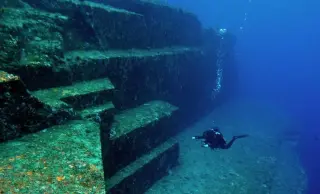
The Yonaguni Monument is a massive underwater rock formation off Japan's westernmost island, measuring 25 metres tall and 100 metres long. Its stepped, pillar-like structure sparks debate between scientists who view it as a natural geological feature and those who argue it is a remnant of a 5,000-year-old sunken city. Accessible only to experienced divers due to strong currents, the site remains a focal point for tourism and geological research.

Sicilian Divers Uncover 2,100-Year-Old Roman Wreck Loaded with 500 Wine Amphorae
archaeology3 months ago

Sicilian Divers Uncover 2,100-Year-Old Roman Wreck Loaded with 500 Wine Amphorae

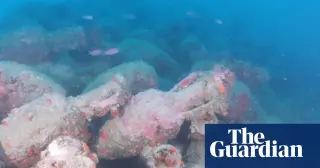
Italian authorities have confirmed the discovery of a 2,100-year-old Roman shipwreck approximately 3 miles off the coast of Mazara del Vallo, Sicily. The vessel, located at a depth of 46 meters, contains roughly 500 amphorae, primarily of the Dressel 1A type used for transporting wine. Culture Minister Alessandro Giuli described the find as a major archaeological discovery that illuminates ancient Mediterranean trade routes. The wreck was initially spotted by fisher Giacomo De Mola, who reported it to the Carabinieri, leading to a joint investigation by the Sicilian Sea Superintendency. Future research aims to determine the exact date, origin, and destination of the cargo, while implementing protective measures for the site.

Undersea 80-Ton Blocks Reveal the Lighthouse of Alexandria Remains
science6 months ago

Undersea 80-Ton Blocks Reveal the Lighthouse of Alexandria Remains

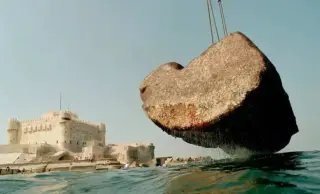
PHAROS project divers have recovered 22 blocks weighing 70–80 tons from the Mediterranean off Alexandria, likely forming the lighthouse’s monumental entrance; each piece is digitized with photogrammetry to enable a virtual reconstruction of the Lighthouse of Alexandria, built in the 3rd century BCE on Pharos and once over 100 meters tall before earthquakes and later reuse of stones in the Qaitbay Citadel.

Submerged Enigma: Yonaguni Monument Triggers a 10,000-Year Debate
science7 months ago

Submerged Enigma: Yonaguni Monument Triggers a 10,000-Year Debate

A 150-by-40-by-27-meter stone formation off Yonaguni Island, discovered in 1986, has sparked a decades-long dispute between researchers who view it as a natural sandstone feature shaped by earthquakes and erosion and Masaaki Kimura’s claim that it could be a deliberate 10,000-year-old human construction with roads and terraces, though no artifacts have been found. The site lies in a seismically active region and, despite extensive exploration, lacks conclusive evidence of civilization, leaving the mystery unresolved and fueling ongoing debates in archaeology.

Ancient Caribou Hunters Revealed Beneath Lake Huron’s Depths
archaeology7 months ago

Ancient Caribou Hunters Revealed Beneath Lake Huron’s Depths

Archaeologists report 9,000-year-old stone hunting structures buried under Lake Huron on the Alpena-Amberley Ridge, the earliest evidence of human activity at the bottom of the Great Lakes; about 80 locations with drive lanes, hunting pits, and stone caches reveal a coordinated caribou-hunting system, preserved by the lake’s clear, sediment-free waters, with ongoing work to map and expand sites.

Decades-Long Quest Ends with Discovery of Lac La Belle Wreck in Lake Michigan
world9 months ago

Decades-Long Quest Ends with Discovery of Lac La Belle Wreck in Lake Michigan

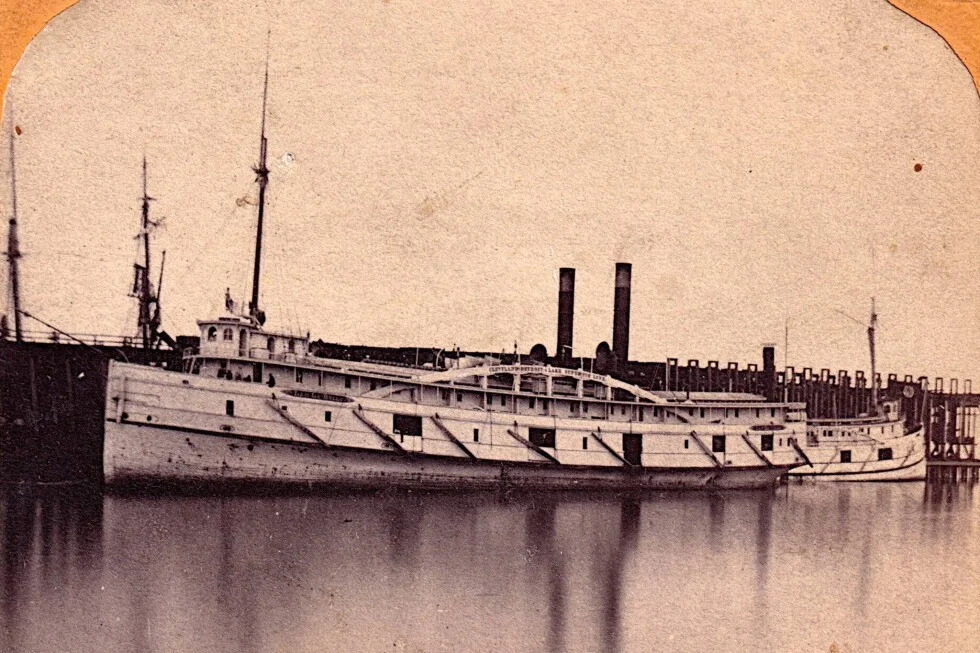
The 217-foot luxury steamer Lac La Belle, which sank in a 1872 Lake Michigan gale off the Wisconsin coast, was found in October 2022 after a nearly six-decade search led by Paul Ehorn and Shipwreck World. The wreck, now mussel-covered with an intact hull and oak interiors, lie about 20 miles offshore between Racine and Kenosha; eight people died when lifeboats capsized or failed, and the discovery highlights ongoing exploration of thousands of Great Lakes wrecks.

Long-Sought Lac La Belle Shipwreck Found in Lake Michigan
science9 months ago

Long-Sought Lac La Belle Shipwreck Found in Lake Michigan

After nearly six decades of searching, Paul Ehorn and Shipwreck World located Lac La Belle, the 1872 passenger steamer sunk in Lake Michigan, about 20 miles off Racine and Kenosha. The discovery, made in October 2022 and announced after a 3D video model was prepared, shows a hull largely intact though encrusted with mussels, and recalls eight deaths when lifeboats capsized during the sinking. This is Ehorn’s 15th shipwreck discovery, and he plans to present findings at the 2026 Ghost Ships Festival.

Decades-long hunt yields Lac La Belle wreck in Lake Michigan
science9 months ago

Decades-long hunt yields Lac La Belle wreck in Lake Michigan

Searchers led by Paul Ehorn of Shipwreck World located the 217-foot luxury steamer Lac La Belle off Wisconsin, completing a roughly six-decade quest. Built in 1864, it sank in October 1872 after a gale while sailing from Milwaukee to Grand Haven; the wreck lies about 20 miles offshore between Racine and Kenosha, remains largely intact with the hull preserved and the exterior mussel-covered. Discovered in 2022 and announced in 2026 with a 3D model, it marks Ehorn’s 15th shipwreck find as investigators press on for the next discovery.

Ancient 2,000-Year-Old Shipwreck Found Intact with Tableware
archaeology1 year ago

Ancient 2,000-Year-Old Shipwreck Found Intact with Tableware

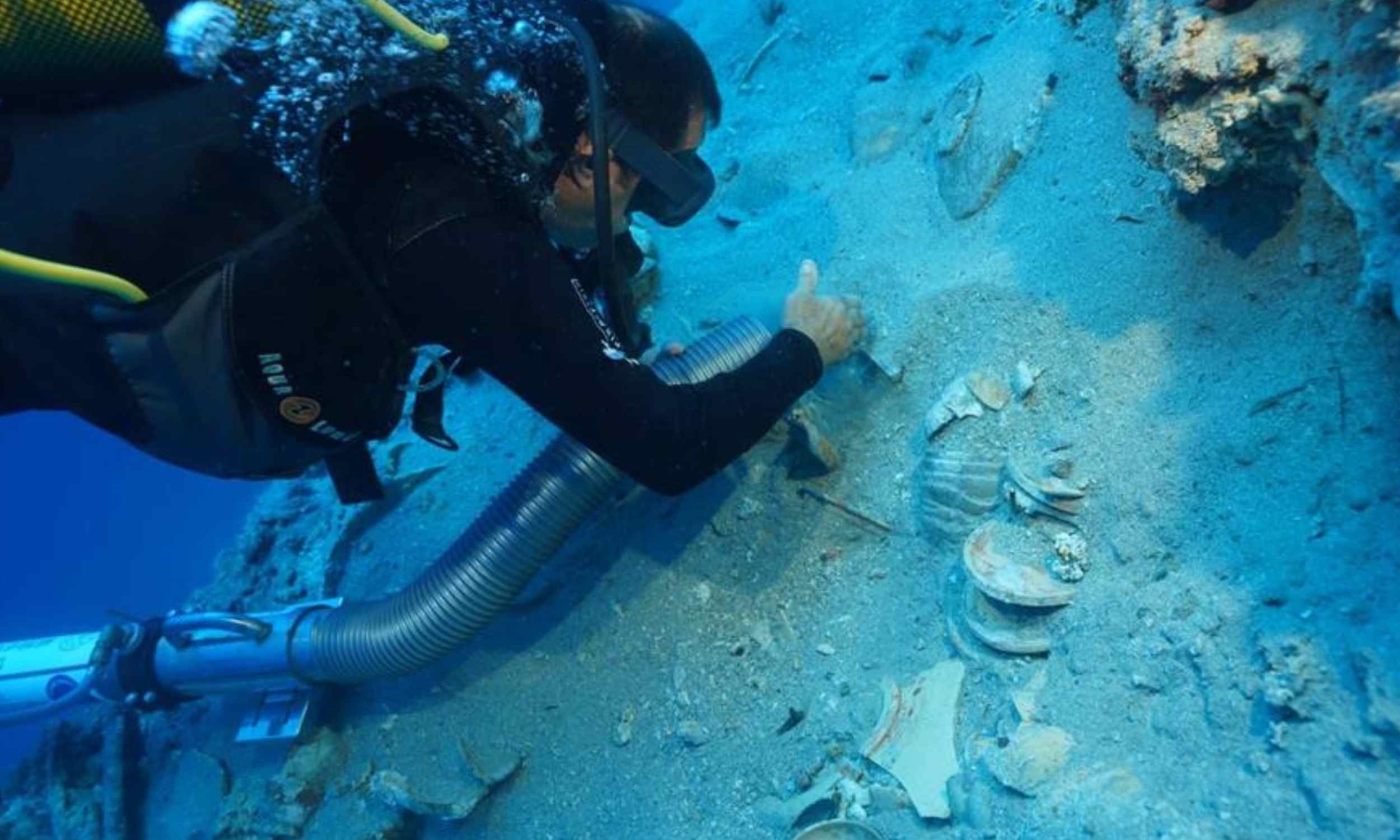
Divers in Antalya, Turkey, discovered a 2,000-year-old shipwreck containing well-preserved Eastern Sigillata A ceramic tableware, providing valuable insights into ancient trade, daily life, and ship cargo practices during the Late Hellenistic to Early Roman period. The cargo's standardized forms and preservation offer detailed data for archaeological research and museum displays, highlighting the significance of maritime heritage in the eastern Mediterranean.

Ancient Egyptian Harbor Discovery Brings Clues Closer to Cleopatra's Lost Tomb
archaeology1 year ago

Ancient Egyptian Harbor Discovery Brings Clues Closer to Cleopatra's Lost Tomb

Archaeologists have discovered a sunken ancient Egyptian port near Taposiris Magna, which may be connected to Cleopatra's tomb, a long-standing mystery. The site includes submerged shoreline, tunnels, and artifacts dating to the Ptolemaic period, supporting the theory that Cleopatra's final resting place might be there, rather than in Alexandria's Royal Quarters.

Underwater Port Discovery Sparks Hope of Cleopatra’s Lost Tomb
archaeology1 year ago

Underwater Port Discovery Sparks Hope of Cleopatra’s Lost Tomb

Archaeologists have discovered a submerged ancient port near Taposiris Magna in Egypt, which may be linked to Cleopatra's final resting place, supporting theories that her tomb is located nearby. The site includes structures from Cleopatra's era and is part of ongoing efforts to locate her tomb, with findings featured in a National Geographic special.