
NASA’s 'Big Bang' Swap Extends Voyager 2’s Interstellar Science Mission by a Year
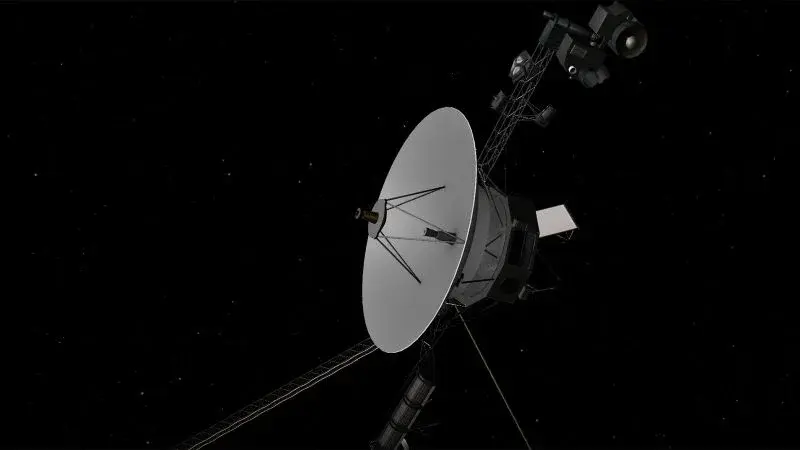
NASA engineers successfully executed a power-saving maneuver on Voyager 2, extending its science mission by at least one year. The 'Big Bang' procedure swapped high-power devices for lower-power alternatives to maintain thermal stability. This move preserves three key instruments in interstellar space, with a similar plan underway for Voyager 1.
Key points
- JPL engineers implemented the 'Big Bang' fix on July 9, 2026, to extend Voyager 2's operational life.
- The maneuver involved simultaneously swapping two heaters and a digital tape recorder for lower-power equivalents to maintain thermal balance.
- Voyager 2 now has enough power to keep its three remaining instruments (Magnetometer, Plasma Wave Subsystem, Cosmic Ray Subsystem) operating for at least one additional year.
- Without this fix, the mission would have had to shut down another instrument before the end of 2026.
- A similar 'Big Bang' procedure is planned for Voyager 1 in the coming months, potentially allowing the restart of its Low-energy Charged Particles experiment.
Background
Voyager 1 and 2, launched in 1977, are the farthest active spacecraft from Earth, traveling beyond the heliosphere. They rely on radioisotope thermoelectric generators (RTGs) that lose approximately 4 watts of power annually due to plutonium decay. Since 2024, dwindling power has forced the shutdown of multiple instruments on both probes. Voyager 2 is currently 21.35 billion kilometers from Earth, while Voyager 1 is 25.40 billion kilometers away. The probes were originally designed for five-year missions but have operated for nearly half a century.
How outlets are covering it
CNN and NASA Science emphasize the success of the 'Big Bang' fix as a critical extension of Voyager 2's mission, highlighting the team's collaborative effort and the preservation of unique interstellar data. The Register notes the delicate nature of the swap, stressing that previous swaps were typically 1:1, whereas this simultaneous multi-device swap was more complex. Tech Times provides detailed technical context, explaining the Seebeck effect and the fixed decay rate of plutonium-238, noting that no successor mission is currently funded to replace the Voyagers' unique data. All sources agree that the maneuver was necessary to avoid losing a third instrument on Voyager 2 before the end of 2026.
Why it matters
The success of the 'Big Bang' fix ensures that humanity's only in-situ sensor network in interstellar space continues to provide irreplaceable data on the heliosphere and interstellar medium. This data is crucial for understanding solar system shielding and galactic cosmic radiation. The maneuver also sets the stage for similar extensions for Voyager 1, potentially prolonging both missions into the 2030s. Given the lack of funded successor missions, every additional year of operation preserves unique scientific insights that cannot be replicated for decades.
What to watch
NASA plans to perform the same 'Big Bang' procedure on Voyager 1 in the coming months. A thermal test for Voyager 1 is scheduled for late August, subject to data analysis. If successful, the power savings may allow the restart of Voyager 1's Low-energy Charged Particles experiment, which was shut down in April 2026. Engineers aim to keep at least one instrument on each probe operating into the 2030s.
- ‘Big Bang’ fix boosts Voyager 2’s mission in interstellar space CNN
- NASA Engineers Help Prolong Voyager 2’s Science Mission NASA Science (.gov)
- Voyager 2 cheats the power budget for another year The Register
- This ‘Ancient’ Spacecraft Keeps Defying Death—But How Much Longer Will Its Extended Mission Last? The Debrief
- NASA’s ‘Big Bang’ Saves Voyager 2’s Last Three Interstellar Instruments Tech Times
Want the full story? Read the original reporting
Read on CNN