
DESI and Gaia data yield first precise mass measurement of the Milky Way
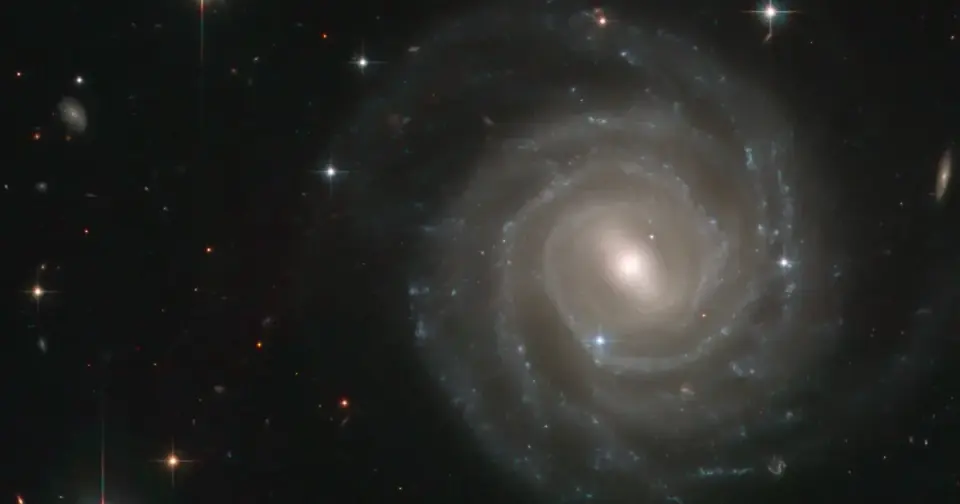
Astronomers have determined the total mass of the Milky Way with unprecedented precision. By combining spectroscopic data from the Dark Energy Spectroscopic Instrument (DESI) with positional data from ESA’s Gaia mission, researchers analyzed over 10,000 stars in the galactic halo. The study estimates the galaxy's total mass at 1.2 trillion solar masses, with an uncertainty of only 10-12%. This resolves previous estimates that varied by a factor of four, confirming the presence of a substantial dark matter halo.
Key points
- The study utilized data from more than 10,000 blue and RR Lyrae horizontal branch stars located in the Milky Way's halo, ranging from 33,000 to 312,000 light-years from the center.
- The total mass of the Milky Way is estimated at 1.19 trillion solar masses, with a 10-12% uncertainty, marking the most precise measurement to date.
- Within the inner 80 kiloparsecs (260,000 light-years), the mass is estimated at 640 billion solar masses, with a 6-7% uncertainty.
- Previous estimates of the galaxy's mass ranged from 500 billion to 2 trillion solar masses, a factor of four difference, due to the difficulty of measuring mass from within the galaxy.
- The new data effectively rules out the hypothesis of a 'light' Milky Way with minimal dark matter, which was suggested by earlier studies of the galactic disk.
Background
Recent astronomical efforts have focused on understanding the Milky Way's structure and history. In October 2026, researchers identified a 'microblazar' candidate, IRAS 18293-0941, located 12,000 light-years away, providing insights into energetic phenomena within the galaxy. Additionally, a November 2026 Hubble image of the globular cluster M30 suggested it may have been captured from another galaxy, highlighting the Milky Way's accretion history. These studies complement the broader effort to map the galaxy's mass and dark matter distribution.
Why it matters
Accurately measuring the Milky Way's mass is crucial for understanding the distribution of dark matter, which constitutes the majority of the galaxy's mass. This measurement helps refine models of galactic formation and evolution, and provides a benchmark for comparing other galaxies. The high precision of this measurement reduces uncertainty in cosmological models and improves our understanding of the gravitational forces shaping the Milky Way.
What to watch
Future studies may extend the analysis to stars at greater distances, potentially improving the precision of mass estimates further. Researchers may also explore the implications of the confirmed dark matter halo for understanding the galaxy's formation and its interactions with other galaxies. Additionally, the data may inform models of the Milky Way's warp and precession, as observed by Gaia.
Want the full story? Read the original reporting
Read on Big Think