Tag

Gaia

All articles tagged with #gaia

Astronomers map 45 rocky exoplanets as prime targets in the search for habitable worlds
science21 days ago

Astronomers map 45 rocky exoplanets as prime targets in the search for habitable worlds

Researchers using Gaia data and the NASA Exoplanet Archive identify 45 rocky exoplanets in the habitable zone (plus 24 near-edge worlds) that could sustain Earth-like conditions, spotlighting planets such as Proxima Centauri b and TRAPPIST-1 d–g. The list should guide observations with JWST, the Roman Space Telescope, ELT, LIFE and other missions to study atmospheres, test habitability limits, and refine the definition of the habitable zone.

Sun’s Galactic Escape Tracked by Gaia’s Twin Stars
space26 days ago

Sun’s Galactic Escape Tracked by Gaia’s Twin Stars

A Gaia-based study of ~2 billion stars found 6,594 solar twins clustered in the 4–6 billion-year range near the Sun’s current orbit, suggesting a mass outward migration from the galactic core during the Milky Way’s bar formation. The temporary lowering of a corotation barrier likely allowed Sun-like stars to drift outward, placing our Sun in a calmer region conducive to life.

Sun's Galactic Escape: From Core to a Life-Friendly Orbit
space28 days ago

Sun's Galactic Escape: From Core to a Life-Friendly Orbit

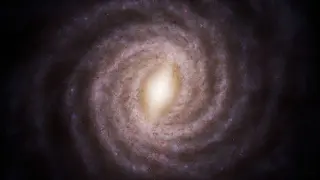
Researchers using Gaia data analyzed nearly two million stars and found 6,594 Sun-like stars around 4–6 billion years old, suggesting the Sun migrated from the Milky Way's inner regions to its current calmer orbit about 26,000–28,000 light-years from the center; the move likely occurred as the galaxy's central bar formed and accelerated stellar birth, moving many stars outward, which would have given Earth a more benign environment for life to emerge and evolve; studying solar twins helps reconstruct the solar system's early history.

Moon-safe: Asteroid 2024 YR4 will miss the Moon in 2032 after JWST orbit refinements
astronomy1 month ago

Moon-safe: Asteroid 2024 YR4 will miss the Moon in 2032 after JWST orbit refinements

Astronomers using the James Webb Space Telescope refined the orbit of asteroid 2024 YR4, ruling out a collision with the Moon and showing it will pass about 13,200 miles (21,200 km) above the lunar surface in 2032. This closes the earlier 4.3% Moon-impact risk that existed due to orbital uncertainty, with Gaia-star measurements helping to nail down the asteroid’s path.

Gaia Uncovers a Black-Hole Swarm in Palomar 5, Destined to Dissolve
science1 month ago

Gaia Uncovers a Black-Hole Swarm in Palomar 5, Destined to Dissolve

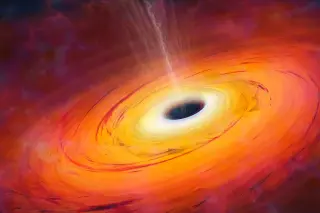
Gaia data reveal Palomar 5, a Milky Way globular cluster with an extensive tidal stream, may host over 100 stellar-mass black holes, making up about 20% of the cluster’s mass. Detailed simulations that include these black holes show they can eject stars into the cluster’s tidal tails, hastening its dissolution into a stream of black holes that will orbit the galactic center in around a billion years. The finding suggests such black-hole-rich clusters may be common and could be important for understanding black-hole mergers.

Hidden Black-Hole Swarm Shapes Palomar 5's Galactic Stream
space1 month ago

Hidden Black-Hole Swarm Shapes Palomar 5's Galactic Stream

Gaia data and N-body simulations indicate Palomar 5 hosts a substantial population of stellar-mass black holes—over 20% of its mass—which drove stars into its broad tidal stream; the cluster is on track to dissolve in about a billion years, leaving a black-hole–dominated remnant, suggesting globular clusters commonly harbor black holes and are key sites for future black hole mergers, with Palomar 5 acting as a Rosetta Stone for stream formation.

Most Milky Way Runaway Stars Aren’t Born in Binaries, New Survey Finds
space2 months ago

Most Milky Way Runaway Stars Aren’t Born in Binaries, New Survey Finds

Spanish researchers using Gaia astrometry and the IACOB spectroscopic database analyzed 214 O-type runaway stars and found that most did not originate as binary companions; the fastest runaways tend to be single, while faster rotators are linked to binary-supernova ejections, indicating multiple ejection mechanisms. The study also identified 12 runaway binaries, including three X-ray binaries with neutron stars or black holes, underscoring complex pathways for how these stars leave their birthplaces and influence galactic evolution.

Gaia Reveals Our Skies Are Filled with Star Clusters
science-and-exploration7 months ago

Gaia Reveals Our Skies Are Filled with Star Clusters

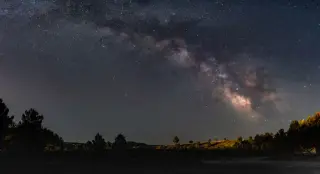
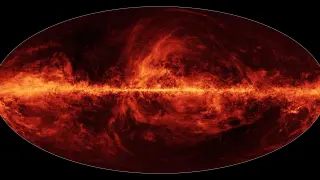
The European Space Agency's Gaia mission has revolutionized our understanding of the Milky Way by mapping billions of stars with unprecedented precision, revealing complex structures, interconnected star clusters, and the dynamic processes shaping our galaxy, including the discovery of star families, tidal tails, and the large-scale interconnectedness of star-forming regions.

Astronomers Uncover a Hidden Giant in Stellar Fog
science9 months ago

Astronomers Uncover a Hidden Giant in Stellar Fog

Astronomers have discovered a large exoplanet, potentially up to ten times the size of Jupiter, hidden within the gas and dust of a protoplanetary disk around the young star MP Mus, using combined data from ALMA and Gaia, marking the first time Gaia has detected an exoplanet in such a disk and providing new insights into planet formation.

Astronomers Discover Rare Gas Giant Exoplanet Using Unique Microlensing Method
science9 months ago

Astronomers Discover Rare Gas Giant Exoplanet Using Unique Microlensing Method

A team of astronomers used gravitational microlensing, a technique based on Einstein's 1936 theory, to discover a rare gas giant exoplanet, AT2021ueyL b, located over 3,200 light-years away in the galactic halo, marking only the third such discovery outside the Milky Way's dense center. This method allows detection of distant, cold planets in wide orbits, providing valuable insights into planetary formation in metal-poor regions. The discovery was facilitated by Gaia satellite alerts and ground-based telescopes, and it highlights the potential of upcoming missions like the Nancy Grace Roman Space Telescope to vastly expand our understanding of exoplanets.