
Stuttgart Researcher Proposes Air-Breathing Plasma Engine for Indefinite Low-Orbit Satellites
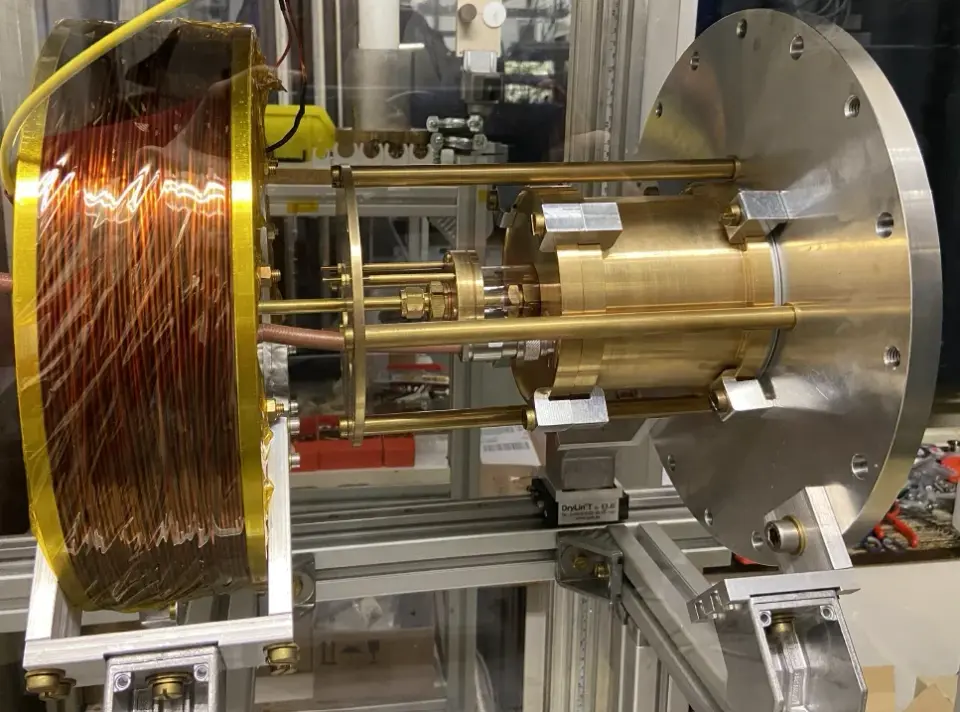
Francesco Romano’s PhD thesis at the University of Stuttgart introduces a new Atmosphere-Breathing Electric Propulsion (ABEP) system designed to keep satellites in Very Low Earth Orbit (VLEO) indefinitely without traditional fuel. By using a contactless RF Helicon Plasma Thruster and a specular intake, the design converts atmospheric molecules into plasma for thrust, solving the fuel dependency of current VLEO missions.
Key points
- The proposed system targets Very Low Earth Orbit (VLEO), ranging from 100 to 450 km, where atmospheric drag is significant but offers advantages like better remote sensing and lower power requirements for communications.
- Current VLEO satellites require constant engine operation to counteract drag, typically consuming expensive propellants like Xenon, which eventually run out, as seen with the GOCE satellite.
- Romano’s design utilizes a 'specular intake,' a parabolic mirror coated with graphite or silicon dioxide, which achieved a 94.3% particle collection efficiency in wind tunnel tests involving atomic oxygen, argon, and nitrogen.
- The thruster employs a birdcage antenna inspired by MRI technology to ensure 99% of electrical power enters the engine, avoiding the reactance losses associated with standard wire coils.
- A solenoid generates a magnetic field that expels plasma as a quasi-neutral jet, eliminating the need for a cathode neutralizer, which is typically corroded by aggressive atomic oxygen in the upper atmosphere.
- Experimental validation in a vacuum chamber demonstrated stable plasma generation using only 50-60W of RF power, well within the capabilities of standard spacecraft solar panels.
Background
While previous coverage noted Apple’s acquisition of plasma simulation software for manufacturing and Mars’ extreme temperature gradients due to thin air, this development focuses specifically on propulsion. It addresses the long-standing challenge of maintaining satellites in VLEO, where atmospheric friction necessitates constant fuel consumption. Unlike earlier concepts that struggled with material corrosion or atmospheric variability, this thesis presents a specific engineering solution using contactless RF technology and optimized intake geometries to overcome these barriers.
Why it matters
This research offers a potential pathway to indefinite satellite operations in VLEO without the logistical and financial burden of carrying heavy propellant loads. If proven viable in actual missions, it could revolutionize remote sensing, communications, and radar capabilities by allowing satellites to operate closer to Earth for longer durations, while also reducing space debris through natural atmospheric decay.
What to watch
It remains unclear if Dr. Romano or other entities will pursue commercial development or actual mission testing for this thruster. The next step would involve de-risking the technology through further experimental validation and potentially integrating it into a real-world satellite mission to confirm its performance in the variable conditions of the actual upper atmosphere.
Want the full story? Read the original reporting
Read on Universe Today