Tag

Plasma Physics

All articles tagged with #plasma physics

Physicists Identify 'Gravitational Reconnection' in Einstein’s Equations, Linking Gravity to Solar Flare Mechanics
science13 days ago

Physicists Identify 'Gravitational Reconnection' in Einstein’s Equations, Linking Gravity to Solar Flare Mechanics

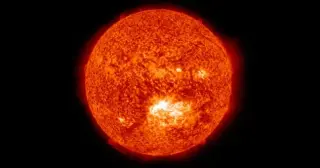
Physicists Luca Comisso and Felipe A. Asenjo have theoretically demonstrated that gravitational fields can break and reconnect, a process analogous to magnetic reconnection in solar flares. Published in Physical Review D, this discovery reveals hidden constraints within Einstein’s equations, suggesting gravity can transfer energy to matter under specific conditions, potentially offering new insights for modeling extreme events like black hole mergers.


Physicists Identify 'Gravitational Reconnection' in Einstein’s Equations, Linking Gravity to Solar Flare Mechanics
science14 days ago

Physicists Identify 'Gravitational Reconnection' in Einstein’s Equations, Linking Gravity to Solar Flare Mechanics

A new study by Columbia University and Universidad Adolfo Ibáñez researchers reveals that gravitational fields can undergo 'reconnection,' a process analogous to magnetic reconnection in solar flares. By reformulating Einstein’s equations to resemble plasma physics, scientists found that gravity’s underlying structures can break and reconnect, transferring energy to matter. This theoretical discovery offers new constraints for modeling extreme events like black hole mergers, potentially reducing reliance on complex simulations.

science21 days ago

New Math Reveals 'Gravitational Reconnection' in Einstein's Equations

Physicists have identified a theoretical process called 'gravitational reconnection' within Einstein's field equations, analogous to magnetic reconnection in solar flares. This discovery suggests gravitational fields can change connectivity and transfer energy to matter, potentially offering new constraints for modeling black hole mergers without full simulations.

Chinese Scientists Generate Lab-Scale Ball Lightning Using Tungsten Needle and Terahertz Pulses
science1 month ago

Chinese Scientists Generate Lab-Scale Ball Lightning Using Tungsten Needle and Terahertz Pulses

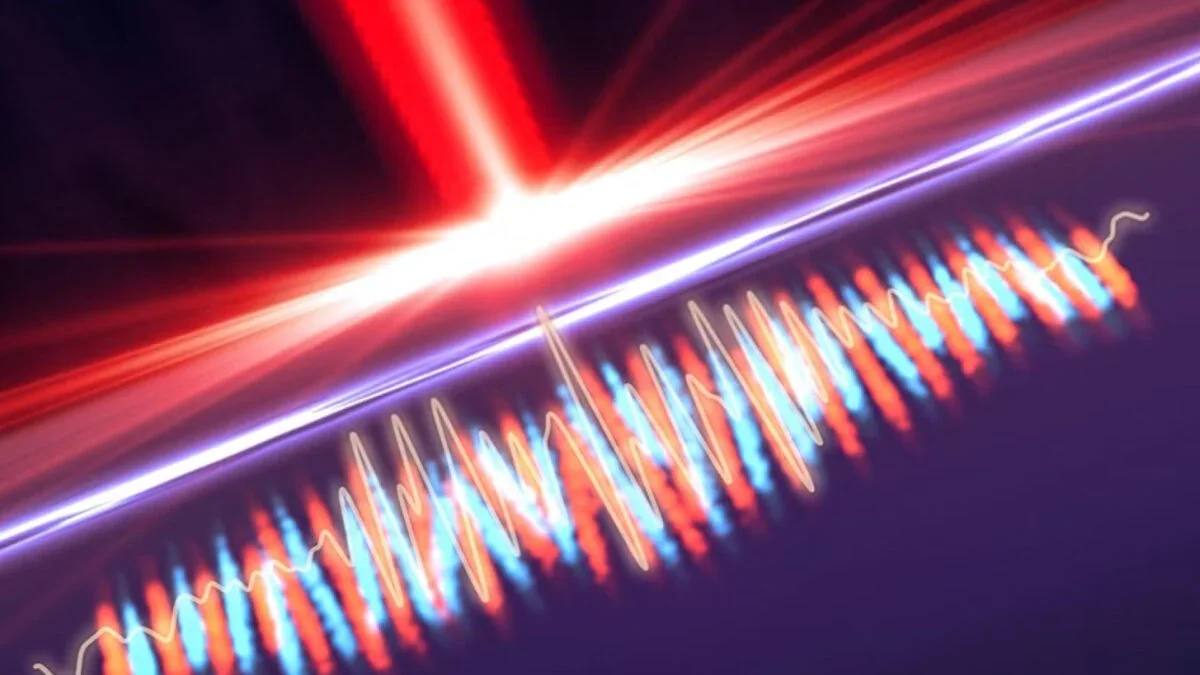
Researchers at the Chinese Academy of Sciences have created a miniature, long-lived plasma sphere in a laboratory setting, offering a potential explanation for the century-old mystery of ball lightning. By firing ultrashort laser pulses at a tungsten needle with a 100-nanometer tip, they generated intense electric fields that ionized argon gas, forming a self-sustaining electromagnetic soliton. The resulting plasma ball, initially 80 micrometers across, expanded over 100 nanoseconds while maintaining its structural integrity, matching theoretical models of soliton behavior rather than ordinary thermal plasma dissipation. While this lab-scale phenomenon is far smaller than natural ball lightning, the team’s calculations suggest that similar mechanisms driven by microwaves could produce meter-sized spheres lasting seconds, aligning with historical eyewitness accounts. The study, published in Nature Photonics, also highlights potential applications in advanced energy storage and extreme-condition light-matter interaction research.

Princeton Researchers Identify Energy-Efficient Path to Fusion Ignition via Revised Lawson Criterion
science1 month ago

Princeton Researchers Identify Energy-Efficient Path to Fusion Ignition via Revised Lawson Criterion

Princeton University researchers have published a theoretical study in Physical Review Letters proposing a more efficient route to nuclear fusion ignition. By extending the 1950s Lawson criterion to account for helium ash, impurities, radiation, and heat loss, the team identified a specific sequence for achieving self-sustaining plasma. The findings suggest that heating plasma before increasing its density requires significantly less energy than traditional compression-first methods, potentially saving time and resources for next-generation reactor designs.

High-Speed Imaging Reveals Lithium Pathways in Fusion Reactor Heat Management
science1 month ago

High-Speed Imaging Reveals Lithium Pathways in Fusion Reactor Heat Management

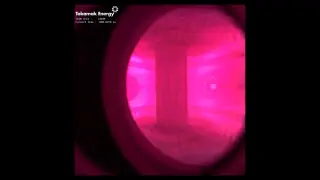
Tokamak Energy has used a 16,000 fps color camera to observe lithium impurities in the ST40 spherical tokamak, aiming to solve the critical challenge of divertor heat exhaust. The footage shows how lithium transitions from neutral atoms to ions, tracing magnetic field lines and cooling the plasma edge. This data supports the 'X-point radiator' concept, which uses impurities to radiate heat away before it damages reactor components, with early results showing reduced heat loads on divertors.

Stuttgart Researcher Proposes Air-Breathing Plasma Engine for Indefinite Low-Orbit Satellites
science-and-technology2 months ago

Stuttgart Researcher Proposes Air-Breathing Plasma Engine for Indefinite Low-Orbit Satellites

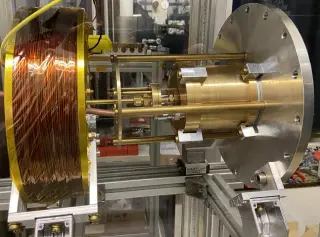
Francesco Romano’s PhD thesis at the University of Stuttgart introduces a new Atmosphere-Breathing Electric Propulsion (ABEP) system designed to keep satellites in Very Low Earth Orbit (VLEO) indefinitely without traditional fuel. By using a contactless RF Helicon Plasma Thruster and a specular intake, the design converts atmospheric molecules into plasma for thrust, solving the fuel dependency of current VLEO missions.

Plasma Instabilities May Self-Regulate to Boost Fusion Performance
science2 months ago

Plasma Instabilities May Self-Regulate to Boost Fusion Performance

Researchers at the DIII-D National Fusion Facility in San Diego have provided the first experimental evidence that Alfvén eigenmodes, previously viewed as a hindrance to fusion, may actually suppress plasma turbulence. Published in Physical Review Letters, the study shows these plasma waves drive currents that create shear flow, which stabilizes the plasma and improves heat confinement. This counterintuitive finding suggests that certain instabilities could be leveraged to enhance reactor performance rather than merely mitigated.

New Simulations Reopen Search for Dark Photons as Dark Matter Candidate
space3 months ago

New Simulations Reopen Search for Dark Photons as Dark Matter Candidate

New computer simulations suggest that dark photons, a leading candidate for dark matter, did not heat the early universe as previously believed. This finding invalidates earlier constraints that ruled out significant portions of the dark photon parameter space, potentially reopening a vast range for experimental searches. The study, published in Physical Review Letters, highlights that nonlinear plasma dynamics halt the conversion of dark photons to ordinary photons before substantial energy transfer occurs, challenging previous linear approximations.

Lab Simulations Recreate Catastrophic Forces from Nuclear Fallout to Black Holes
science3 months ago

Lab Simulations Recreate Catastrophic Forces from Nuclear Fallout to Black Holes

Researchers have successfully recreated extreme, potentially catastrophic phenomena in controlled laboratory settings to study their mechanics safely. Recent experiments include simulating smallpox pandemic spread, modeling solar plasma, and generating quark-gluon plasma at five trillion kelvins. These controlled recreations allow scientists to understand disaster dynamics, such as nuclear fallout dispersion and black hole event horizons, without risking real-world harm.

Pencil-Sized Plasma Gun Aims to Sanitize Spacewear
space-and-spaceflight6 months ago

Pencil-Sized Plasma Gun Aims to Sanitize Spacewear

A University of Alabama in Huntsville team has developed a pencil-sized cold-plasma “laundry gun” that blasts fabrics with a plasma jet to kill bacteria and odors, potentially keeping astronauts’ clothes cleaner in space. While proof-of-concept and small-scale, the technology could one day sterilize spacesuits and tools for long missions; researchers plan to increase the device size and add filters to reduce ozone byproducts as they work toward practical use in space.

China Demonstrates Plasma Regime That Cuts Divertor Heat and Eliminates ELMs
science6 months ago

China Demonstrates Plasma Regime That Cuts Divertor Heat and Eliminates ELMs

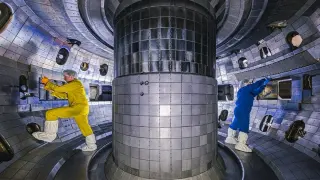
Researchers on the EAST tokamak demonstrated a Detached divertor and Turbulence-dominated Pedestal (DTP) regime by precise light impurity seeding, achieving partial divertor detachment, full ELM suppression, and a boosted pedestal temperature with sustained confinement for about one minute, offering a path to reduce divertor heat while maintaining strong fusion performance.

Parker Solar Probe Reveals the Hidden Heating of the Solar Wind
space9 months ago

Parker Solar Probe Reveals the Hidden Heating of the Solar Wind

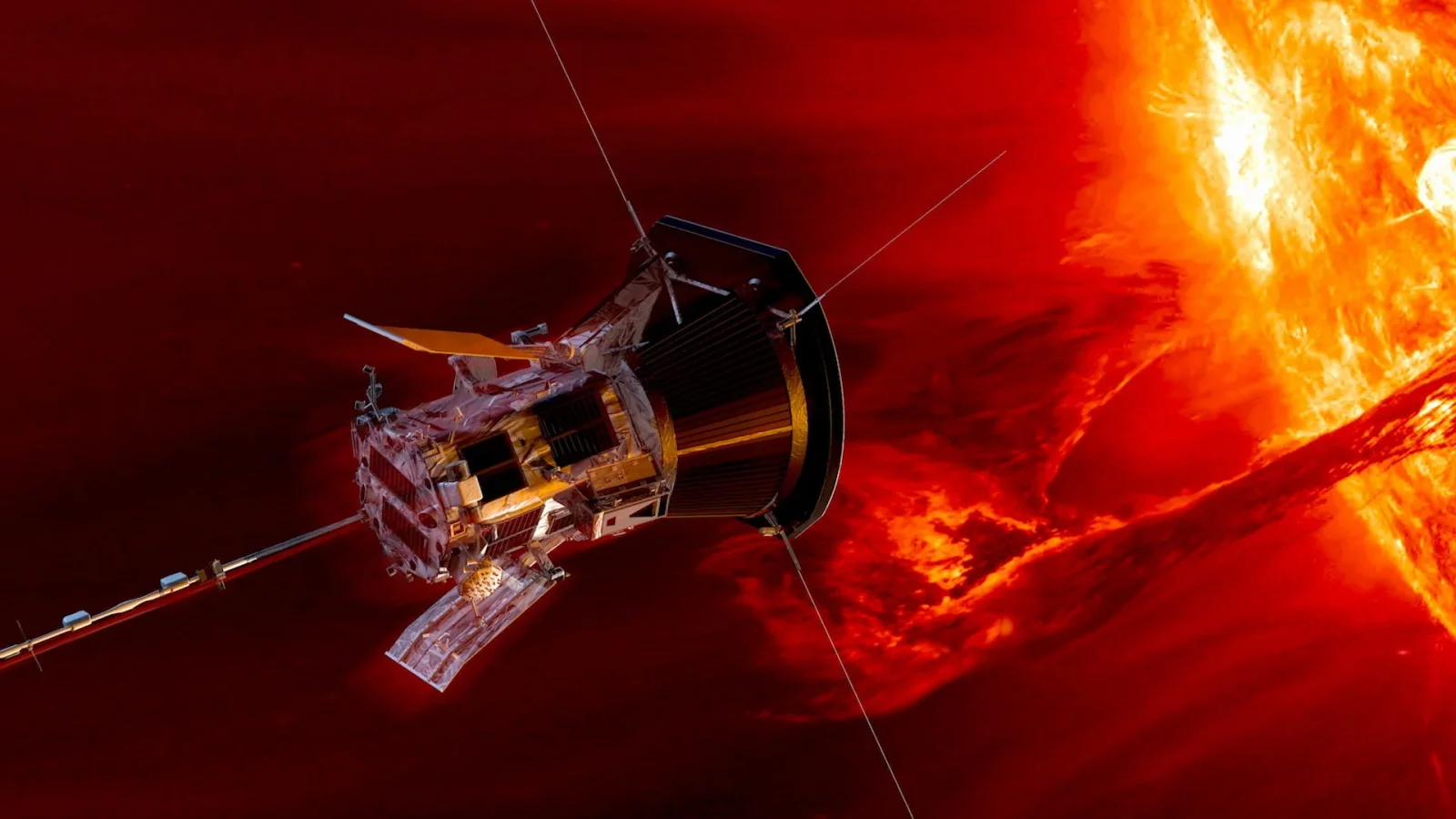
NASA’s Parker Solar Probe, flying closer to the Sun than any prior mission (within 3.8 million miles of the surface), uses a new ALPS analysis tool to map how energy heats and accelerates the solar wind, addressing the coronal heating puzzle and improving space-weather forecasts while providing insights into plasma behavior across the cosmos.