Tag

Astronauts

All articles tagged with #astronauts

Earthbound after a year in space: Scott Kelly finds return to normal life oddly unfamiliar
science1 day ago

Earthbound after a year in space: Scott Kelly finds return to normal life oddly unfamiliar

Scott Kelly’s 340 days aboard the ISS yielded not only physical effects like fluid shifts and balance issues but also a lasting psychological readjustment: weeks of detachment and a sense of watching one’s life from behind the eyes, a “reverse overview effect” that underscores the need to plan postflight transition as longer missions loom, with Artemis II and mars-bound crews likely facing similar challenges.

Gravity’s Rebound: Spine and Sole Pain After Long Space Missions
space1 day ago

Gravity’s Rebound: Spine and Sole Pain After Long Space Missions

Returning astronauts often feel burning sole pain and lower-back ache within days of landing as swollen intervertebral discs in microgravity are suddenly compressed by Earth's gravity; skin loses its Earth-hardening calluses and the vestibular system re-calibrates, making first steps unsteady. Pain typically peaks around days 2–4 as discs rehydrate and recompress while paraspinal muscles re-adjust. The risk of herniated discs is highest in the first year post-flight, especially in the cervical spine. Recovery follows a pattern: stand soon after splashdown but walk unsteadily for days, height returns to normal in about 10 days, and bone density recovery lags behind. Artemis missions and future Mars transits will face these challenges without on-site ground support, requiring careful postflight conditioning.

Orbit Time: Astronauts Age Slightly Less Than Earthbound Counterparts
science2 days ago

Orbit Time: Astronauts Age Slightly Less Than Earthbound Counterparts

Astronauts in low-Earth orbit experience a tiny amount of time travel into the future due to special and general relativity: their clocks run slower because they move fast, while being higher up slightly speeds up time; the net effect is about 20–25 microseconds per day, amounting to a few milliseconds over six months and about nine milliseconds after a year; the phenomenon is real and measurable (as shown by Hafele–Keating experiments and GPS timing), but it is far too small to impact health—spaceflight’s health effects dominate.

Headward fluid shifts in microgravity push NASA to treat astronauts’ meals as mission-critical
space2 days ago

Headward fluid shifts in microgravity push NASA to treat astronauts’ meals as mission-critical

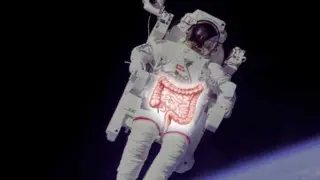
In microgravity, fluids shift toward the head, causing facial puffiness, nasal congestion, and a dulled sense of smell and taste. This fluid shift contributes to reduced appetite and muscle/bone loss, prompting NASA to monitor daily nutrition as a core part of crew health. Despite several hours of exercise, long-duration countermeasures do not fully prevent multisystem deconditioning, a concern that grows with planned Artemis missions and potential Mars voyages, leaving open the need for improved food, countermeasures, or new therapies.

Space Rewires the Brain: Neuroplasticity in Microgravity
science3 days ago

Space Rewires the Brain: Neuroplasticity in Microgravity

A BBC report synthesizes 15 brain-imaging studies (about 377 participants) showing that microgravity triggers structural and functional changes in brain regions involved in movement, balance and multisensory processing, revealing the brain rewires itself to life without gravity. While astronauts can counter bone and muscle loss with exercise, brain adaptation takes time and could complicate long-duration missions to the Moon or Mars, prompting exploration of countermeasures such as centrifugation or non-invasive brain stimulation to help pilots and crews adapt and stay safe.

Cosmic Ray Light Shows: Astronauts See Retinal Flashes from Apollo to the ISS
space5 days ago

Cosmic Ray Light Shows: Astronauts See Retinal Flashes from Apollo to the ISS

Astronaut Don Pettit described seeing “luminous dancing fairies” in the ISS, a retinal flash caused by galactic cosmic rays that pierce the craft and the eye. Apollo crews reported similar flashes, and the ALTEA detectors on the ISS linked heavy-ion particles to these events, explained by direct ionization or Cherenkov radiation. Although brief and seemingly harmless, these particles pose long-term brain and eye health risks for deep-space missions, influencing radiation-mitigation strategies for Artemis and future journeys to the Moon and Mars.

Orbit’s Gravity-Free Body Reshapes Itself: Heart Rounds, Spine Stretches, Astronauts Gain Height
science19 days ago

Orbit’s Gravity-Free Body Reshapes Itself: Heart Rounds, Spine Stretches, Astronauts Gain Height

In microgravity, the human body changes shape: the heart becomes slightly more spherical (about 9.4% in a 2014 study of 12 astronauts) due to reduced gravitational load, while the spine lengthens as discs rehydrate, adding a few centimeters of height during long orbital stays. Both effects are temporary and reverse after returning to Earth, illustrating how much our form is defined by gravity. These changes raise considerations for long-duration missions (e.g., Mars), where deconditioning could affect performance on arrival and landing, though astronauts counteract with daily exercise. The heart change is a sign of cardiac deconditioning rather than permanent growth and is based on limited, preliminary data.

Artemis 3 crew gets their official roster in a calendar-surprise reveal
space28 days ago

Artemis 3 crew gets their official roster in a calendar-surprise reveal

NASA revealed the Artemis 3 crew at a Johnson Space Center meeting that felt like a calendar surprise: commander Randy Bresnik, Luca Parmitano as pilot, Frank Rubio and Andre Douglas as mission specialists, with Bob Hines designated as backup. The five will fly aboard the Orion capsule on the Space Launch System for a ~2-week mission in high Earth orbit, docking with two lunar lander designs (SpaceX’s Starship and Blue Origin’s Blue Moon) to test compatibility ahead of future lunar landings. Artemis 3 follows Artemis 2 and aims for a late-2027 liftoff, with training timelines shortened and the backup role intended to keep the crew ready should changes arise or set up for Artemis 4.

Artemis 3 crew sparks diversity debate as NASA defends all-male lineup
space1 month ago

Artemis 3 crew sparks diversity debate as NASA defends all-male lineup

NASA defended Artemis 3’s four-principal crew as being selected for mission qualifications, not gender, with the lineup—Randy Bresnik, Luca Parmitano, Andre Douglas, and Frank Rubio—being all male and Bob Hines as backup. The piece notes the broader NASA astronaut pool is about 40% women and that diversity is pursued in forms beyond gender, including international partnerships and the pipeline of female astronauts, while Artemis 3 focuses on testing lunar landers for future surface missions with SpaceX and Blue Origin involvement.

Artemis III crew named for NASA's lunar return
sciencespace1 month ago

Artemis III crew named for NASA's lunar return

NASA unveiled Artemis III's four-astronaut crew for a 2028 Moon landing: commander Randy Bresnik; mission specialists Frank Rubio and Andre Douglas; and ESA astronaut Luca Parmitano. The mission is among NASA's most complex and hinges on lunar lander work by SpaceX and Blue Origin, with new AxEMU suits in development. Notably, Artemis III will be a four-man crew, an all-male lineup amid ongoing discussions about funding and timelines.

Artemis 3 Crew Shortlist: NASA's Moon Mission Picks
space-exploration1 month ago

Artemis 3 Crew Shortlist: NASA's Moon Mission Picks

Space.com breaks down likely Artemis 3 crew contenders ahead of NASA's June 9 announcement, highlighting frontrunners such as Raja Chari, Nicole Mann, Jasmin Moghbeli and Kayla Barron, with others like Andre Douglas and Stephanie Wilson in contention; Artemis 3 will operate in low Earth orbit to practice rendezvous with lunar landers and test new EVA capabilities, with possible involvement from ESA or CSA depending on lander readiness and ISS scheduling.

ISS air leaks spark safe-haven orders as astronauts brace for repairs
space1 month ago

ISS air leaks spark safe-haven orders as astronauts brace for repairs

Two air leaks were detected in the ISS Zvezda module, prompting protective shelter-in-place and an elevated safety posture for the Crew-12 astronauts as Roscosmos undertakes repairs; NASA initially ordered safe-haven procedures but later reversed them, allowing a return once repairs paused. There was no immediate threat to the spacecraft, and officials continue discussions on extending the station’s life.