
ESA’s Hera Reveals First Close-Up Images of Asteroid Dimorphos After 2022 DART Impact
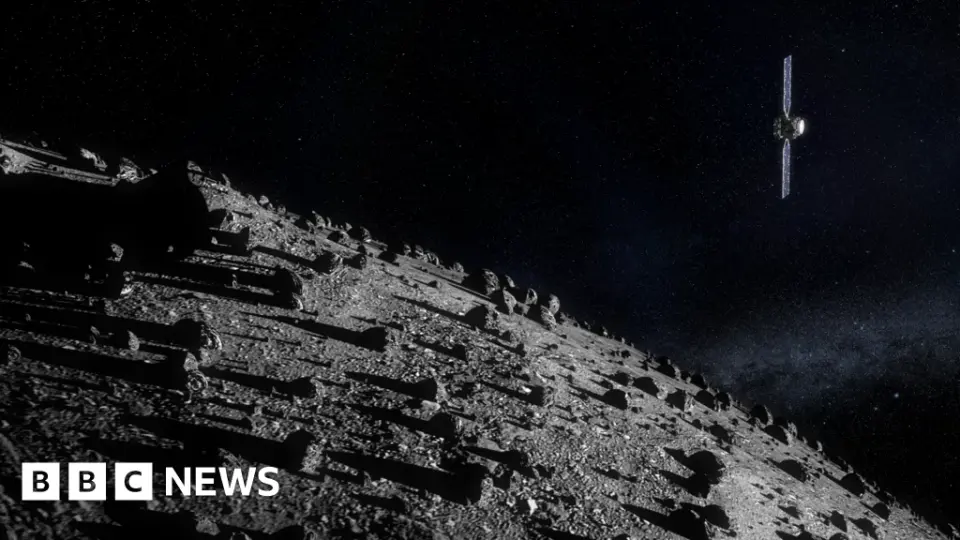
The European Space Agency’s Hera spacecraft has arrived at the Didymos-Dimorphos binary asteroid system to investigate the aftermath of NASA’s 2022 DART impact. On Wednesday, Nov. 25, 2026, ESA released the first close-up images of the 150-meter-wide moonlet Dimorphos, which was deliberately struck by DART to test planetary defense capabilities. The mission aims to measure the asteroid’s mass and structural changes to validate kinetic impact as a viable method for deflecting potential threats to Earth.
Key points
- ESA’s Hera spacecraft arrived at the Didymos-Dimorphos system after a two-year journey, launching from Cape Canaveral on Oct. 7, 2024.
- The first close-up images of Dimorphos were released on Nov. 25, 2026, during a livestream from the Museum für Naturkunde in Berlin.
- NASA’s DART mission impacted Dimorphos on Sept. 26, 2022, at 22,000 km/h, shortening its orbit around Didymos by 33 minutes.
- Hera will spend the next year studying the asteroids, including deploying two shoebox-sized CubeSats, Juventas and Milani, in early 2027.
- The mission aims to measure Dimorphos’s mass and internal structure to refine future planetary defense strategies.
Background
In 2022, NASA’s DART mission successfully altered the orbit of Dimorphos, a small asteroid orbiting the larger Didymos. This was the first-ever test of planetary defense capabilities. The impact created a debris trail visible from Earth and changed Dimorphos’s orbital period by 33 minutes. Subsequent studies revealed that the impact also altered the asteroid’s shape and the binary system’s orbit around the Sun. ESA’s Hera mission was launched in 2024 to investigate the aftermath of this impact, with detailed images scheduled for release on Nov. 25, 2026.
How outlets are covering it
BBC and ESA emphasize the historic nature of the event, highlighting the first close-up images of the impact site and the significance of the mission for planetary defense. Space.com and Aerospace Global News focus on the technical details of the mission, including the spacecraft’s trajectory, instruments, and the deployment of CubeSats. All sources agree on the success of the DART impact and the importance of Hera’s findings for future planetary defense strategies.
Why it matters
The findings from Hera will provide critical data on how asteroids respond to kinetic impacts, helping scientists refine planetary defense strategies. This is essential for protecting Earth from potential asteroid threats, as even small asteroids can cause significant damage. The mission also demonstrates the feasibility of altering an asteroid’s trajectory, a crucial capability for future planetary defense missions.
What to watch
Hera will continue its study of the Didymos-Dimorphos system for the next year, including deploying two CubeSats in early 2027. The mission will measure Dimorphos’s mass, internal structure, and surface composition, providing detailed data on the impact site. The findings will help refine future planetary defense strategies and improve our understanding of asteroid deflection techniques.
- Hera spacecraft investigates damage at asteroid "crash scene" BBC
- Watch live: Hera’s first images of post-impact asteroid Dimorphos ESA
- Hera's Didymos asteroid in eclipse Phys.org
- Watch live: Europe unveils 1st close-up views of asteroid Dimorphos after NASA's DART impact Space
- ESA’s Hera Reaches Dimorphos to Assess DART Impact Damage Aerospace Global News
Want the full story? Read the original reporting
Read on BBC