
Japan's MMX Mission Launches to Sample Mars' Moon Phobos
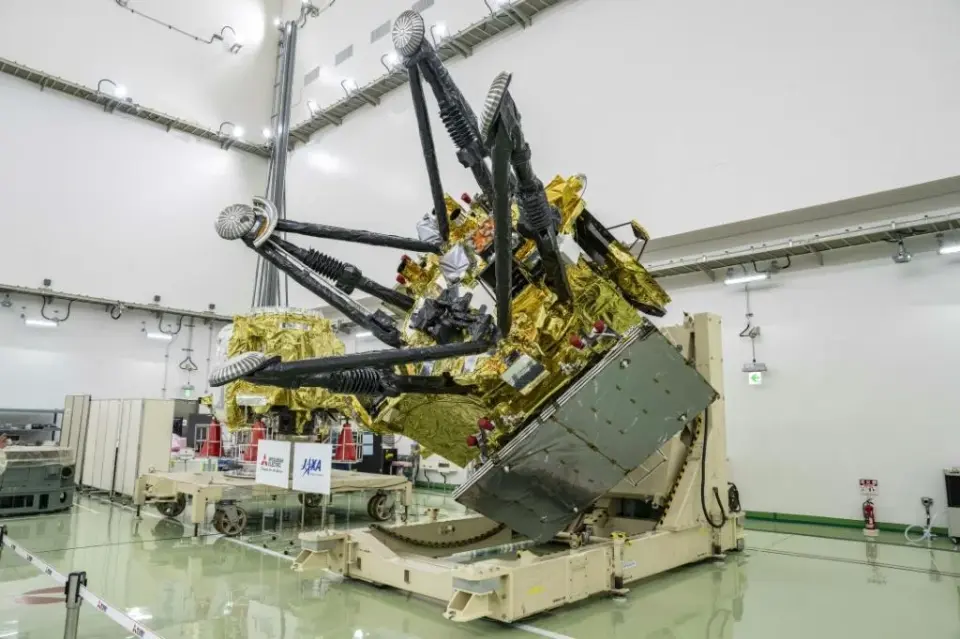
Japan's JAXA is preparing to launch the Martian Moons eXploration (MMX) mission from Tanegashima Space Center in the coming months. The spacecraft will orbit Mars for three years, land on Phobos to collect at least 10 grams of surface material, and return samples to Australia in 2031. The mission aims to determine the origin of Mars' moons and assess the feasibility of using Phobos as a staging point for future crewed Mars missions.
Key points
- MMX will launch from Tanegashima Space Center and orbit Mars for approximately three years.
- The mission includes the French IDEFIX rover to conduct surface observations on Phobos.
- A return capsule is scheduled to land in Australia with samples around 2031.
- The mission seeks to distinguish between the 'giant impact' and 'capture' hypotheses for the moons' origins.
- JAXA views the mission as a precursor to crewed Mars exploration by testing round-trip technologies.
Background
This mission follows Japan's successful Hayabusa-2 asteroid sample return in 2020 and the SLIM lunar lander in 2024. It also aligns with broader international efforts to map lunar and cislunar environments, as seen in recent CAPSTONE and Artemis III preparations, which emphasize complex orbital maneuvers and international cooperation.
How outlets are covering it
Japan Today emphasizes the scientific potential of MMX to unlock origins of life and the engineering challenges of landing on Phobos' low gravity. UNN highlights the competitive aspect, noting Japan's aim to outpace China's Tianwen-3 mission, which is scheduled for launch around 2028 and sample return around 2031. Both sources agree on the mission's timeline and international partnerships, including CNES, DLR, NASA, and ESA.
Why it matters
The MMX mission could provide critical data on how volatile materials were transported to inner rocky planets, potentially explaining the emergence of life. It also tests technologies for future crewed Mars missions, positioning Japan as a key player in deep-space exploration despite recent cancellations of US Mars sample return missions.
What to watch
The MMX spacecraft is expected to launch in the coming months. China's Tianwen-3 mission is scheduled for launch around 2028, with sample return potentially occurring before MMX's 2031 target. JAXA will continue to develop technologies for using Phobos as a 'natural space station' for future crewed missions.
- Japan aims for the moons of Mars Japan Today
- JAXA Unveils Martian Moon Probe, Aiming to Be 1st to Take Home Samples The Japan News
- Japan will send a probe to a moon of Mars to investigate the origins of the Solar System unn.ua
- Japan Prepares an Ambitious Mission to the Moon, Aims to Sample to Reveal the Origin of the Solar System VOI.ID
- JAXA Unveils Spacecraft for World's First Mission to Bring Back Sand from a Martian Moon finance.biggo.com
Want the full story? Read the original reporting
Read on Japan Today