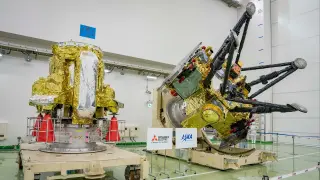
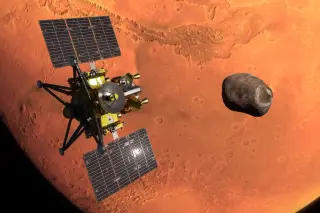
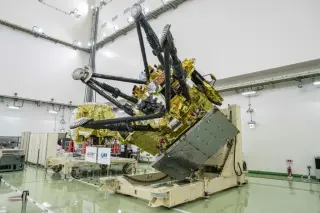
Japan's Martian Moons eXploration (MMX) probe is scheduled to launch on October 20 aboard an H3 rocket. The mission aims to land on Phobos, collect approximately 10 grams of surface material, and return the samples to Earth by 2031. This will be the first time material from the Martian system is brought back to Earth.
On Sept. 8, 2004, NASA’s Genesis solar-wind spacecraft crash-landed in Utah after its parachute failed to deploy because four gravity switches in the sample-return canister were wired backwards, dooming the primary and backup parachutes. Genesis, launched in 2001 for $264 million, was NASA’s first robotic sample-return mission since Apollo 17 and sought to collect solar wind particles on ultrathin wafers; while the capsule shattered on impact, some samples were salvaged and the mishap led to reviews of future missions like Stardust.
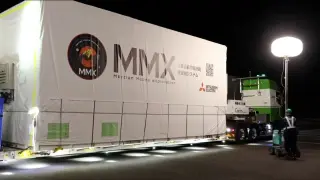
Japan unveiled the Martian Moons eXploration (MMX) spacecraft at Tanegashima Space Center, lining up an Oct. 19 launch window to grab about 10 grams of material from Phobos, deploy a 25-kilogram rover (Idefix) for surface study, and return the samples to Earth by 2031 after a roughly year-long journey to Mars; the mission will also study Deimos and aim to determine how Mars’ moons formed, marking the first successful Mars-system sample return.
Japan’s Martian Moons eXploration (MMX) aims to land a small rover on Phobos, collect more than 10 grams of material with two sampling systems, and return a capsule to Australia by 2031—the first deliberate Martian-system sample brought to Earth. The mission will include a 25‑kg IDEFIX rover, a brief daytime Phobos touchdown, and a return capsule for lab analysis in South Australia, with 11 instruments mapping landing sites and characterizing the material to probe Phobos’s origin and Mars’s history.
Japan’s JAXA plans the unmanned MMX mission to orbit Mars’ moons Phobos and Deimos, landing on Phobos to collect at least 10 grams of material and returning a capsule to Earth around 2031, in collaboration with CNES, DLR, NASA and ESA. The mission aims to shed light on how Mars and its moons formed and how water, volatiles, and organics reached the inner solar system, as rival China pursues its Tianwen-3 sample-return and NASA’s Perseverance is noted as having samples but described as effectively canceled in the article.
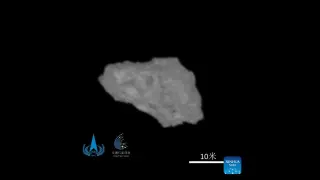
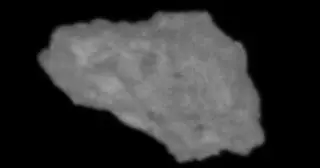
China’s Tianwen-2 probe has rendezvoused with the near-Earth quasi-satellite Kamo’oalewa, returning the first images from roughly 20 km away after a 400-day, 1-billion-km journey. The mission now aims to land briefly on the 41-meter asteroid to collect samples for return to Earth in 2027, a feat that would join Hayabusa, Hayabusa2, and OSIRIS-REx in asteroid-sample history. New analyses also question Kamo’oalewa’s lunar-origin hypothesis, suggesting it may be LL chondrite material that drifted from the Flora family.
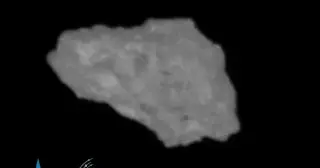
China's Tianwen-2 asteroid-sampling mission released its first image of quasi-moon Kamo'oalewa (asteroid 2016 HO3), taken from about 20 km away on July 2, 2026. The spacecraft will study the object with 11 instruments for roughly a year before attempting a return sample to Earth. Kamo'oalewa, about 16–20 meters across, is a near-Earth quasi-satellite and may be material from the Moon formed by a past large impact Giordano Bruno; a sample could test that idea. Tianwen-2, launched in May 2025, marks China's first asteroid-sample mission, with future plans including Tianwen-3 (Mars sample return in 2028) and Tianwen-4 (Jupiter/Uranus study in 2030).
China released the first image of an asteroid some astronomers say could be a fragment from the Moon, and the Tianwen-2 mission is planned to collect a sample and return it to Earth.
Kamoʻoalewa, a small near-Earth object that travels with Earth like a quasi-moon, may be a fragment of the Moon blown into space by an ancient impact. China’s Tianwen-2 has reached the object and will attempt to collect a few hundred grams of material using multiple sampling methods before returning a capsule to Inner Mongolia in 2027. A lunar origin would be confirmed if the rock’s minerals and isotopes match Moon rock; if not, the evidence would favor an asteroid origin. The mission will map and study Kamoʻoalewa through 2027, potentially providing a decisive answer about whether Earth has been shadowed by a piece of its own satellite.
China’s CNSA Tianwen-2 spacecraft has reached the near-Earth quasi-moon Kamo'oalewa and is set to attempt sampling on July 4, 2026, potentially via a touch‑and‑go grab or direct drilling, collecting about 100 grams of surface material. After mapping the rock from ~300 m to 20 km altitude, the samples would return to Earth in late 2027, with a planned 2035 follow‑up to study 311P/PanSTARRS. The mission could reveal Kamo'oalewa’s origin—perhaps lunar debris or a main-belt fragment—while showcasing China’s space capabilities and informing future asteroid resource exploration.
Japan’s Martian Moons eXploration (MMX) has reached Tanegashima for a late-2026 launch on the H3 rocket. The mission will collect about 10 grams from Phobos and return the samples to Earth in 2031, aided by the IDEFIX rover to scout a landing site. MMX aims to help determine whether Phobos and Deimos are captured asteroids or Mars ejecta, offering insights into Mars’ history and the inner solar system; after delays tied to H3 issues, the project targets a Mars-orbit phase in 2027 and a Phobos landing in 2029.
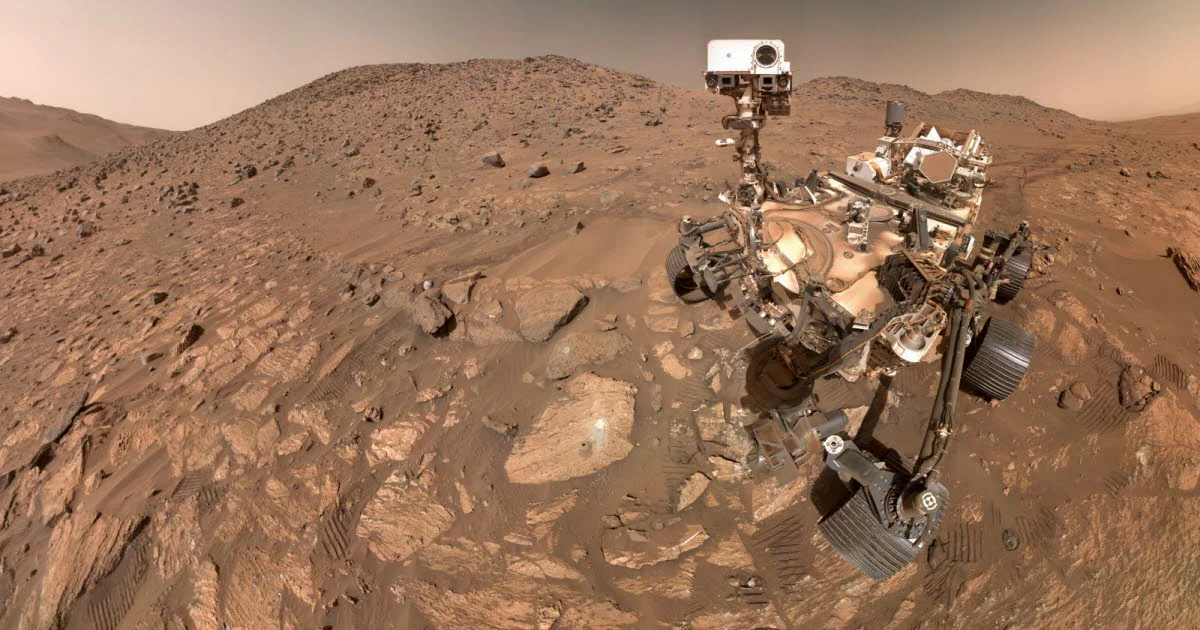
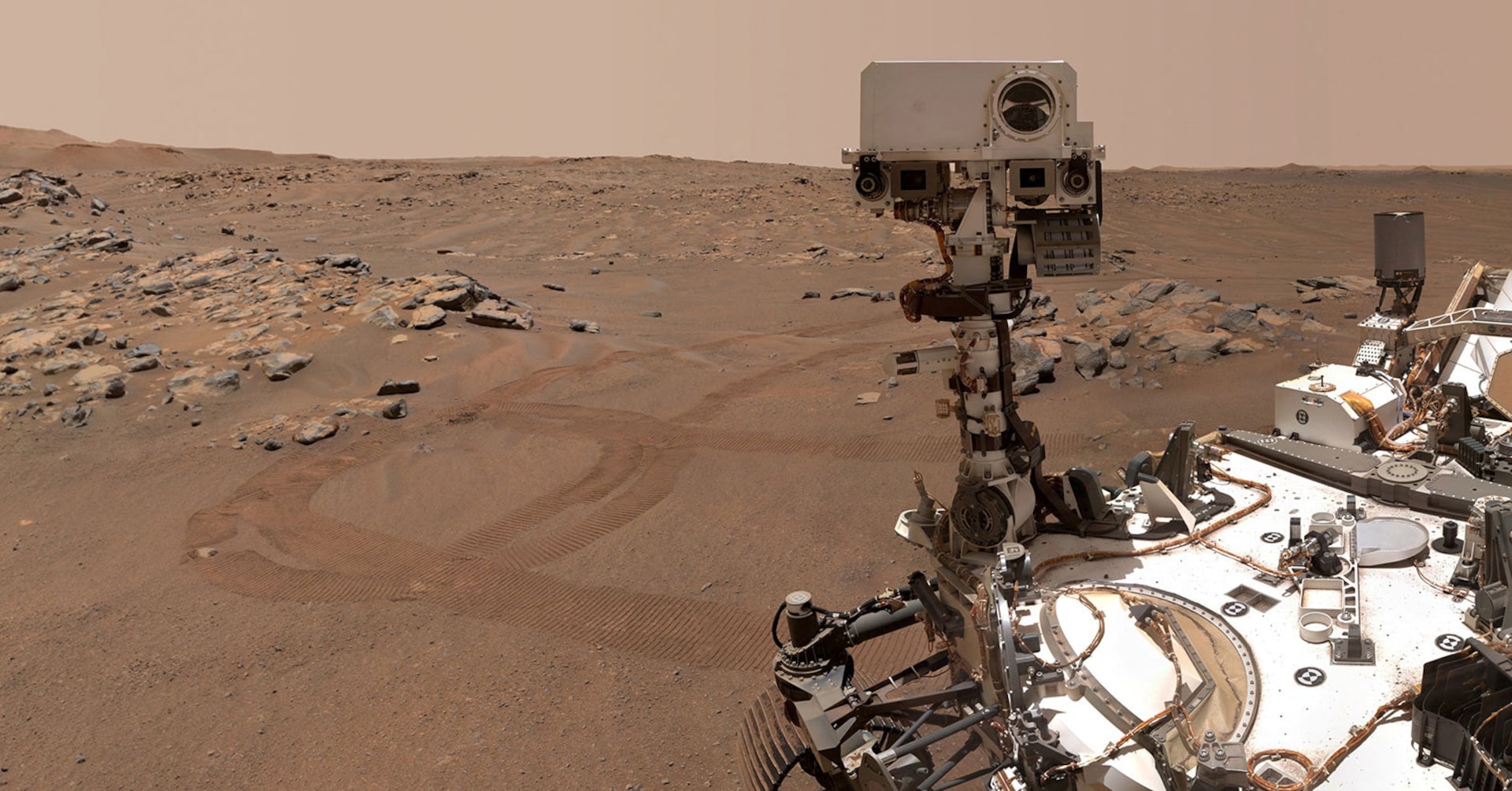
Perseverance detected two minerals, vivianite and greigite, in a Jezero Crater rock, a tantalizing but unproven biosignature that could indicate a past microbial ecosystem; abiotic processes could mimic such signals, so confirmation is essential. A Mars Sample Return would bring rocks to Earth for high-resolution analyses—NASA and partners are pursuing faster, cheaper routes to achieve this within a decade. If confirmed, it would be historic; even a null result would inform the conditions under which life could arise on Mars.
NASA's Mars Sample Return program, which aimed to bring Martian samples to Earth for detailed analysis, has been canceled due to high costs and lack of a concrete plan, resulting in the loss of valuable scientific opportunities, including the analysis of potentially biosignature-bearing rocks like Cheyava Falls.
China is advancing its Mars sample return mission with a new lightweight device designed to capture Martian rock samples in orbit. The 12kg module, developed by the Institute of Aerospace System Engineering in Shanghai, will catch a sample container ejected into orbit by an ascent vehicle. This container, filled with rocks collected from Mars' surface, will be secured and transferred into a storage vessel for its journey back to Earth. The device has been tested to ensure it can adapt to various entry angles and positions, overcoming the mass limitations of traditional docking mechanisms.
NASA is seeking cost-effective alternatives for its Mars sample return mission due to budget constraints, with a formal request for proposals going out to NASA centers, laboratories, and space industry companies. The current program has been plagued by technical complexities, spending constraints, and rising costs, prompting the need for innovation and proven technology to reduce development time, risks, and expenses. The mission's next phase, in partnership with the European Space Agency, aims to retrieve the samples collected by the Perseverance rover and launch them back to Earth, but the projected costs have soared to as high as $11 billion with a return date as far as 2040. NASA is open to leaving behind some of the samples and hopes to find a solution through collaboration with industry partners.