
Nikon investigates AI use in winning microscopy video after scientists flag biological errors
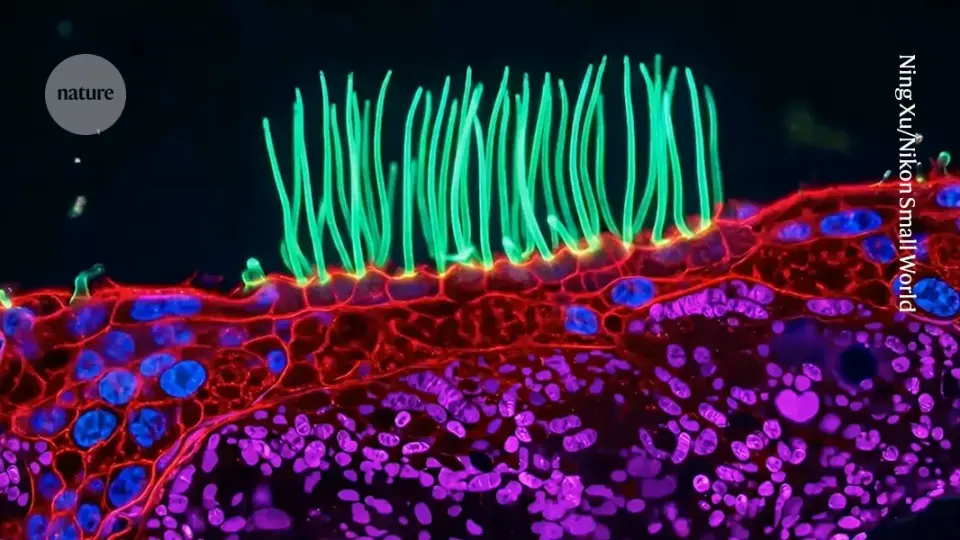
Nikon is re-reviewing the winning entry of its 15th annual Small World in Motion competition after scientists alleged that Dr. Ning Xu’s video of cilia was manipulated using artificial intelligence. Critics argue the footage contains biologically impossible structures and AI watermarks, while Xu claims he only used AI for post-processing colorization, not generation.
Key points
- Nikon is investigating whether the 2026 Small World in Motion winner, Dr. Ning Xu, violated rules by using AI to generate or alter the winning video.
- Scientists, including Edward Phelps and Ian Donovan, claim the video shows structures that 'pop in and out of existence' and contain AI watermarks, suggesting fabrication.
- Xu admits to using an unsupervised AI model for post-processing to colorize grayscale data but denies generating the experimental footage or cilia motion.
- Nikon states Xu is 'respectfully complying' and has provided technical documentation, but the organization is re-evaluating the entry to ensure fair competition.
- The controversy highlights broader concerns about AI tools misrepresenting scientific data, with experts warning that AI-generated visuals can introduce biological inaccuracies.
Background
This incident follows a trend of AI-related controversies in scientific and creative fields, including debates over AI-generated mathematics solutions and allegations of AI use in film trailers. The Small World competition, run by Nikon for 15 years, aims to showcase the beauty of microscopy, with a $3,000 prize for the winner. The dispute underscores the tension between artistic visualization and scientific accuracy in data-driven fields.
How outlets are covering it
Nature emphasizes the scientific integrity issue, quoting experts who argue that AI tools can hallucinate biological structures not present in the underlying data. BBC focuses on the procedural aspect, noting Nikon’s investigation and Xu’s denial of rule-breaking, while highlighting the prize’s significance beyond the monetary value. PetaPixel highlights the technical evidence, including a SynthID watermark detected by Ian Donovan, and notes that Xu’s LinkedIn profile was deleted. Boing Boing provides background on the competition’s artistic nature but does not detail the specific allegations. Outlets disagree on whether Xu’s actions constitute a violation: Nikon initially stood by its procedures, while critics argue the AI use fundamentally altered the data.
Why it matters
The controversy raises critical questions about the role of AI in scientific imaging and data visualization. If AI tools are used to enhance or alter experimental data without clear disclosure, it could undermine trust in scientific findings. The case also highlights the need for transparent standards in using AI for post-processing in competitions and research, ensuring that artistic enhancements do not misrepresent biological reality.
What to watch
Nikon is expected to announce the outcome of its investigation soon, potentially leading to the disqualification of Xu’s entry or a formal statement on AI use in microscopy competitions. Scientists may push for stricter guidelines on AI disclosure in scientific imaging, and the incident could influence future rules for similar competitions. Xu’s response and the availability of raw grayscale data will be key to resolving the dispute.
- This award-winning microscopy image used AI — igniting controversy in a prestigious competition Nature
- Tiny image sparks big backlash in Nikon photo contest BBC
- Nikon ‘Re-Reviewing’ Winner of Small World in Motion Contest After AI Accusation petapixel.com
- Allegations of AI Use in Nikon Competition Spark Controversy the-scientist.com
- Nikon's microscope videos turn sea slugs and starfish larvae into living art Boing Boing
Want the full story? Read the original reporting
Read on Nature