
Orbital debris crisis intensifies as new cleanup missions and financial incentives seek to prevent Kessler syndrome
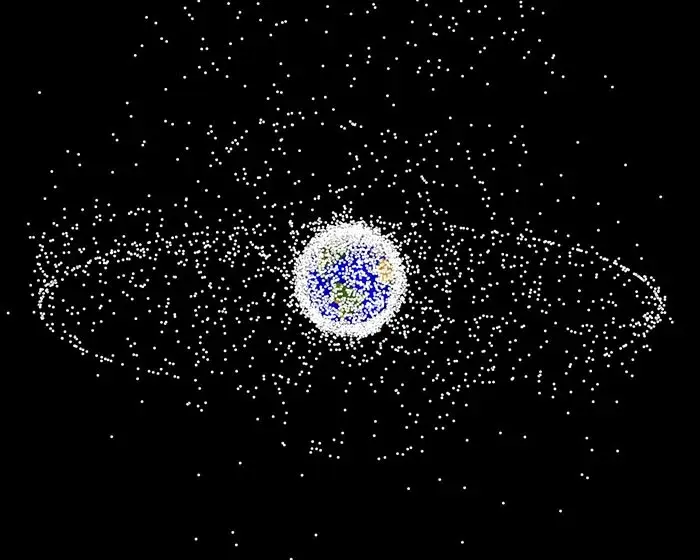
Earth’s orbit is increasingly crowded with millions of untracked debris fragments, raising the risk of cascading collisions known as Kessler syndrome. While SpaceX expands its Starlink constellation to over 11,000 satellites, researchers and governments are exploring active removal missions and financial deposit systems to mitigate long-term orbital hazards.
Key points
- The European Space Agency estimates 230 million debris pieces between 1 mm and 1 cm, plus 1.5 million larger fragments, orbiting Earth.
- A UK-funded mission with ClearSpace aims to launch in 2029 to capture and deorbit two dead satellites by 2032.
- North Carolina State University researchers propose a 'bottle deposit' model to incentivize satellite operators to remove defunct spacecraft.
- SpaceX reports over 11,000 active Starlink satellites and plans for up to 100,000 more, alongside potential AI data centers in orbit.
- Astronomers report that satellite light streaks are forcing them to mask telescope data, potentially obscuring rare astronomical discoveries.
Background
This situation follows a decade of rapid satellite deployment, beginning with SpaceX’s first Starlink batch in 2019. Previous incidents, including a 2021 Russian anti-satellite test and a 2009 Iridium-Cosmos collision, have already generated thousands of tracked fragments. The current crisis is exacerbated by proposals for massive orbital infrastructure, such as SpaceX’s application for 1 million satellites for AI computing, which could increase collision risks and light pollution.
How outlets are covering it
WRAL.com emphasizes the growing volume of untracked debris and the potential for a cascading Kessler syndrome, highlighting the need for new cleanup technologies and financial incentives. Astronomy.com focuses on the technical challenges of low Earth orbit (LEO) congestion, noting that SpaceX’s Starlink satellites perform over 400,000 avoidance maneuvers annually but that higher-altitude debris remains a long-term threat. The New Indian Express highlights the public safety concerns and outdated international treaties, citing the recent uncontrolled reentry of NASA’s Swift satellite. SpaceNews notes the commercial challenges of in-orbit servicing, suggesting that while technologies are being proven, finding paying customers for debris removal remains difficult.
Why it matters
The accumulation of space debris threatens the functionality of critical infrastructure, including GPS, weather forecasting, and communications. If the Kessler syndrome threshold is reached, certain orbital regions could become unusable, hindering future space exploration and scientific observation. Additionally, the reentry of large debris poses potential risks to ground safety, while the environmental impact of burning up satellites in the atmosphere remains an open research question.
What to watch
The UK’s ClearSpace mission is scheduled to launch in 2029, with the goal of removing two satellites by 2032. Researchers at NC State are modeling the effectiveness of deposit systems, while SpaceX continues to expand its constellation and develop automated collision-avoidance systems. International discussions on updating the 1967 Outer Space Treaty to address debris mitigation are expected to gain momentum as orbital traffic increases.
- Earth is surrounded by millions of pieces of space junk and the problem is getting worse WRAL
- How space trash could affect weather, ozone and your forecast The Weather Channel
- Our increasingly cluttered skies Astronomy.com
- The cost of operating amid debris SpaceNews
- Quick Take | Cleaning space junk The New Indian Express
Want the full story? Read the original reporting
Read on WRAL