
Pharma Consortium’s Secret Data Boosts AI Protein Models
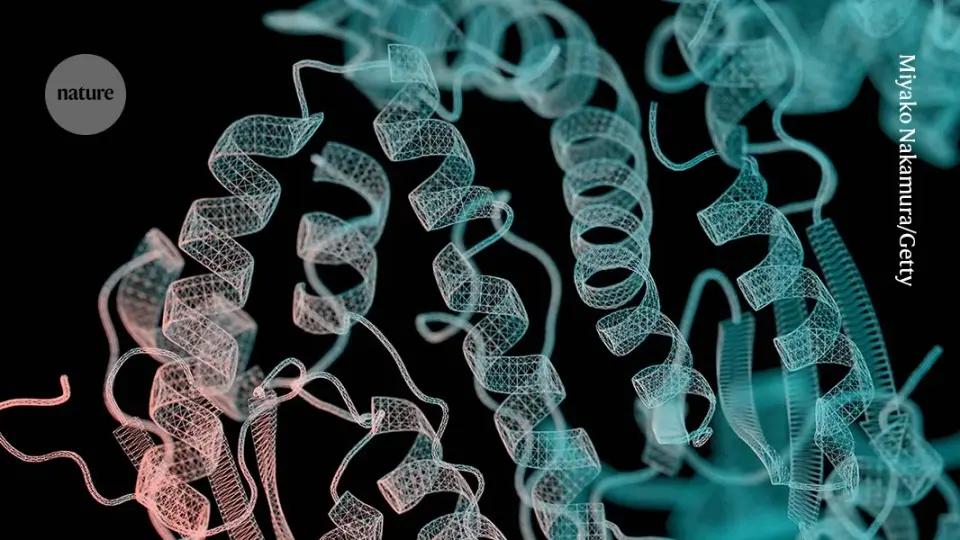
A consortium of pharmaceutical companies demonstrated that training AI models on proprietary protein data significantly outperforms models using only public datasets. By fine-tuning an open-source version of AlphaFold 3 on over 20,000 private structures, the group achieved higher accuracy in predicting protein-drug interactions. While the results are promising, the model remains private and unpeer-reviewed, highlighting the gap between public data limitations and private industry capabilities.
Key points
- A consortium of drug companies, including AbbVie and Astex, formed the AI Structural Biology (AISB) Network to pool proprietary data.
- They fine-tuned OpenFold3, an open-source replica of AlphaFold 3, on 20,167 private protein-ligand structures.
- The resulting model predicted over half of a test set of 1,056 structures with high accuracy, compared to one-third for the public version.
- The study, released via a blog post, has not been peer-reviewed, and the model is not publicly available.
- Experts argue that public databases like the Protein Data Bank lack sufficient examples of drug-protein interactions, limiting AI performance in drug discovery.
Background
AlphaFold, which won the 2024 Nobel Prize in Chemistry, revolutionized protein structure prediction using public data from the Protein Data Bank (PDB). However, as AI models evolve to predict interactions between proteins and drugs, the PDB’s limited dataset of drug-like molecules becomes a bottleneck. Previous coverage noted that AI tools are increasingly used in drug discovery, such as in mapping autism-related protein networks, but the reliance on public data remains a constraint for complex molecular interactions.
Why it matters
The findings suggest that private pharmaceutical data could significantly enhance AI capabilities in drug discovery, potentially accelerating the development of new treatments. However, the lack of public access to these models and data raises concerns about the democratization of AI in science. If private firms hold a competitive advantage due to proprietary data, it may widen the gap between industry and academic research, limiting broader scientific progress.
What to watch
The AISB Network plans to submit a paper describing the work to a peer-reviewed journal. Additionally, a UK-funded project called OpenBind, supported by up to £8 million, is releasing hundreds of new protein structures to address the data gap. The success of these initiatives could influence future policies on data sharing in AI-driven drug discovery.
Want the full story? Read the original reporting
Read on Nature