
Rubin Observatory’s 3.2-Gigapixel Camera Reveals 650,000 Galaxies in COSMOS Field
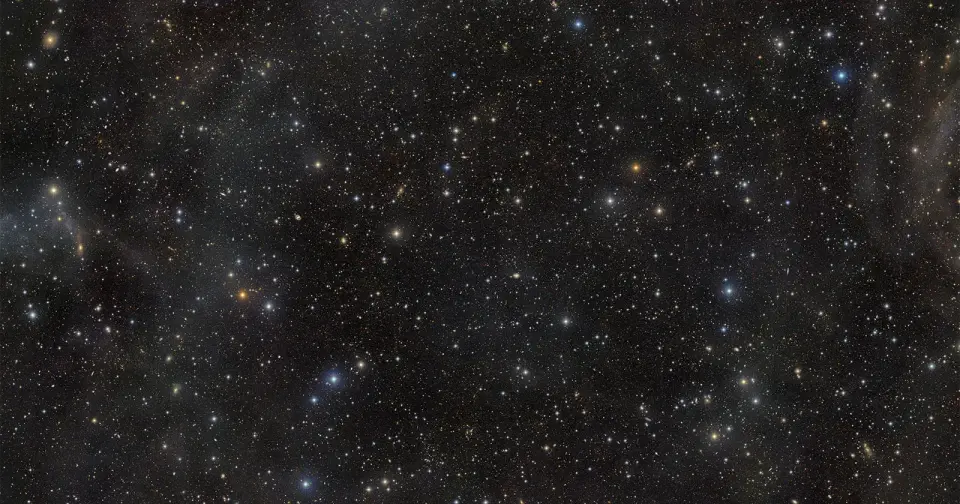
The NSF-DOE Vera C. Rubin Observatory has released its first deep-field image from the Legacy Survey of Space and Time (LSST), capturing over 650,000 galaxies in the COSMOS field. This 3.2-gigapixel image, created by stacking hundreds of exposures, marks Early Data Preview 2 and validates the camera’s precision for a decade-long survey of the southern sky.
Key points
- The image was captured using the LSST Camera, the world’s largest digital camera, which weighs 3,000 kilograms and consists of 189 CCDs mounted on the 8.4-meter Simonyi Survey Telescope.
- The COSMOS field, located in the constellation Sextans, contains over 650,000 galaxies and 75,000 stars, providing a clear view of cosmic evolution due to its lack of foreground dust and stars.
- This release, known as Early Data Preview 2, combines data collected between April 2025 and January 2026, covering approximately 3,000 square degrees of the night sky.
- The observatory will repeatedly image this field to detect transient events like supernovae, leveraging the COSMOS field’s extensive historical data from Hubble and other telescopes for comparison.
Background
The Vera C. Rubin Observatory began its primary mission recently, aiming to capture 700 high-resolution images nightly for ten years. Previous archive coverage noted that this release serves as a critical validation step for the LSST survey, ensuring the camera’s measurements align with decades of prior observations in the COSMOS field, which has been studied since 2003.
How outlets are covering it
While PetaPixel and The Times of India emphasize the sheer scale of the image, citing over 500,000 galaxies, the Rubin Observatory and NOIRLab provide more precise figures, stating the image contains over 650,000 galaxies and 75,000 stars. NOIRLab highlights the technical achievement of the 55,536 x 30,291 pixel resolution, whereas PetaPixel focuses on the camera’s physical size and weight. All sources agree that the COSMOS field is a vital testing ground for the survey’s ability to detect transient cosmic events.
Why it matters
This image validates the Rubin Observatory’s capability to deliver precise, high-quality data for the LSST, a survey designed to create the most detailed record of the universe. By comparing new data with historical observations, scientists can track how galaxies change over time and identify short-lived events like supernovae, advancing our understanding of cosmic evolution.
What to watch
The Rubin Observatory will continue to image the COSMOS field repeatedly over the coming years, generating deeper views that reveal fainter galaxies and finer details. This ongoing data collection will support the broader LSST mission to map the southern sky and detect transient objects for detailed study.
- 3.2-Gigapixel LSST Camera Captures Over Half a Million Galaxies PetaPixel
- Rubin Observatory begins landmark 10-year timelapse of night sky Technology Org
- Rubin's COSMOS Rubin Observatory
- The world’s largest digital camera captured more than 500,000 galaxies and 50,000 stars in one deep view of the universe The Times of India
- Rubin Looks Deep Into a Famous Cosmic Field NOIRLab
Want the full story? Read the original reporting
Read on PetaPixel