
Amphibians and Reptiles Rely on Hidden Senses Beyond Human Perception
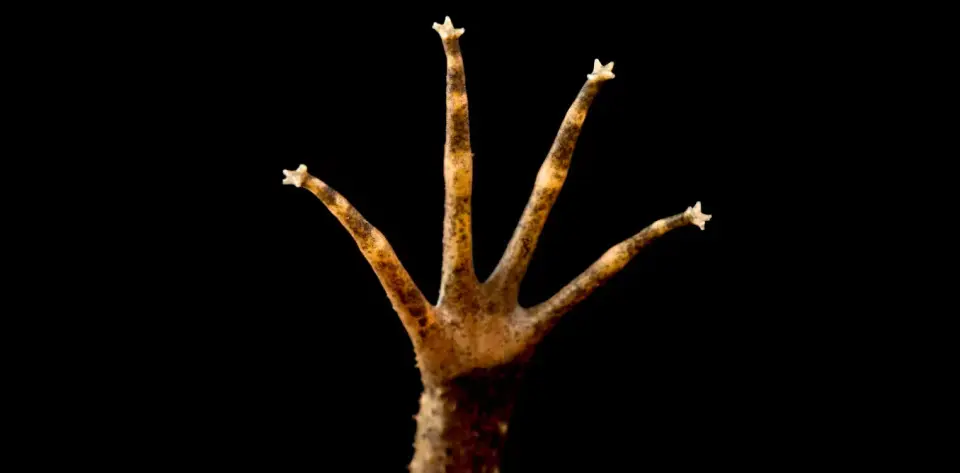
A new analysis highlights how amphibians and reptiles possess specialized sensory organs that detect stimuli humans cannot perceive, including infrared radiation, magnetic fields, and subtle water vibrations. These adaptations allow animals like the Surinam toad and pit vipers to hunt and navigate effectively in low-visibility environments. The findings emphasize that biological sensing extends far beyond the traditional five senses, with species evolving unique mechanisms to interact with their physical surroundings.
Key points
- The Surinam toad uses 128 tiny sensory lobes on its fingertips to detect minute water movements, allowing it to catch prey in complete darkness despite poor vision.
- Pit vipers, boas, and pythons possess pit organs that detect infrared radiation, creating thermal images of warm-blooded prey even when visual cues are absent.
- Amphibians utilize cutaneous mechanoreception to detect touch, pressure, and vibration through their skin, enabling them to remain motionless while monitoring for predators within 15 to 30 inches.
- Many reptiles and amphibians exhibit magnetoreception, using Earth's magnetic field for navigation; sea turtles, for instance, can respond to magnetic variations across distances of up to 8,000 miles.
- Snakes integrate forked tongue chemoreception with other senses to taste the air, while amphibians breathe and excrete toxins through skin that also acts as a sensory interface.
Background
This report follows recent paleontological discoveries, such as the identification of the 309-million-year-old amphibian Jeanerpeton mazonensis, which highlighted exceptional soft-tissue preservation in Carboniferous fossils. While that discovery focused on anatomical structure, the current analysis shifts attention to functional sensory evolution in modern species.
Why it matters
Understanding these non-human sensory modalities challenges the anthropocentric view of perception and provides insights into evolutionary adaptations for survival in challenging environments. It also underscores the complexity of biological systems, suggesting that future research in biomimicry or sensory technology may draw inspiration from these ancient mechanisms.
What to watch
Researchers may continue to investigate the specific neural mechanisms behind magnetoreception and infrared detection, as well as how these senses integrate with other modalities in various species. Further studies could explore the ecological implications of these sensory abilities for migration and predation.
Want the full story? Read the original reporting
Read on The Conversation