Tag

Amphibians

All articles tagged with #amphibians

Peruvian Andes frogs colonize melting glaciers, facing new genetic and fungal challenges
science2 days ago

Peruvian Andes frogs colonize melting glaciers, facing new genetic and fungal challenges

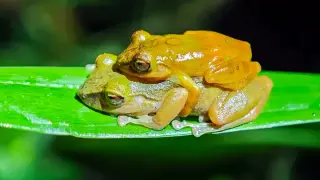
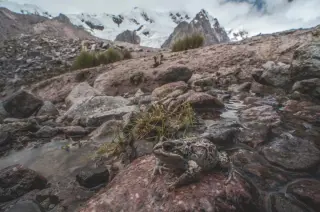
A two-month expedition in Peru's Cordillera Vilcanota revealed that marbled four-eyed and water frogs are expanding their ranges into areas recently freed by melting glaciers. Researchers found these amphibians thriving at 5,400m, the highest elevation for any frog species. While the new habitats offer genetic diversity, the chytrid fungus still affects the animals, though altitude may limit infection intensity. Local communities often fear these toads, prompting scientists to distribute educational materials to change perceptions.
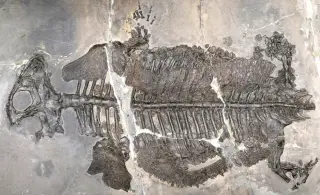
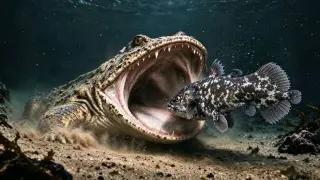
Triassic Amphibian Fossil Rewrites History of Marine Life
science27 days ago

Triassic Amphibian Fossil Rewrites History of Marine Life

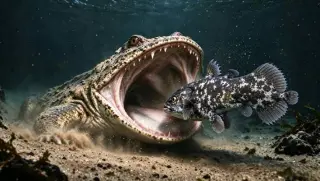
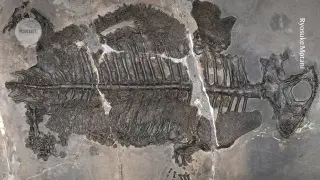
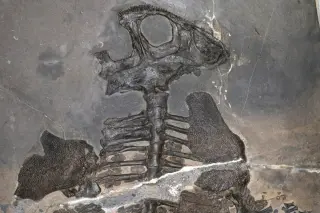
Researchers have identified Gerrothorax maritimus, a 237-million-year-old amphibian from China, as the first known species to live entirely in the ocean. This discovery overturns the long-held belief that amphibians could not survive in saltwater due to their permeable skin. The creature, found in Guizhou Province, featured a flat, armored body and a wide mouth suited for suction feeding on the seafloor. Its bony armor likely prevented saltwater absorption, allowing it to bypass the osmotic challenges that prevent modern amphibians from thriving in marine environments.

Armored Triassic Amphibian Found to Have Lived Entirely in the Ocean
science28 days ago

Armored Triassic Amphibian Found to Have Lived Entirely in the Ocean

Scientists have identified Gerrothorax maritimus, a 237-million-year-old stem amphibian from China, as the first known species to live entirely in the ocean. Discovered in Guizhou province, the 74-centimeter creature featured heavy bony armor that likely prevented saltwater absorption through its skin, allowing it to survive in marine environments where modern amphibians cannot.

Amphibians and Reptiles Rely on Hidden Senses Beyond Human Perception
science-tech1 month ago

Amphibians and Reptiles Rely on Hidden Senses Beyond Human Perception

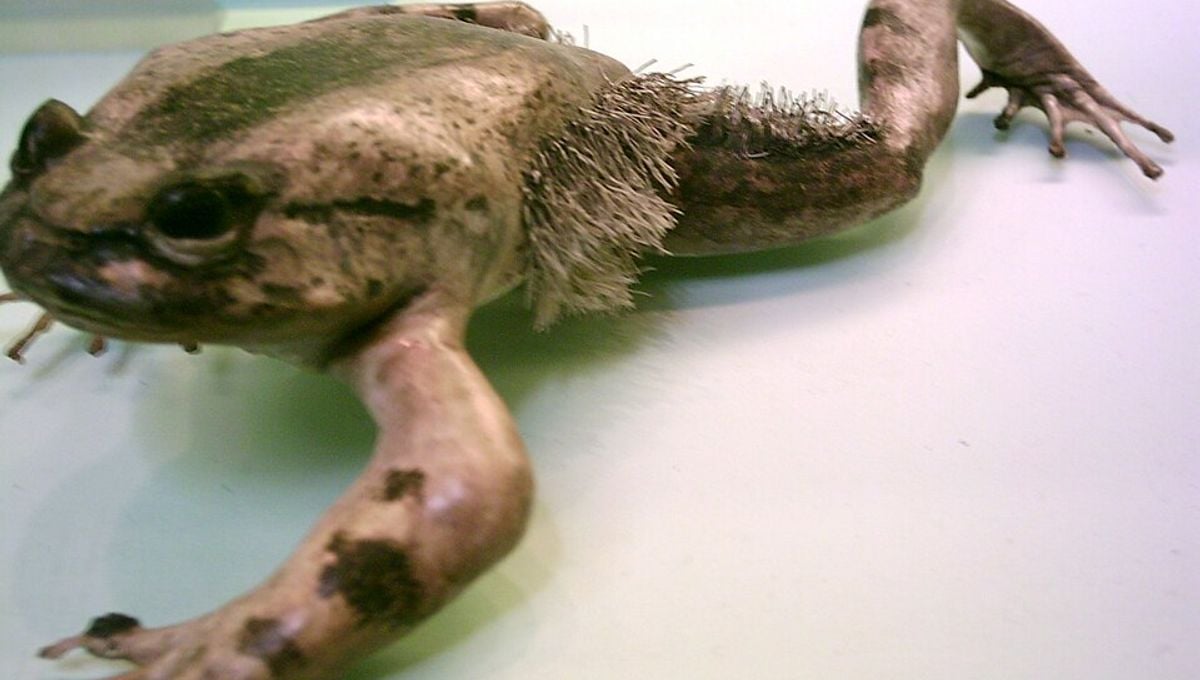
A new analysis highlights how amphibians and reptiles possess specialized sensory organs that detect stimuli humans cannot perceive, including infrared radiation, magnetic fields, and subtle water vibrations. These adaptations allow animals like the Surinam toad and pit vipers to hunt and navigate effectively in low-visibility environments. The findings emphasize that biological sensing extends far beyond the traditional five senses, with species evolving unique mechanisms to interact with their physical surroundings.

Student Paleontologists Name New 309-Million-Year-Old Amphibian After Their Mothers
science1 month ago

Student Paleontologists Name New 309-Million-Year-Old Amphibian After Their Mothers

Two student interns at the Field Museum in Chicago have officially described a new species of early amphibian, Jeanerpeton mazonensis, dating back 309 million years. The species, found in Mazon Creek fossil deposits, was named in honor of the students' mothers, both of whom are named Jean. This discovery separates the creature from a previously grouped 'waste bin taxon' and highlights the exceptional preservation of soft tissue details in Carboniferous-era fossils.

124-Year-Old Museum Specimen Reveals New Frog Species in Ecuador
science3 months ago

124-Year-Old Museum Specimen Reveals New Frog Species in Ecuador

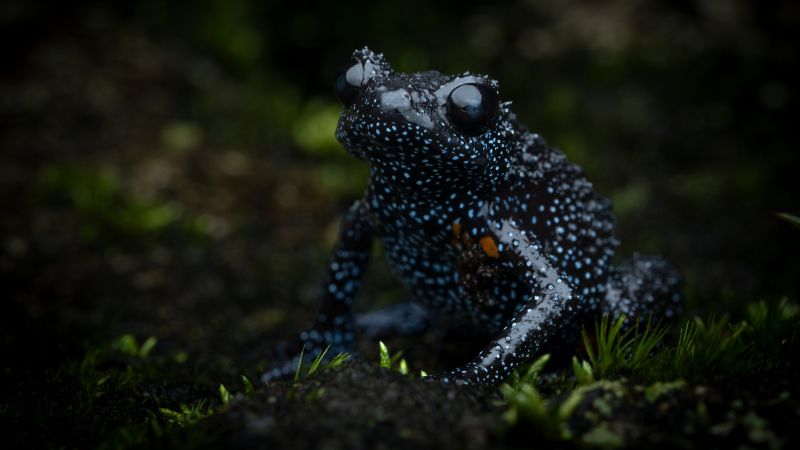
A new frog species, Pristimantis milpe, has been formally described after researchers discovered that frogs previously labeled as Pristimantis subsigillatus were misidentified for over a century. The error originated from a 1902 specimen stored in London, which did not match the living populations in Ecuador and Colombia. This widespread amphibian, found in rainforests and urban areas, was overlooked due to a failure to link historical type specimens with current populations.

La Brea’s Forgotten Bones Reveal a New Ice Age Toad Species
science3 months ago

La Brea’s Forgotten Bones Reveal a New Ice Age Toad Species

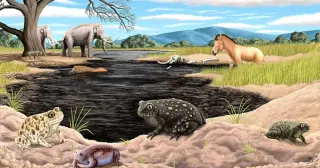
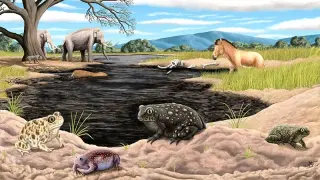
Researchers at the La Brea Tar Pits have identified a new extinct amphibian species, *Spea labreae*, from ice age fossils. Discovered accidentally by Dr. Alberto Cruz while reviewing unexamined 1950s collections, the finding is only the second ice age amphibian known in North America. The discovery, published in the *Journal of Vertebrate Paleontology*, offers critical insights into past climate conditions in Los Angeles, as amphibians are highly sensitive to environmental changes. The study also records the first presence of the Mexican burrowing toad in the region, highlighting significant shifts in local ecosystems over the last 10,000 years.

Forgotten Fossil Reveals Ice Age Toad Species in Los Angeles
science3 months ago

Forgotten Fossil Reveals Ice Age Toad Species in Los Angeles

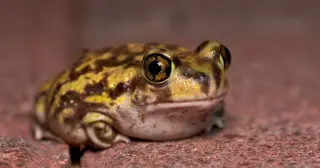
Researchers have identified a new extinct amphibian species, Spea labreae, from fossils excavated at the La Brea Tar Pits in 1929. The discovery, published in the Journal of Vertebrate Paleontology, marks the first extinct amphibian found in Los Angeles and only the second Ice Age amphibian known in North America. The find suggests that Ice Age Los Angeles was significantly colder and wetter than today, as amphibians are highly sensitive to environmental changes. The species is slightly larger than modern spadefoot toads and may have gone extinct due to its size or climate shifts.

New Ice Age Toad Species Unearthed in LA Tar Pits
science3 months ago

New Ice Age Toad Species Unearthed in LA Tar Pits

A new extinct spadefoot toad species, named Spea labreae, has been identified from Ice Age fossils at the La Brea Tar Pits in Los Angeles. Discovered by paleoecologist José Alberto Cruz in 1929-excavated bones, the find is the second extinct Ice Age amphibian ever found in North America. The discovery offers crucial insights into the region's ancient climate, as amphibians are sensitive indicators of temperature and humidity. The species was slightly larger than modern spadefoots and is believed to have lived approximately 45,000 years ago. The finding, published in the Journal of Vertebrate Paleontology, highlights the value of revisiting old collections and underscores the importance of amphibian fossils in understanding past environmental conditions.

Tiny coquí frogs trade growth for immune defense under fungal threat
science5 months ago

Tiny coquí frogs trade growth for immune defense under fungal threat

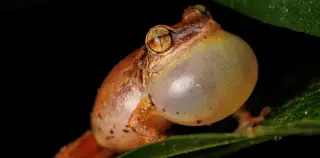
Researchers from the University of Florida used field data and mathematical models to show how young coquí frogs balance growth and immune defense in the face of a deadly fungal pathogen. When infection is low, they grow quickly to reach maturity; as infection rises, they allocate more energy to fighting disease, slowing growth and delaying maturity. Seasonal timing also matters: warmer seasons boost food and infection risk, influencing survival and lifetime reproduction. The study highlights how pathogens cause hidden costs in development and has implications for conservation and captive release timing.