
BepiColombo completes eight-year odyssey to orbit Mercury, setting stage for dual-probe science campaign
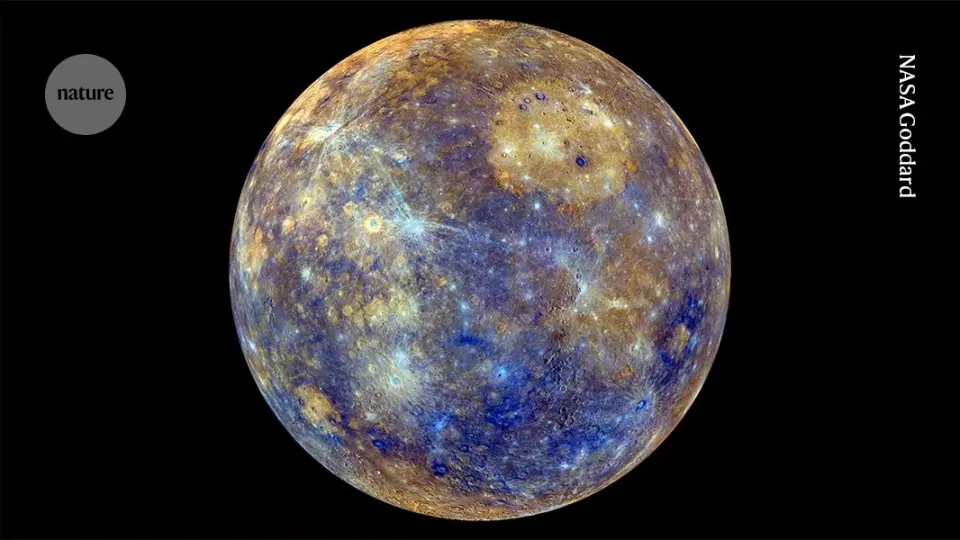
The joint European-Japanese BepiColombo mission has successfully entered orbit around Mercury, concluding an eight-year journey that began in October 2018. The spacecraft, comprising the ESA-built Mercury Planetary Orbiter (MPO) and the JAXA-built Mercury Magnetospheric Orbiter (MIO), will remain linked until December 9, 2026, before separating to study the planet from different altitudes. Science operations are scheduled to commence in April 2027, marking the first time two spacecraft will simultaneously observe Mercury to analyze its magnetic field, surface, and interior structure.
Key points
- Orbit insertion was confirmed on November 21, 2026, after a 37-minute thruster burn slowed the spacecraft enough for Mercury's gravity to capture it.
- The two probes will separate on December 9, 2026; MIO will enter a highly elliptical orbit (500–11,000 km altitude), while MPO will descend to a lower orbit (400–1,500 km) by March 2027.
- The mission cost approximately $2 billion and traveled over 6 billion miles, using gravity assists from Earth, Venus, and Mercury to shed speed.
- A one-year delay in the timeline was caused by solar panel issues that reduced power for the Mercury Transfer Module's electric thrusters.
- The mission aims to resolve long-standing mysteries about Mercury's large iron core, magnetic field, and surface composition, which previous missions like MESSENGER and Mariner 10 could not fully explain.
Background
BepiColombo is the second mission to orbit Mercury, following NASA's MESSENGER (2011–2015) and the earlier Mariner 10 flybys in the 1970s. Mercury remains one of the least explored planets in the solar system, with only Uranus and Neptune having fewer visitors. The planet's proximity to the Sun makes it difficult to reach, requiring complex trajectories to avoid overshooting the target. Previous missions revealed unexpected features, such as a magnetic field and a core comprising 60% of the planet's volume, but no single formation model has fully explained these characteristics.
How outlets are covering it
Nature emphasizes the technical achievement of the eight-year journey and the unique capability of the Mercury Imaging X-ray Spectrometer (MIXS), which tested its instruments by imaging the Crab Nebula en route. ABC News highlights the logistical challenges, noting that flight controllers in Germany took several hours to confirm orbit insertion due to the 94-million-mile distance and weak signal. Space.com details the specific timeline, including the 37-minute burn and the one-year delay caused by solar panel issues. National Geographic focuses on the scientific implications, particularly how the dual-prober design will help distinguish Mercury's innate magnetic field from solar wind fluctuations and resolve debates about whether the planet lost its outer layers to a giant impact or formed with its current dense structure.
Why it matters
BepiColombo represents a significant advancement in planetary science by providing simultaneous, multi-vantage-point data from Mercury. This will allow scientists to better understand the planet's interior, magnetic field, and surface composition, which are critical for modeling planetary formation in the early solar system and for understanding exoplanets that orbit close to their stars. The mission also tests new technologies, such as X-ray imaging in interplanetary space, and addresses the extreme thermal challenges of operating near the Sun.
What to watch
The two probes will separate on December 9, 2026. MIO will immediately enter its final orbit, while MPO will perform a series of maneuvers to reach its lower orbit by March 2027. Science operations are scheduled to begin on April 6, 2027, with the mission expected to continue for at least one Earth year (four Mercury years).
- BepiColombo finally reaches Mercury after eight-year odyssey Nature
- Little Mercury gets its first visitor in years as a pair of spacecraft loop into orbit ABC News - Breaking News, Latest News and Videos
- European-Japanese BepiColombo probe arrives in orbit around Mercury today Space
- Mercury-bound X-ray telescope delivers first images after eight years in space Phys.org
- A New Mission Arrives at Mercury, the Solar System's Most Mysterious Planet National Geographic
Want the full story? Read the original reporting
Read on Nature