
Curiosity Marks 5,000 Sols and 1km Ascent While Puzzled by Unexplained Surface Holes
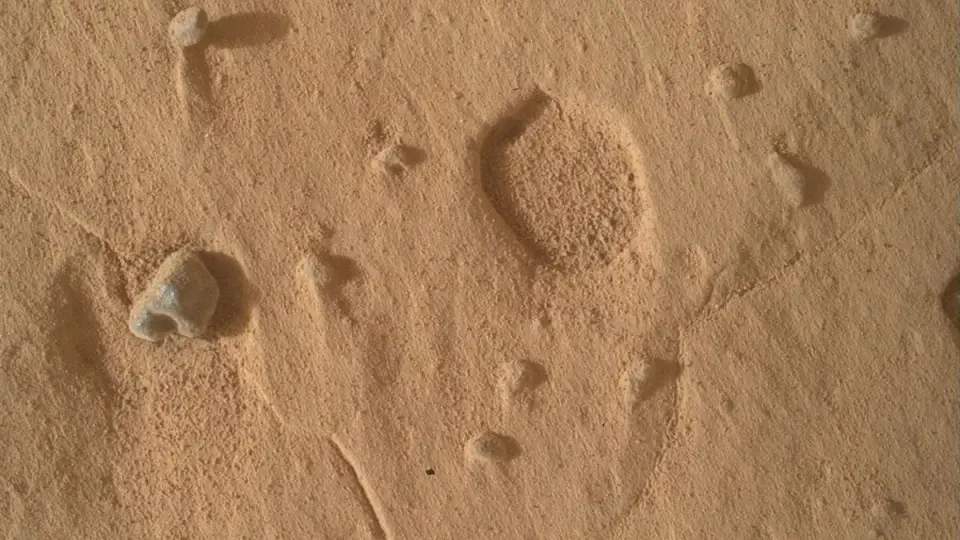
NASA’s Curiosity rover has reached a major milestone, achieving a 1,000-meter elevation gain on Mount Sharp and completing 5,000 Martian days (sols) in August 2026. While the rover was designed for a two-year mission, it has operated for 14 years. Recent exploration in the Valle Grande valley has revealed unusual, shallow surface holes that defy standard geological explanations, prompting detailed imaging and chemical analysis to determine their origin.
Key points
- Curiosity achieved a 1,000-meter elevation gain on Mount Sharp in late August 2026, a significant milestone for the 14-year-old mission.
- The rover completed its 5,000th sol on August 29, 2026, far exceeding its original two-year design lifespan.
- Scientists are investigating unusual, broad, and shallow holes found in the Valle Grande valley, which lack the typical pebble or nodule signatures of known erosion patterns.
- The rover is currently analyzing sulfate-rich layers above the 'boxwork' terrain to understand how Mars' environment transitioned from wet to dry.
- Recent activities include examining a wind-formed ripple named 'Chocolatal' to determine if it is a transverse aeolian ridge (TAR).
Background
This development follows earlier discoveries in the same region, including a field of honeycomb-like polygons found in July 2026 that also lacked clear geological explanations. Curiosity has been climbing Mount Sharp since 2014, analyzing sedimentary layers to reconstruct the history of water on Mars.
How outlets are covering it
ScienceAlert emphasizes the mystery of the new holes, noting they are unlike any pits seen before on Mars and lack obvious embedded pebbles. NASA’s official blog focuses on the technical achievements, such as the 1,000-meter ascent and the 5,000-sol milestone, while also detailing the investigation of the 'Chocolatal' ripple. Astrobiology Web highlights the 1-kilometer elevation gain as a pinnacle of the mission, noting the panoramic views captured. India Today contextualizes the achievement by contrasting the rover's 14-year operational life against its original two-year design intent.
Why it matters
The discovery of unexplained surface features and the rover's continued operation beyond its design life demonstrate the potential for long-term geological insights on Mars. Understanding these anomalies could reveal new erosion processes or rock properties, helping to reconstruct the planet's climate history and habitability.
What to watch
Scientists will continue analyzing the chemical data from the sampled rock beds and the 3D models of the mysterious holes. Curiosity will also further investigate the 'Chocolatal' ripple to determine its formation and stability, while continuing its ascent up Mount Sharp to examine higher sedimentary layers.
- NASA Found Strange Holes on Mars. Scientists Aren't Sure What Made Them. ScienceAlert
- Curiosity Blog, Sols 4995-5001: 5,000 (Martian) Days on Mars NASA Science (.gov)
- This incredible new Mars image marks 5,000 Martian days for NASA’s Curiosity rover Imaging Resource
- Mars Curiosity Reaches 1-Kilometer Elevation Gain Astrobiology Web
- Curiosity rover completes 5,000 days on Mars. It was sent to live for just 700 days India Today
Want the full story? Read the original reporting
Read on ScienceAlert