Tag

Gale Crater

All articles tagged with #gale crater

Loeb presses NASA on Martian cone; is it just a rock or could it be something else?
science11 days ago

Loeb presses NASA on Martian cone; is it just a rock or could it be something else?

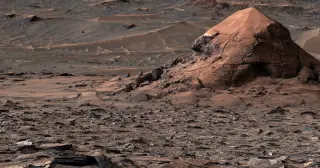
Harvard astrophysicist Avi Loeb challenges NASA’s claim that a cone-shaped feature photographed by the Curiosity rover in Gale Crater is merely a rock, arguing the object could be about 20 cm and may be debris, while NASA says it’s a small (about 1 cm) wind-sculpted formation and suggests pareidolia; Loeb has urged NASA to show another similar rock in Curiosity images to back its interpretation.

NASA Dismisses ‘Party Hat’ Mars Rock as Wind-Sculpted, Not Debris
science12 days ago

NASA Dismisses ‘Party Hat’ Mars Rock as Wind-Sculpted, Not Debris

NASA says the cone-shaped “party hat” rock photographed by the Curiosity rover in Gale Crater in August 2022 is a wind-sculpted rock, not debris; the resemblance may be due to pareidolia, despite Avi Loeb’s suggestion that it could be human-made debris. The object measured about 1 cm and was photographed from roughly 13 feet away, with NASA noting Mars winds continue to shape rocks and citing other unusual Martian rocks captured by rovers.

NASA: Mars 'Party Hat' Rock Is Wind-formed, Not Debris
science13 days ago

NASA: Mars 'Party Hat' Rock Is Wind-formed, Not Debris

NASA has identified the cone-shaped object photographed by the Curiosity rover in Gale Crater in August 2022 as likely a wind-shaped rock rather than human-made debris. NASA staff explained that Mars’ high-speed winds can sculpt rocks into unusual forms, and observers may have read a familiar shape (a phenomenon called pareidolia) into the rock, which measured about 1 centimeter and was photographed from roughly 13 feet away. The initial skepticism about a possible Man-made origin was amplified by Avi Loeb’s post, but NASA clarified the natural rock interpretation remains the most plausible.

Mars boxwork ridges reveal mysterious nodules, hinting at ancient water
science1 month ago

Mars boxwork ridges reveal mysterious nodules, hinting at ancient water

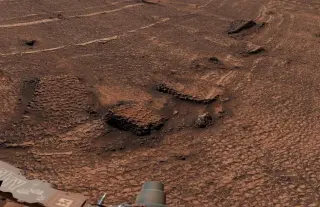
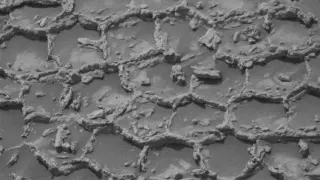
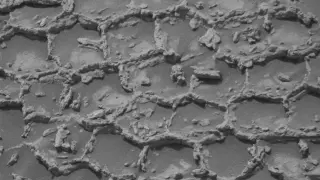
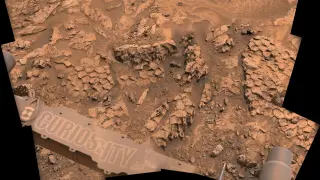
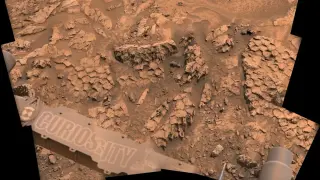
NASA's Curiosity rover photos show giant boxwork ridges on Mount Sharp in Gale Crater now covered with hundreds of tiny egg-like nodules. Scientists are unsure how the nodules formed—possible mineral cementation followed by groundwater activity—though there’s no evidence of life. The findings shed light on Mars’ watery past and how ancient groundwater shaped the landscape.

Mars's Lost Giant Moon: Evidence for an 18× Phobos-Sized Satellite
science2 months ago

Mars's Lost Giant Moon: Evidence for an 18× Phobos-Sized Satellite

Sedimentary rhythmites in Gale Crater's Jura outcrop, analyzed by NASA's Curiosity rover, point to Mars once hosting a much larger moon capable of driving tides in an ancient lake. The proposed moon would have been about 18 times the mass of Phobos and may have been tidally destroyed into rings that later formed Phobos and Deimos. While promising, the evidence isn’t definitive and researchers will inspect additional sites to test the idea.

Curiosity Finds Rare Hematite Clues to Mars' Water Past in Gale Crater
space2 months ago

Curiosity Finds Rare Hematite Clues to Mars' Water Past in Gale Crater

NASA’s Curiosity rover, exploring Vera Rubin Ridge in Gale Crater, has identified high concentrations of hematite—an iron-oxide mineral formed in water—raising questions about Mars’ ancient, water-rich environment; the mission also notes unique Martian dunes and continues to study oxidation and past habitability while navigating mechanical wear.

Ice blankets could keep ancient Martian lakes liquid while the planet froze
space2 months ago

Ice blankets could keep ancient Martian lakes liquid while the planet froze

A LakeM2ARS modeling study using Curiosity data from Gale crater simulated 64 possible ancient Martian lakes over 30 Martian years each (about 56 Earth years). In some cases the lakes froze solid in winter; in others a thin ice lid formed and melted seasonally, insulating the water below and allowing long-term liquid water despite a cooling climate. This mechanism helps explain how liquid water persisted on early, colder Mars and supports the idea that habitable, water-bearing environments could endure even as the planet grew freezing, without requiring a globally warm Mars.