
The Great Lakes Are Geologically Infants Compared to Ancient Rift Lakes
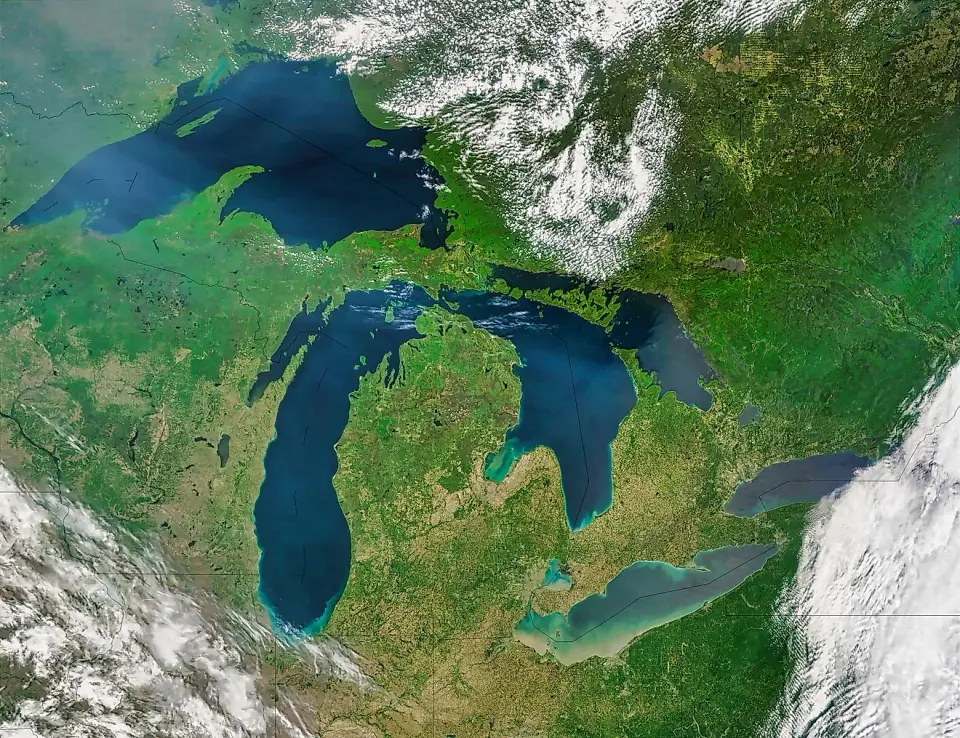
The Great Lakes are geologically young, having formed only about 10,000 years ago after the Ice Age, whereas some of the world's oldest lakes, such as Lake Baikal and Lake Tanganyika, have existed for millions of years. While the Great Lakes are recent postglacial features, ancient lakes in Africa, Asia, and Russia have persisted through vast geological timescales, often due to active tectonic rifting that maintains their basins. This stark contrast highlights that the Great Lakes are among the youngest major lake systems on Earth, with their entire modern history fitting into a tiny fraction of the lifespans of these older, enduring water bodies.
Key points
- An EPA and Environment Canada atlas dates the current Great Lakes ecosystem to roughly the last 10,000 years, marking them as postglacial formations.
- Lake Baikal in Russia is over 25 million years old, making it significantly older than the Great Lakes, with its age sustained by active continental rifting.
- Lake Tanganyika in East Africa has a basin history of 9 to 12 million years, with a single deep lake forming around 5 to 6 million years ago.
- The Caspian Sea, the world's largest enclosed inland water body, has been a closed basin for approximately 5.5 million years.
- Lake Malawi in East Africa has substantial lacustrine conditions dating back 4 to 4.5 million years, driven by rifting that began around 8.6 million years ago.
- Lake Issyk-Kul in Kyrgyzstan has a substantial lake history of about 3 million years, though its basin sedimentation dates back 22 million years.
Background
The Great Lakes are often perceived as ancient due to their vast size and deep geological substrates, but their current form is a recent postglacial development. In contrast, several of the world's oldest lakes, such as Baikal, Tanganyika, and Malawi, are located in active tectonic rift zones that have maintained their basins for millions of years. These ancient lakes have survived significant climatic shifts and have developed unique endemic species, such as the Baikal seal and diverse cichlid fish populations. The Great Lakes, by comparison, are among the youngest major lake systems on Earth, with their entire modern history being a small fraction of the lifespans of these older, enduring water bodies.
Why it matters
Understanding the age of the Great Lakes in comparison to the world's oldest lakes highlights the dynamic nature of Earth's surface and the role of tectonic activity in maintaining long-lived lake systems. The Great Lakes' recent formation underscores the impact of glacial retreat on modern geography, while the ancient lakes demonstrate how tectonic rifting can preserve water bodies over millions of years. This contrast also emphasizes the unique biological and geological histories of these lakes, with ancient lakes supporting endemic species and complex ecosystems that have evolved over vast timescales.
What to watch
Further geological and sedimentary studies may refine the age estimates of the world's oldest lakes, particularly for controversial claims like Lake Zaysan. Ongoing research into tectonic activity and sediment accumulation will continue to clarify the lifespans of ancient lakes and their role in preserving unique ecosystems. Additionally, monitoring the Great Lakes' water levels and environmental changes will remain critical as they continue to evolve in the postglacial era.
Want the full story? Read the original reporting
Read on WorldAtlas