
Harvard Scientist Defies NASA Chief, Claims Accelerating Asteroid Is Lost Soviet Probe
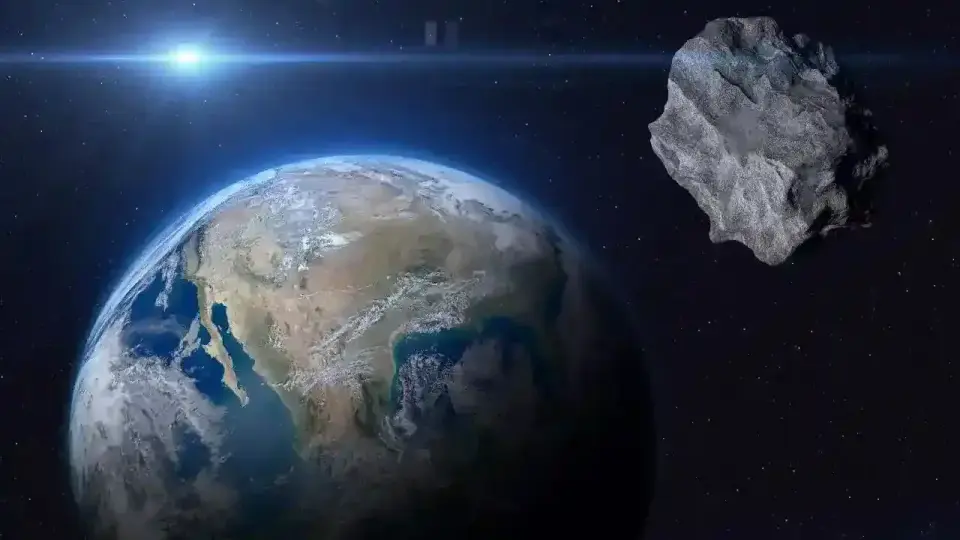
Harvard astrophysicist Avi Loeb publicly disputes NASA Administrator Jared Isaacman’s assertion that the accelerating space object 1998 KY26 is a standard asteroid. Loeb argues the object is actually the lost Soviet spacecraft Phobos 1, citing its non-gravitational acceleration and high reflectivity. While mainstream science leans toward a 'dark comet' or radiation-pressure explanation, new thermal models suggest the object is too warm to retain ice. The debate will be resolved in July 2031 when Japan’s Hayabusa2 spacecraft arrives for a direct rendezvous.
Key points
- NASA Administrator Jared Isaacman stated on Fox & Friends that he sees no evidence 1998 KY26 is anything other than an asteroid.
- Avi Loeb countered that the object exhibits non-gravitational acceleration, a trait inconsistent with ordinary rocky asteroids.
- Loeb’s team proposes the object is the Phobos 1 spacecraft, which lost contact in 1988, noting its trajectory and shiny surface match the probe’s expected characteristics.
- New research from Georgia Tech indicates the object is too warm to retain buried ice, challenging the 'dark comet' theory that relies on sublimating gas for propulsion.
- Japan’s Hayabusa2 spacecraft is scheduled to reach 1998 KY26 in July 2031, which Loeb believes will definitively reveal whether the object is a Soviet relic or a natural body.
Background
The object 1998 KY26 has been a subject of scientific debate for years due to its anomalous movement. Recent archival coverage highlights that while it was previously estimated to be 30 meters wide, new observations place its diameter at approximately 11 meters with a rapid rotation period of 5.35 minutes. These revised parameters have intensified scrutiny regarding its physical composition and the forces driving its orbit.
How outlets are covering it
Fox News highlights the direct confrontation between Loeb and Isaacman, emphasizing Loeb’s claim that the object is 'not an asteroid' due to its propulsion. Futurism and Eurasia Review focus on the scientific consensus shifting away from the 'dark comet' hypothesis due to new thermal data from Georgia Tech, which suggests the object is a dehydrated asteroid. Loeb’s own Medium post frames the debate as a failure of mainstream science to consider technological origins, linking the mystery to broader questions about interstellar objects like 'Oumuamua. While Isaacman maintains a conventional view, Loeb argues that ignoring the Soviet spacecraft theory is an act of scientific dogmatism.
Why it matters
The resolution of this debate in 2031 will determine whether humanity has identified a piece of Cold War space history or a new class of natural celestial bodies. If Loeb is correct, it would validate the hypothesis that some interstellar objects may be technological in origin, potentially reshaping our understanding of extraterrestrial life and space exploration history.
What to watch
Japan’s Hayabusa2 spacecraft is expected to rendezvous with 1998 KY26 in July 2031. This mission will provide the first direct physical and chemical analysis of the object, potentially confirming or disproving the Soviet spacecraft theory. Until then, scientists will continue to refine thermal and orbital models using ground-based telescopes and radar to better understand the object's composition and rotation.
- Harvard scientist pushes back on NASA chief over mystery space object: 'It's not an asteroid' Fox News
- Scientists Stumped by Why Mysterious Object Is Accelerating as a Japanese Spacecraft Rushes to Catch It Futurism
- Simulations cast doubt on unusual asteroid's 'dark comet' status Phys.org
- A Mysterious Space Object Accelerates Towards Earth as Scientists Debate Its Origin Medium
- A Tiny Asteroid Is Rewriting The Questions For Hayabusa2 – Analysis Eurasia Review
Want the full story? Read the original reporting
Read on Fox News